Thank you for visiting Art and Beautiful Things.
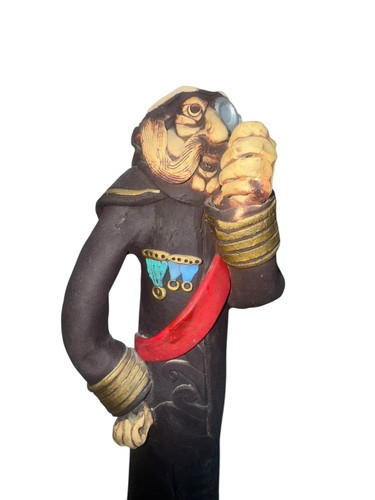
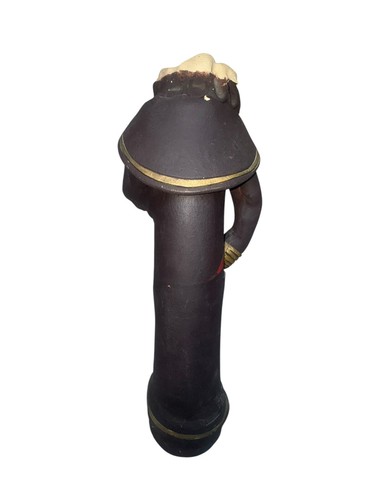
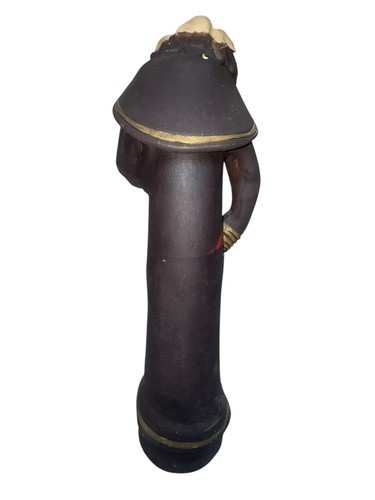
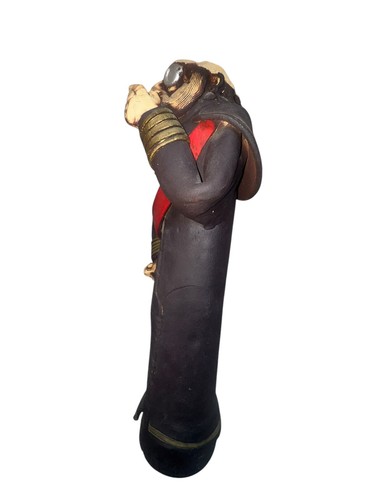
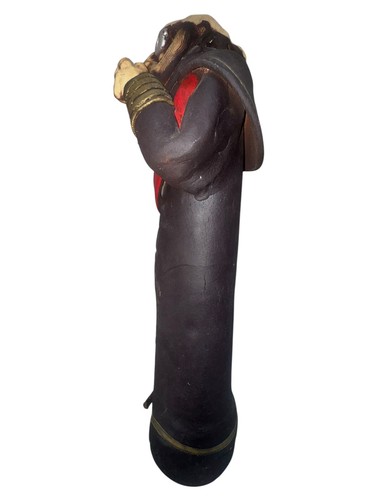
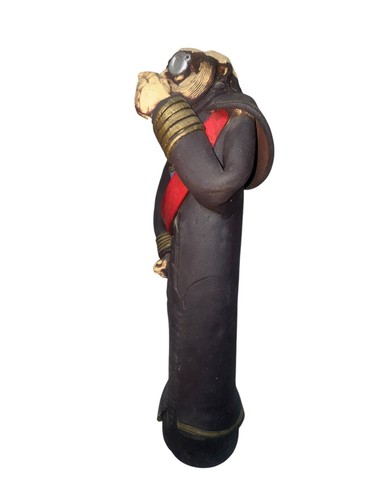
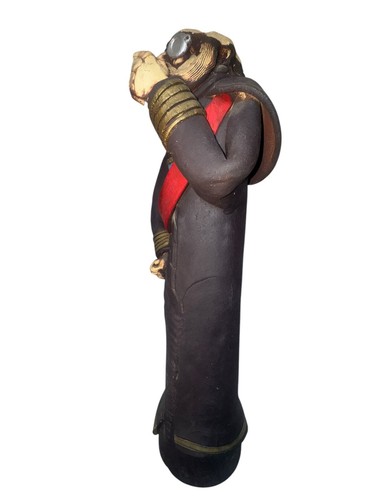
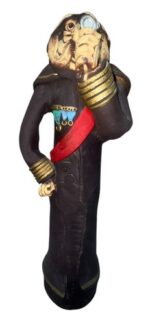
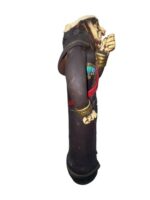
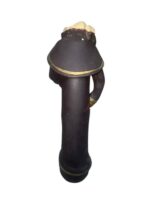
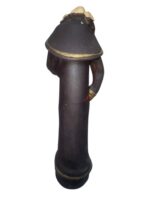
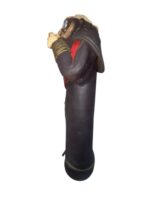
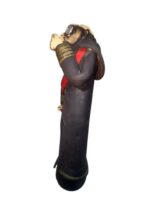
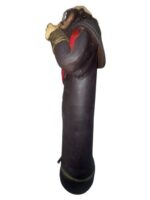
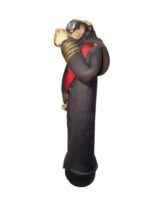
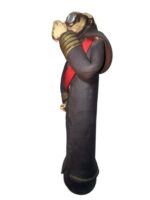
Offered here is an exceptional and monumental People Pot sculpture by celebrated American ceramic artist James Robert “Bob” Black (1936–1983). Standing an impressive 25 inches in height and signed “Black ’71,” this remarkable hand-built ceramic figure represents the imaginative storytelling and expressive craftsmanship that made Bob Black one of the most distinctive voices in twentieth-century American studio pottery.
Few ceramic artists created characters with the warmth, humor, and personality found in Black’s work. His figures are far more than decorative sculptures—they are portraits in clay. Every wrinkle, exaggerated facial expression, textured garment, and carefully sculpted detail contributes to a character that seems to possess a life and history of its own.
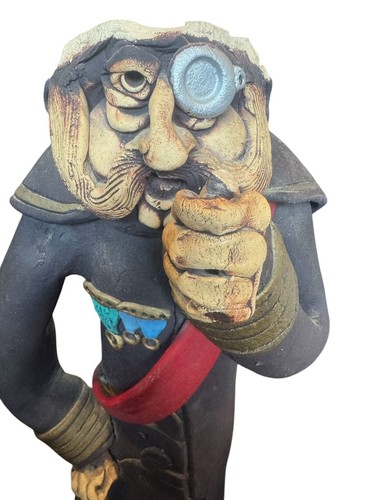
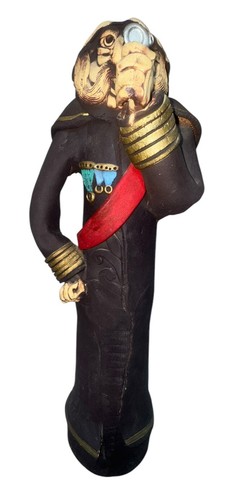
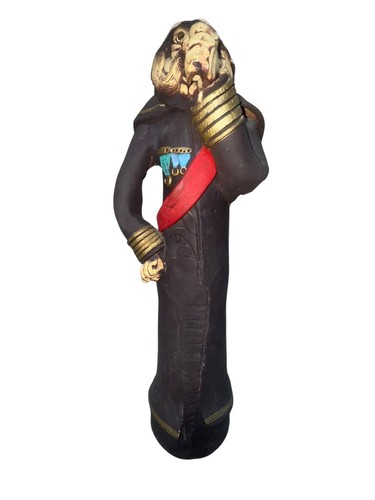
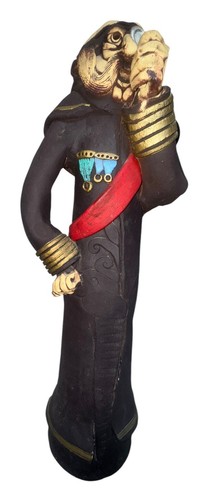
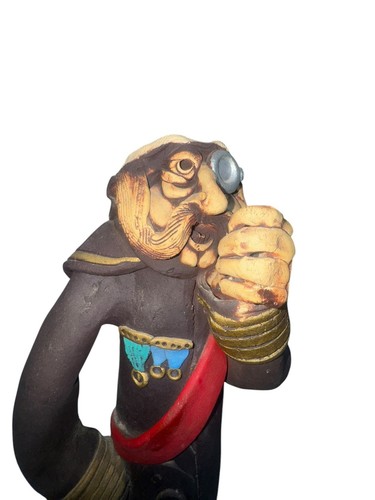
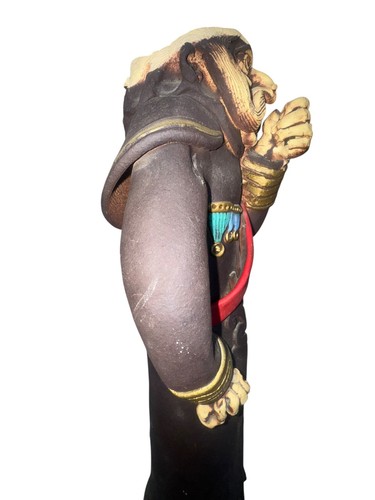
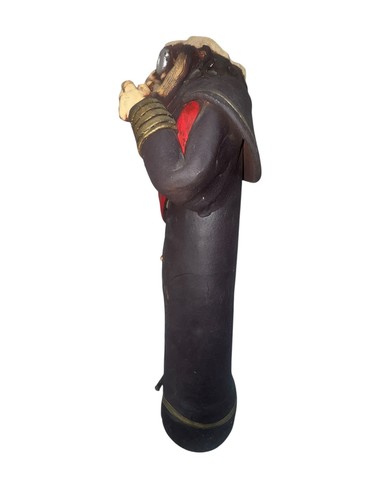
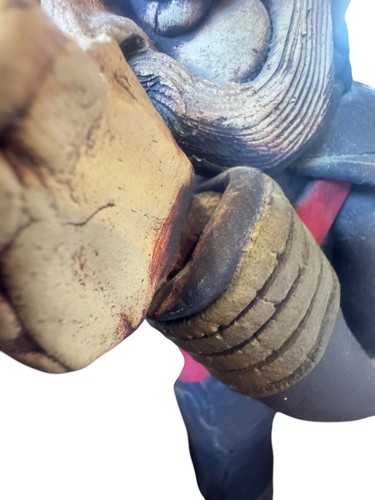
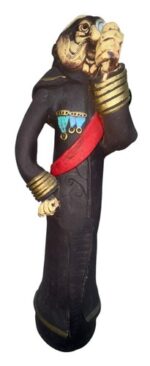
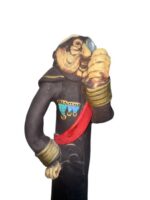
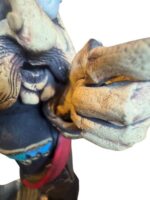
This commanding figure immediately captivates the viewer with his expressive face, sweeping mustache, prominent nose, and oversized optical lens or monocle. His richly detailed uniform features a formal military-style collar, decorative cuffs, medal ribbons, and a vivid red ceremonial sash that contrasts beautifully against the darker textured body of the sculpture. The result is a work that is simultaneously whimsical, theatrical, and remarkably sophisticated.
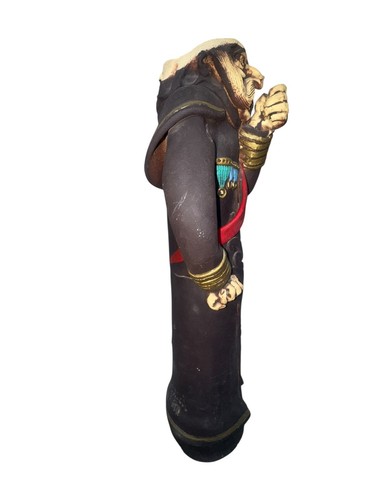
Unlike many studio ceramic figures, this sculpture possesses a commanding architectural presence. Standing twenty-five inches tall, it easily becomes the focal point of any collection, whether displayed among American studio pottery, folk art, or twentieth-century sculpture.
A Character Open to Interpretation
One of the enduring qualities of Bob Black’s People Pots is their ability to spark conversation. Rather than depicting identifiable historical figures, Black often created expressive personalities that invite viewers to imagine their own stories.
This particular sculpture has all the qualities of a distinguished authority figure. His decorated uniform, ceremonial sash, and weathered expression suggest someone of importance—perhaps a military officer, naval commander, harbor master, or European court official. The large optical lens or monocle lends additional personality, giving the figure an inquisitive, almost larger-than-life presence.
Many viewers have remarked that his whimsical features recall the exaggerated court officials and aristocratic characters found in classic mid-century animation and storybook illustrations. While no documentation has been found identifying this sculpture as portraying a specific individual or fictional character, its theatrical personality is unmistakably one of Bob Black’s greatest artistic strengths.
Rather than presenting a literal portrait, Black created a timeless character whose story is left to the imagination of each collector.
The People Pot Series
James Robert “Bob” Black earned national recognition for his celebrated People Pots, a body of work that blurred the boundaries between functional ceramics, sculpture, and portraiture.
Each figure began as a hand-built vessel before gradually evolving into an individual personality. Rather than decorating pottery with painted imagery, Black transformed the vessel itself into the subject.
Kings…
Musicians…
Scholars…
Judges…
Military officers…
Distinguished gentlemen…
Every sculpture became an individual work of art rather than a reproduction.
No two examples possess exactly the same personality.
American Studio Pottery
Created during the height of the American Studio Pottery movement, this sculpture reflects a period when ceramic artists embraced individuality, craftsmanship, and artistic expression over factory production.
Black’s work stands apart because it combines technical ceramic skill with humor and narrative. His sculptures appeal equally to collectors of:
- American Studio Pottery
- Figurative Ceramics
- Folk Art
- Mid-Century Decorative Arts
- Ceramic Sculpture
- Narrative Art
As interest in twentieth-century American ceramics continues to grow, Bob Black’s People Pots have become increasingly sought after for their originality and unmistakable style.
Craftsmanship
Constructing a ceramic sculpture of this scale required tremendous technical expertise.
Large hand-built figures present significant challenges during drying and firing, where cracking, warping, or collapse can easily occur. Successfully producing a monumental twenty-five-inch sculpture demanded careful engineering, controlled firing, and years of ceramic experience.
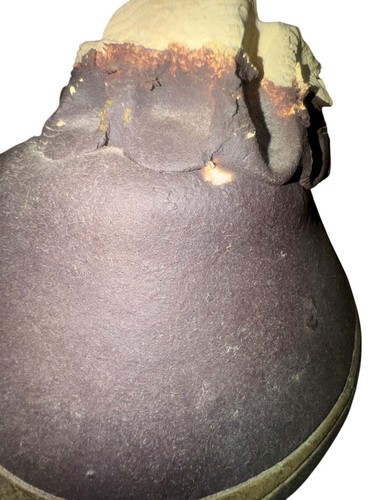
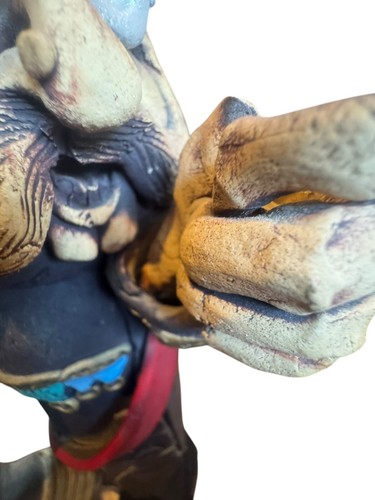
The deeply textured clothing, expressive facial modeling, sculpted hands, and dimensional surface decoration all demonstrate Black’s remarkable confidence as both sculptor and ceramic artist.
Signature & Date
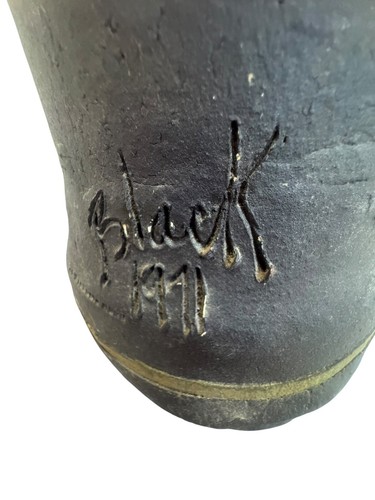
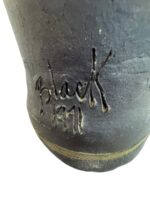
The sculpture is signed by the artist “Black ’71” near the lower portion of the figure, firmly dating the work to 1971, an important period in Bob Black’s artistic career.
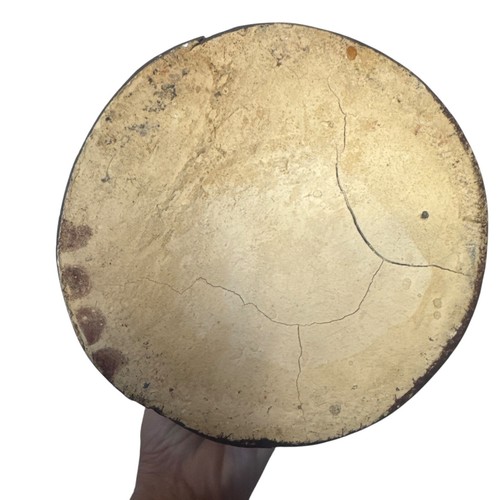
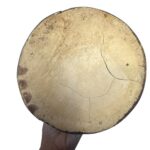
The underside displays the unglazed base typical of hand-built studio ceramics and is consistent with original firing methods used by the artist.
Condition
This sculpture presents beautifully and retains outstanding display presence.
The figure is signed and dated by the artist and remains structurally sound.
Condition notes:
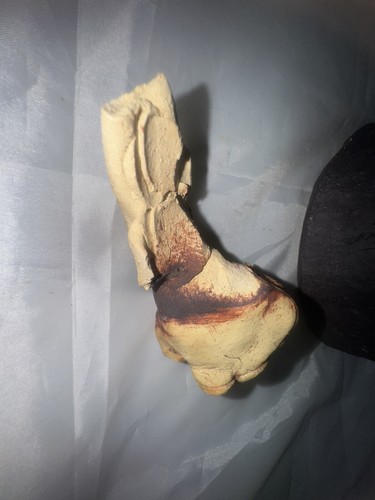
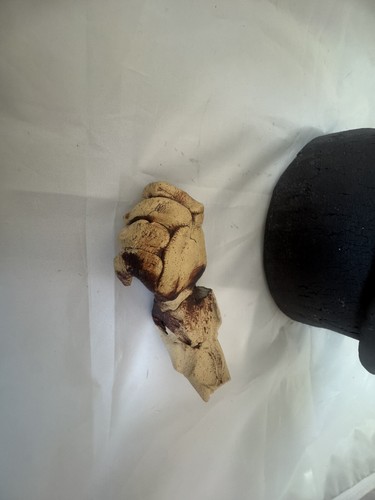
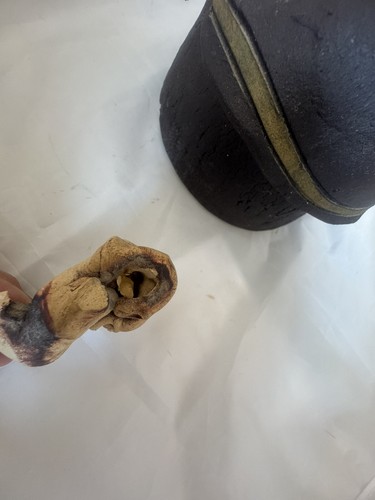
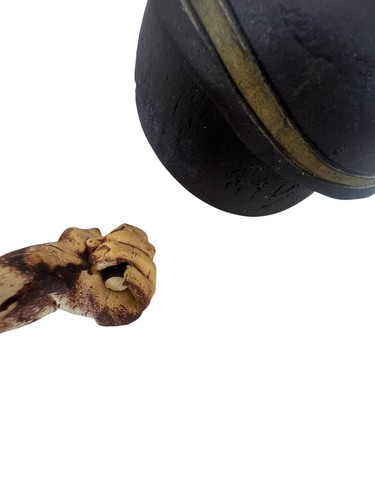
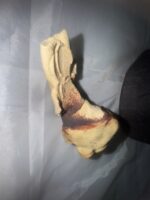
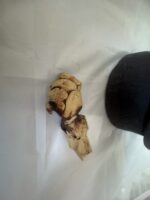
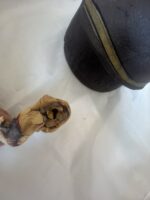
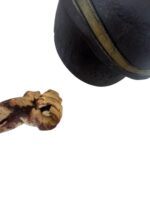
- The figure is missing the accessory originally held in the right hand. Based on the sculpted grip, the object was likely a separately modeled element such as a pipe, cane, or spyglass. Its original form is unknown, and no attempt has been made to replace or restore it.
- There is age-related wear consistent with a hand-built ceramic sculpture from 1971.
- Minor surface wear and expected patina are present from age and handling.
- No restoration has been undertaken, preserving the sculpture in its honest, original state.
Many collectors of American studio pottery prefer original, unrestored examples, making the missing accessory part of the sculpture’s documented history rather than a disguised repair.
Measurements
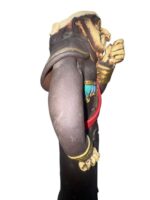
25″ height, 8″ depth, 9 1/2″ width.
Research and Historical Notes
James Robert “Bob” Black (1936–1983) was an American ceramic artist best known for his imaginative People Pots, a series of hand-built sculptural figures created primarily during the 1960s and 1970s. Working within the American Studio Pottery movement, Black developed a distinctive artistic style that merged portraiture, storytelling, and functional ceramic traditions into highly original sculptures that remain immediately recognizable today.
Rather than portraying specific historical individuals, Black typically created expressive fictional personalities. His figures combine exaggerated facial features, elaborate costumes, and subtle humor, encouraging viewers to invent stories about the characters they encounter. This narrative quality has become one of the defining characteristics of his work and continues to attract collectors of American studio ceramics.
This example, signed “Black ’71,” dates to 1971 and represents Black’s mature artistic period. Its monumental scale, expressive modeling, richly textured surfaces, and finely detailed uniform demonstrate the technical confidence that distinguished his larger sculptures. While the identity of the character remains undocumented, the figure’s decorated uniform, ceremonial sash, monocle, and commanding expression suggest a distinguished official whose precise role is intentionally left open to interpretation.
Because no original title or documentation accompanies this sculpture, it is presented simply as a People Pot character figure, allowing future scholarship or catalog discoveries to identify it more specifically if additional information becomes available.
Monumental, signed examples from this period are increasingly difficult to locate and remain among the most desirable works produced by Bob Black.
Thank you again for visiting Art and Beautiful Things. Please feel free to contact us with any questions or requests for additional photographs.
Our Condition Rating
Excellent – We almost never rate anything as excellent because to us, excellent means brand new and still in packaging. If we’ve only removed it from the box for photography, it still receives a "very good" rating.
Very Good – This is where most of our items fall. To us, this means as close to excellent as possible: museum-quality, with no imperfections unless noted (and even then, only very minor ones).
Good – Acceptable. Worth owning, especially if it’s difficult to find in better condition.
Fair – Rough condition. Only rated fair if the item has substantial historical value or is salvage-worthy.
 (248) 617-7717
 mona@artandbeautifulthings.com