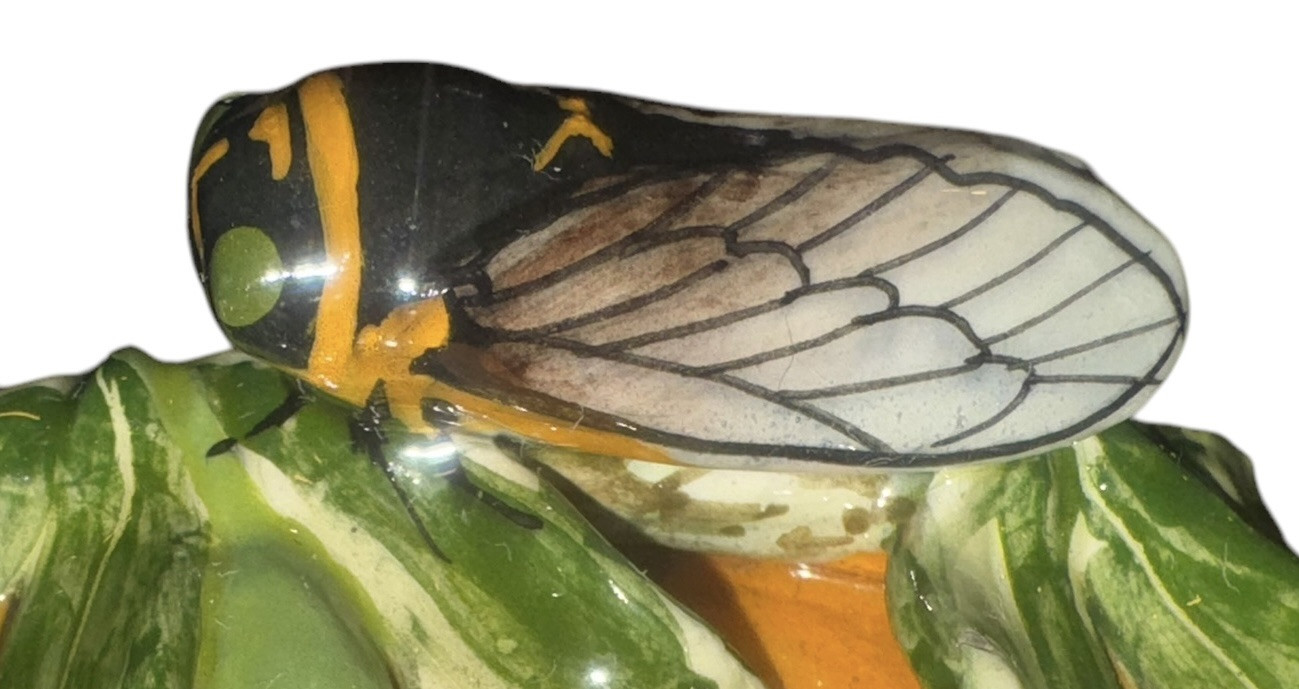
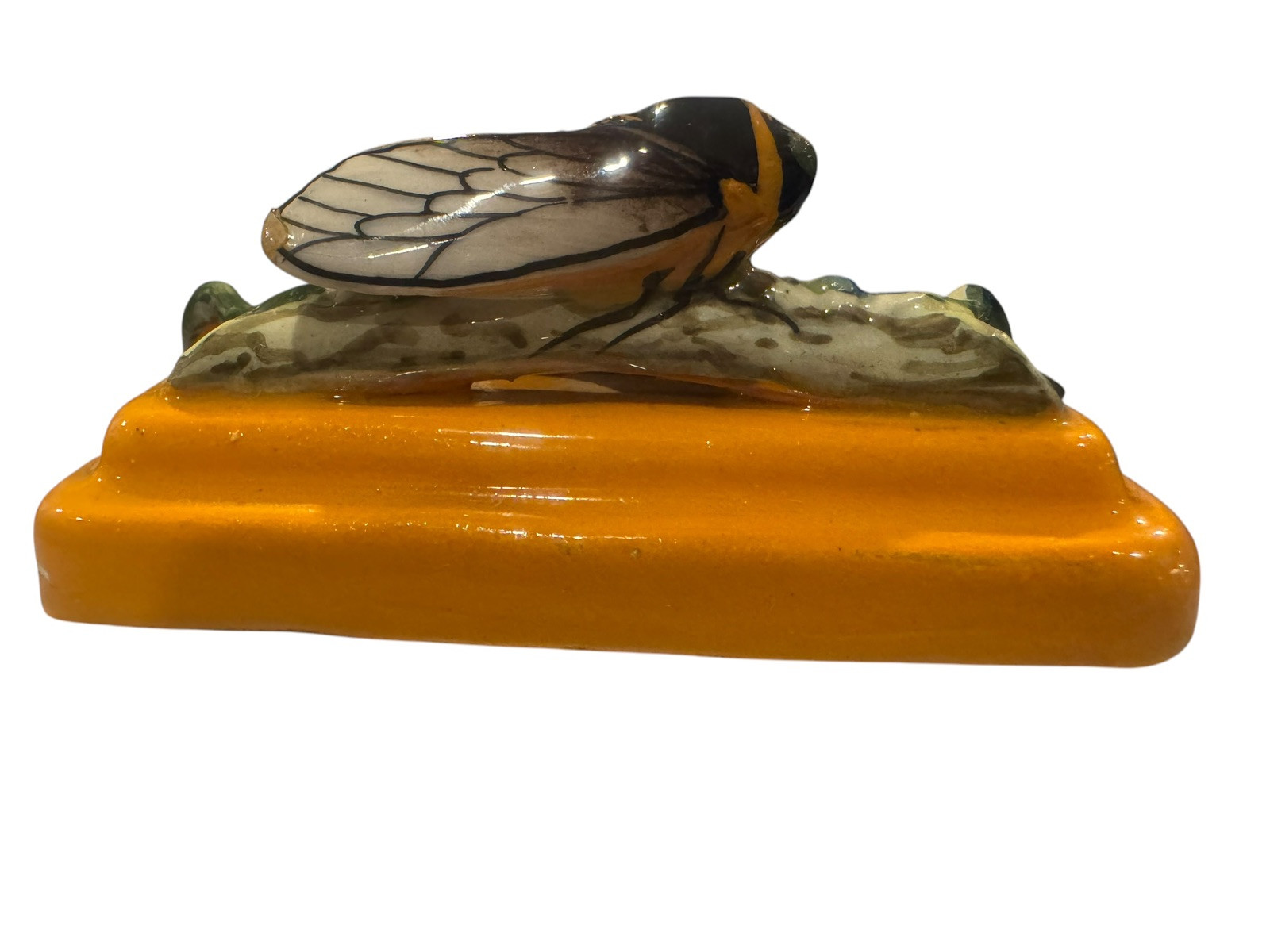
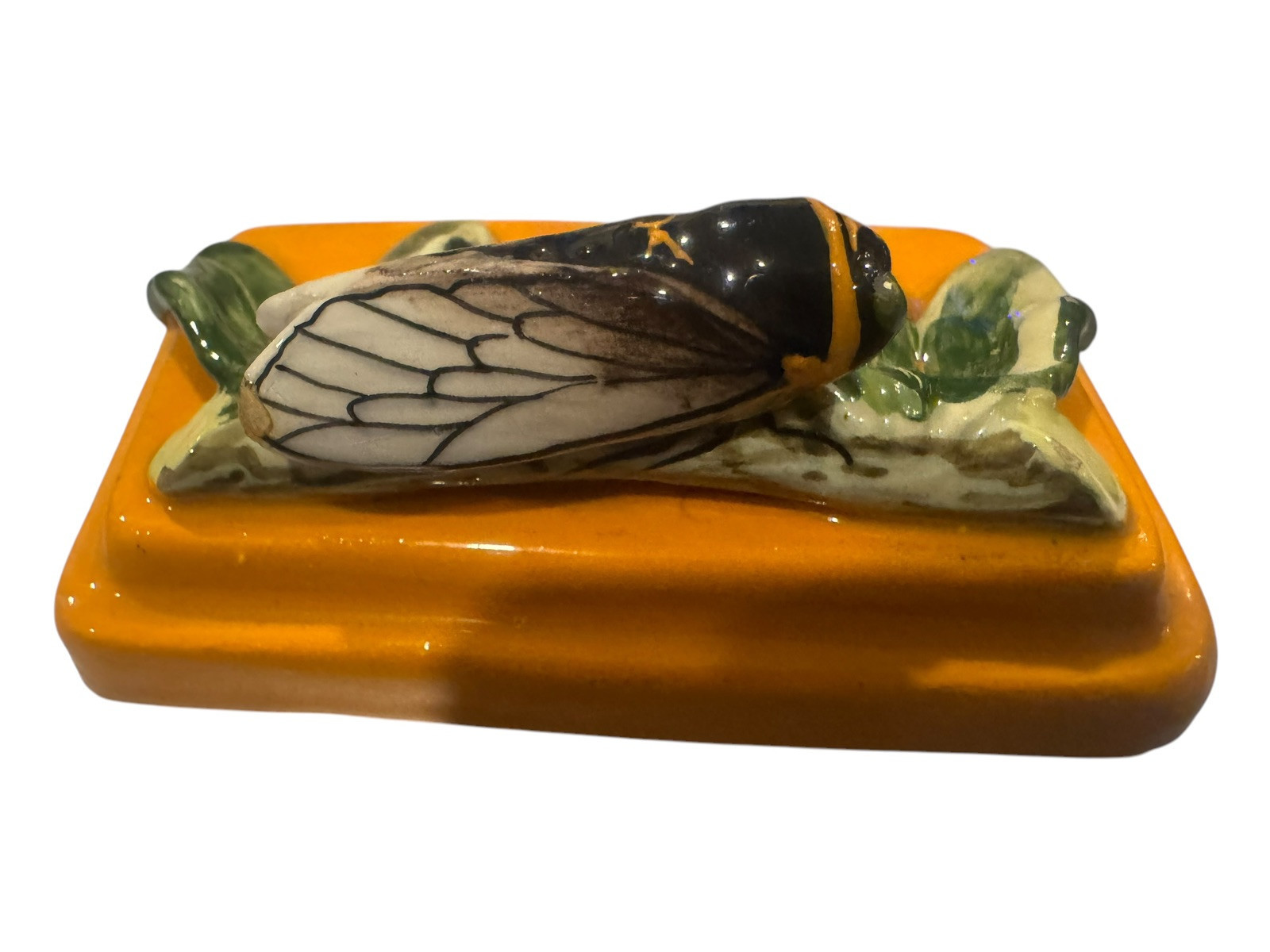
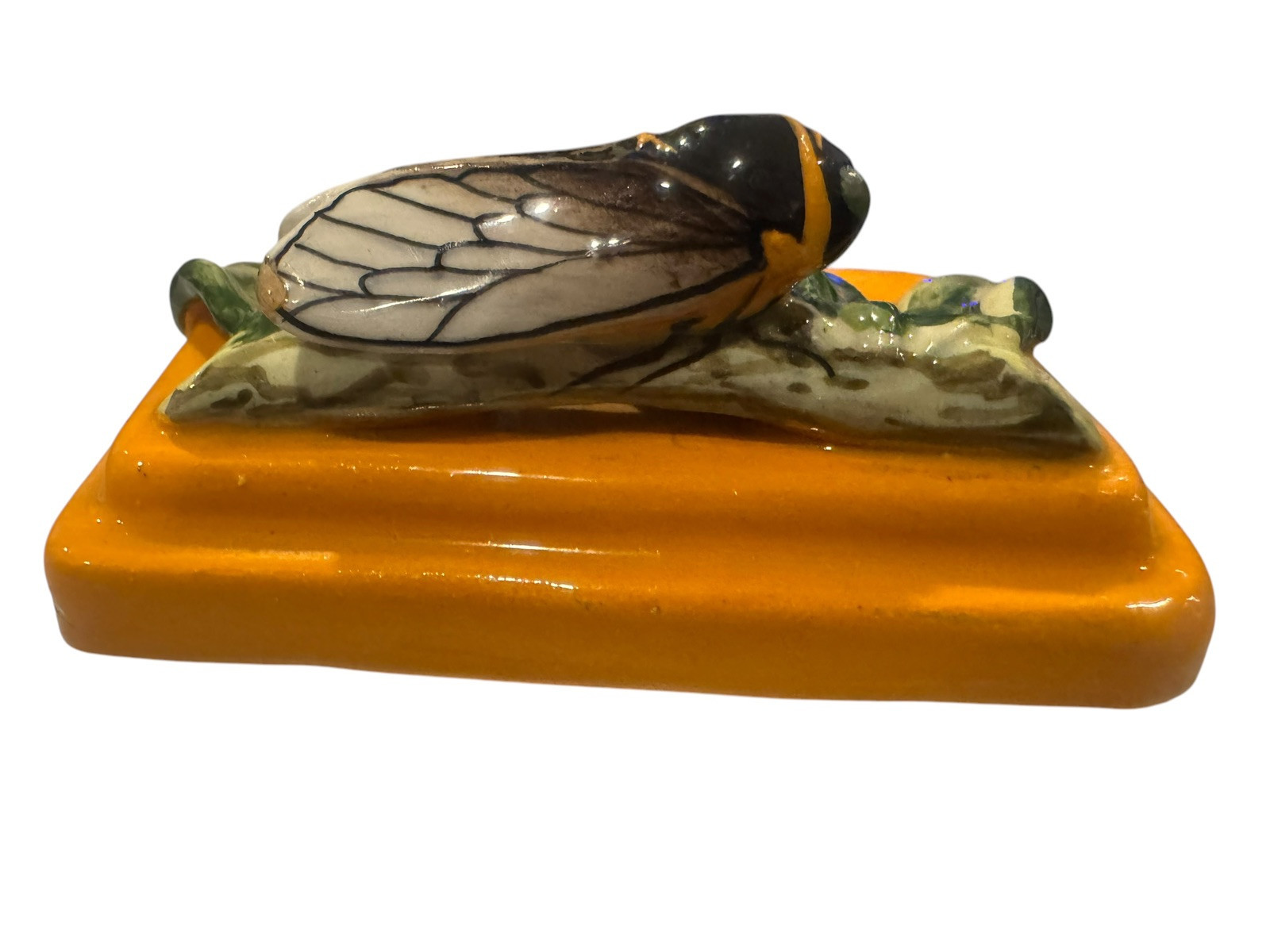
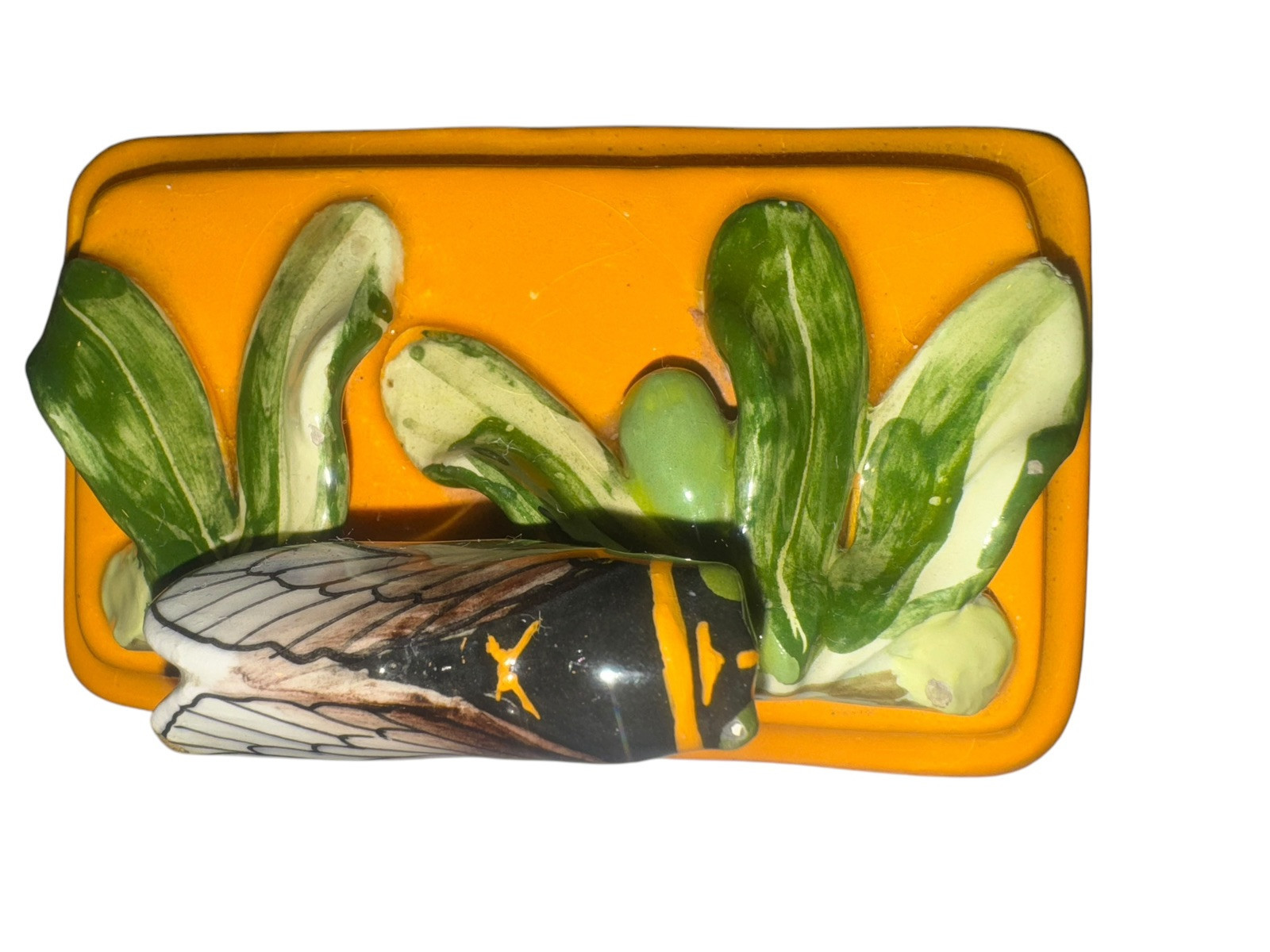
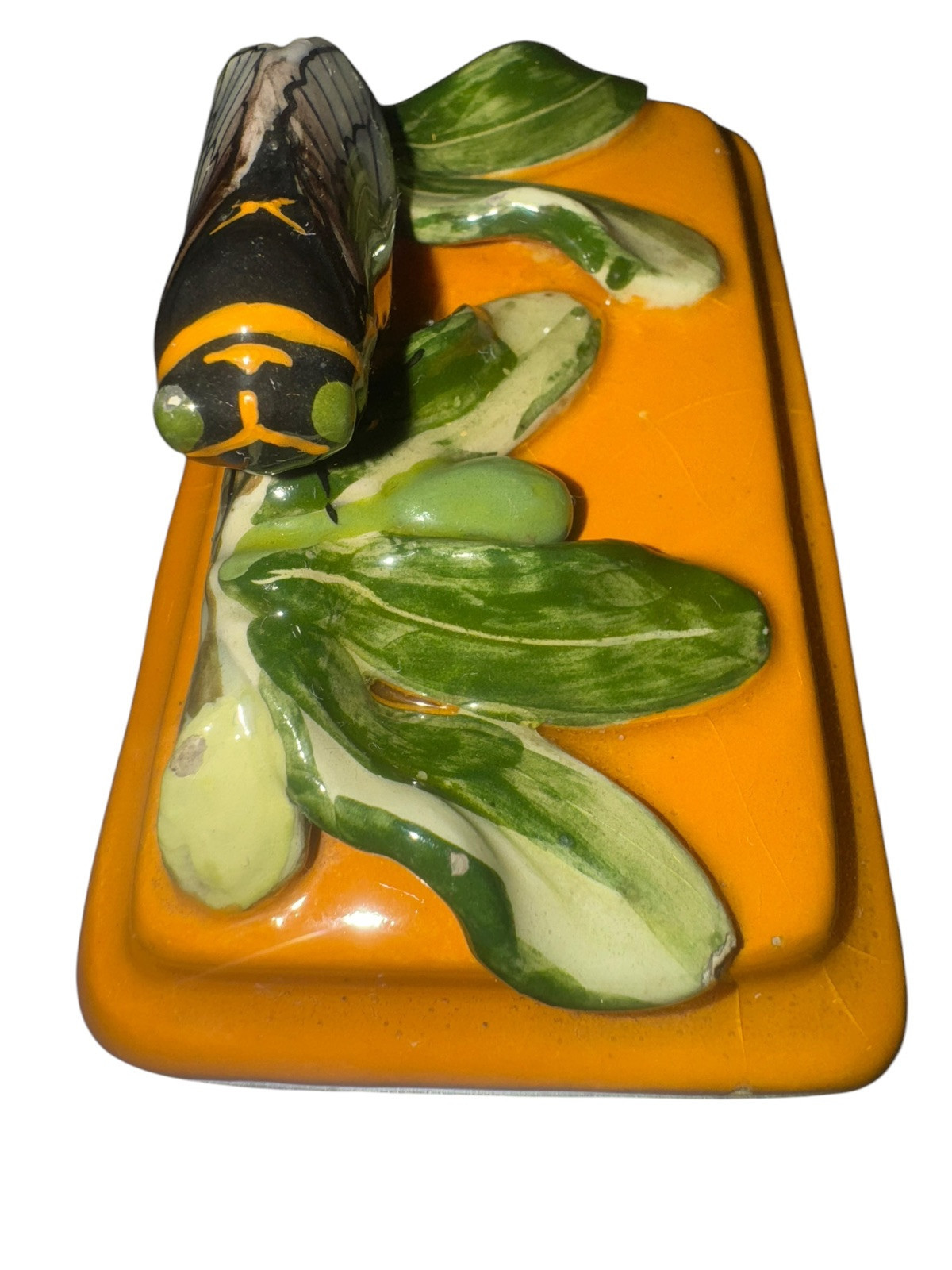
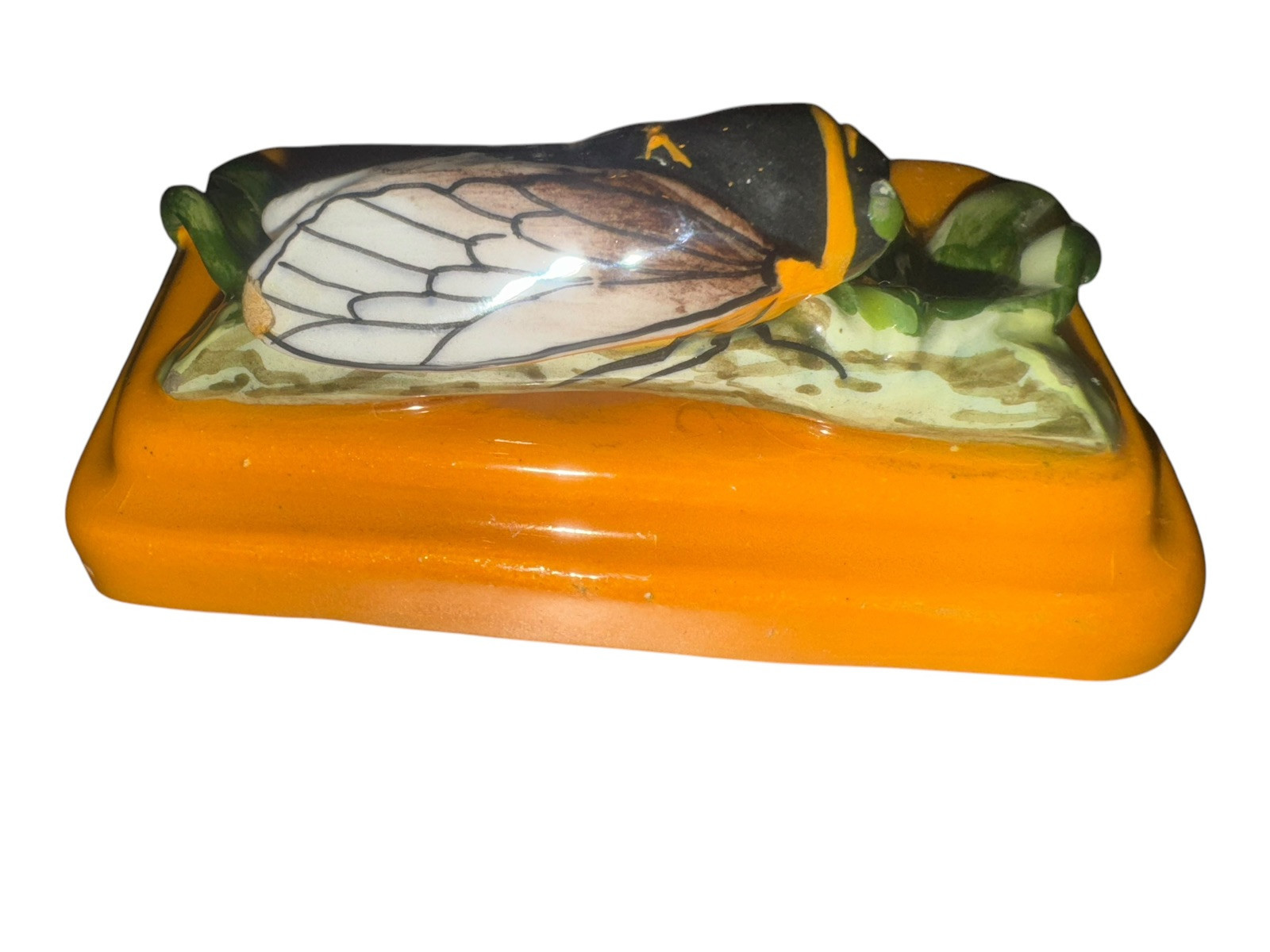
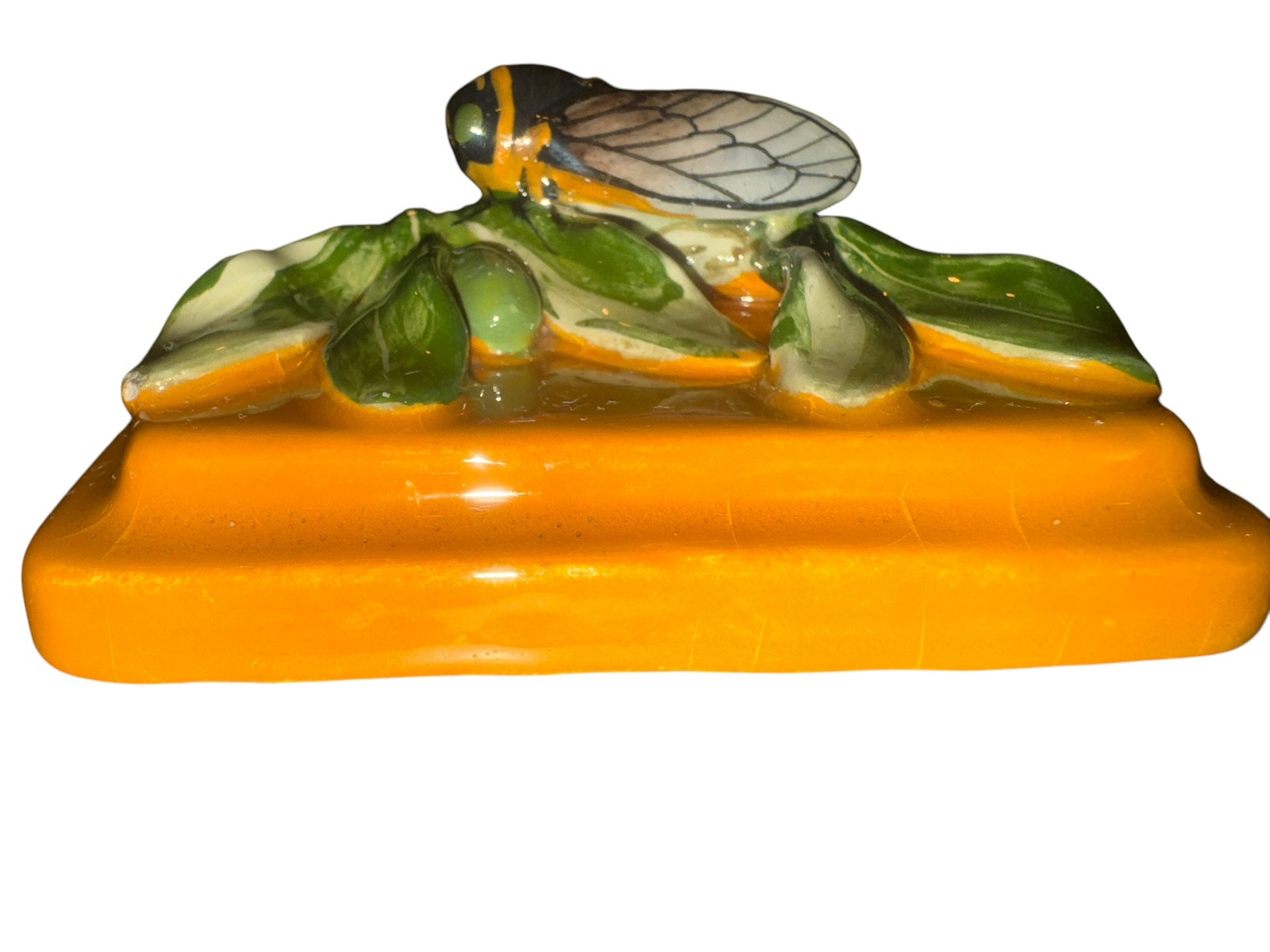
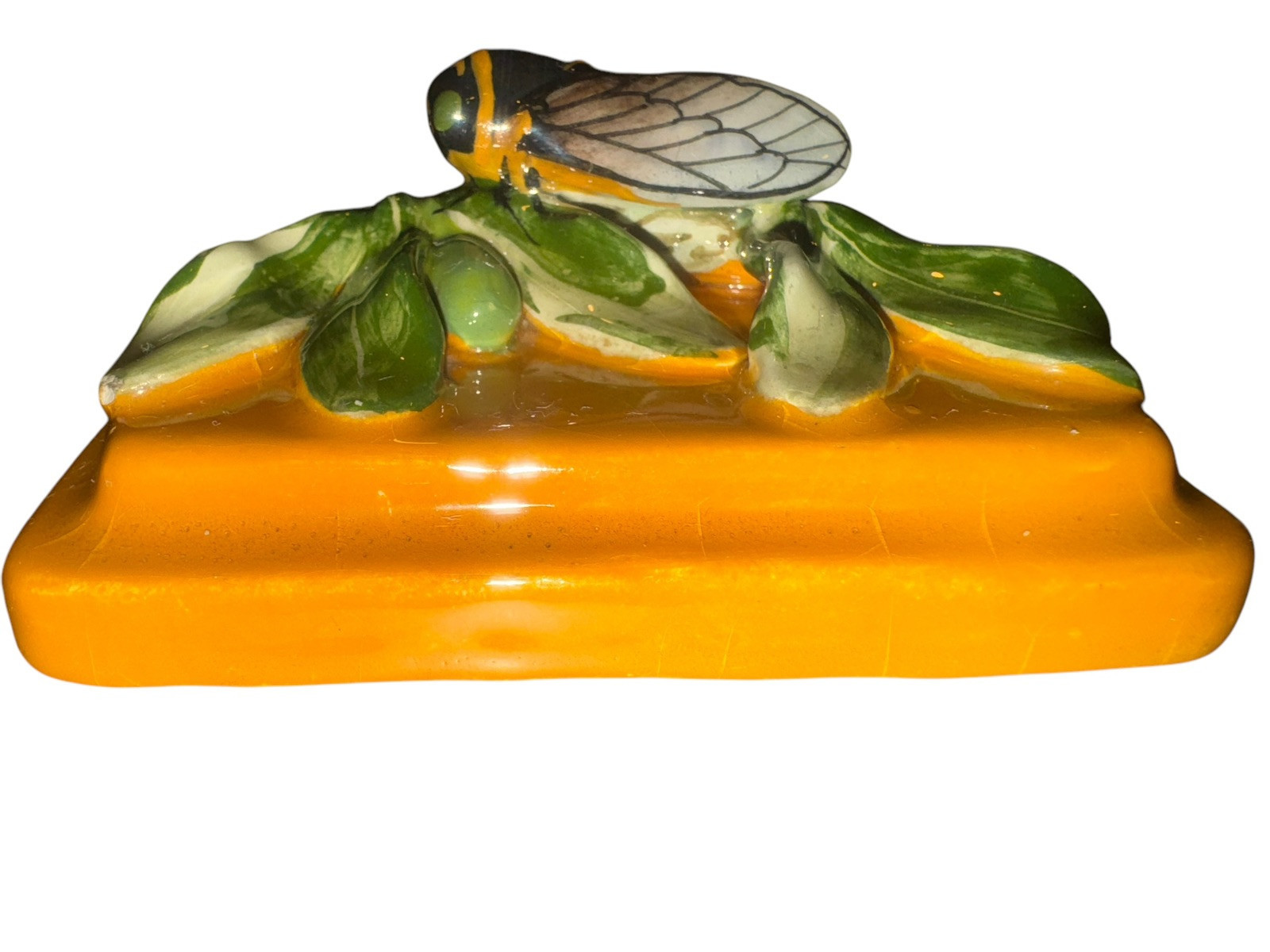
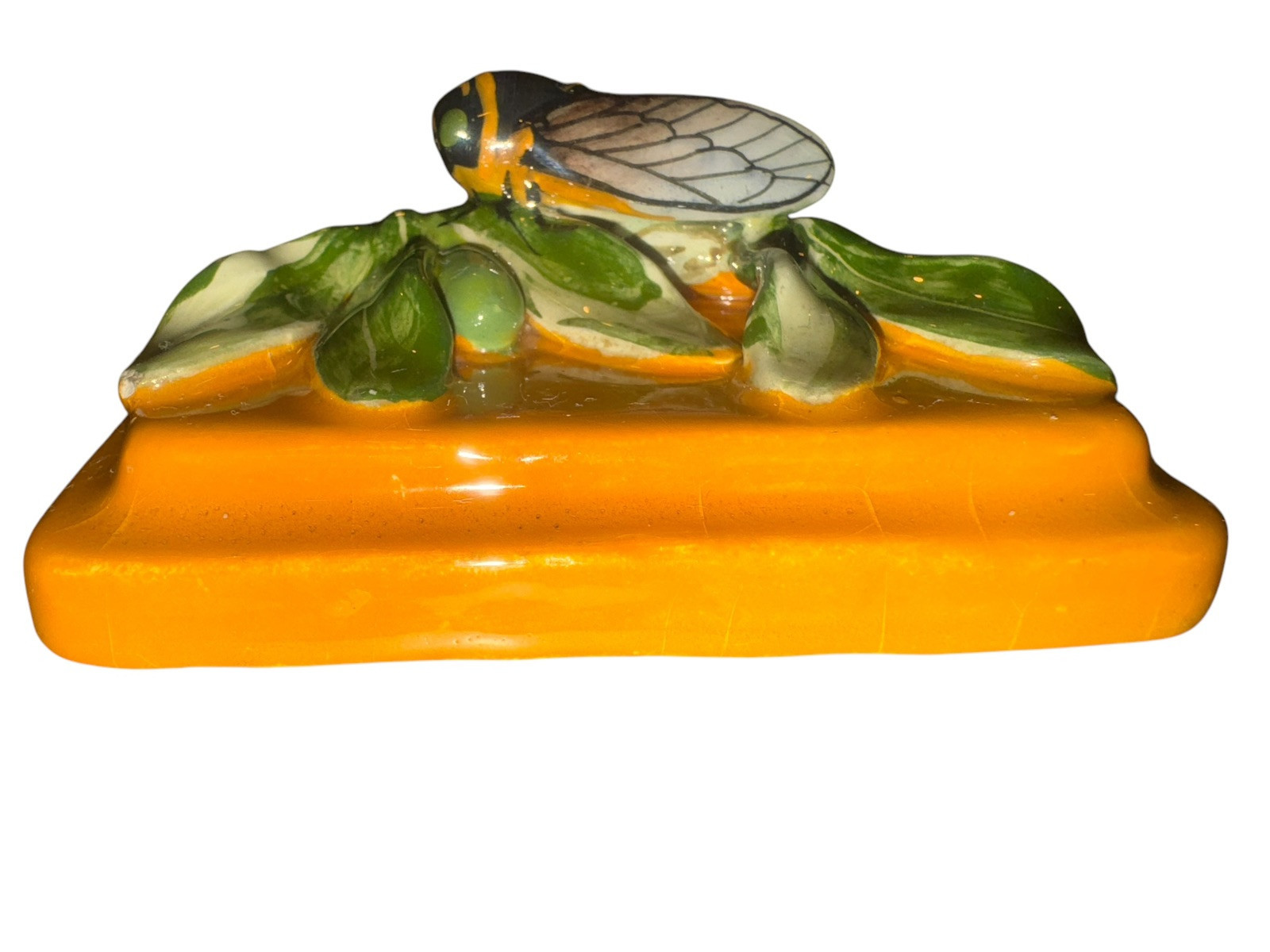
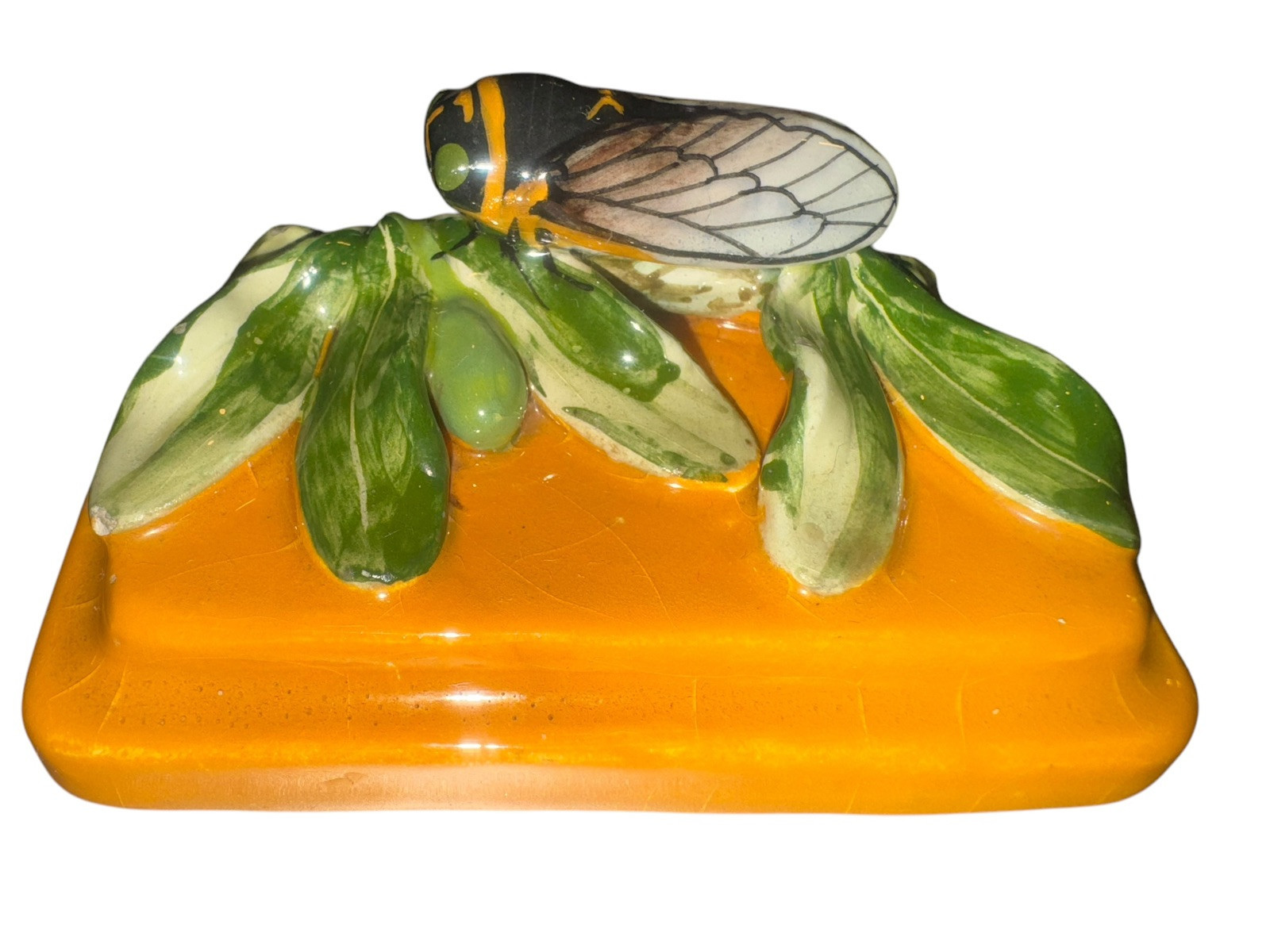
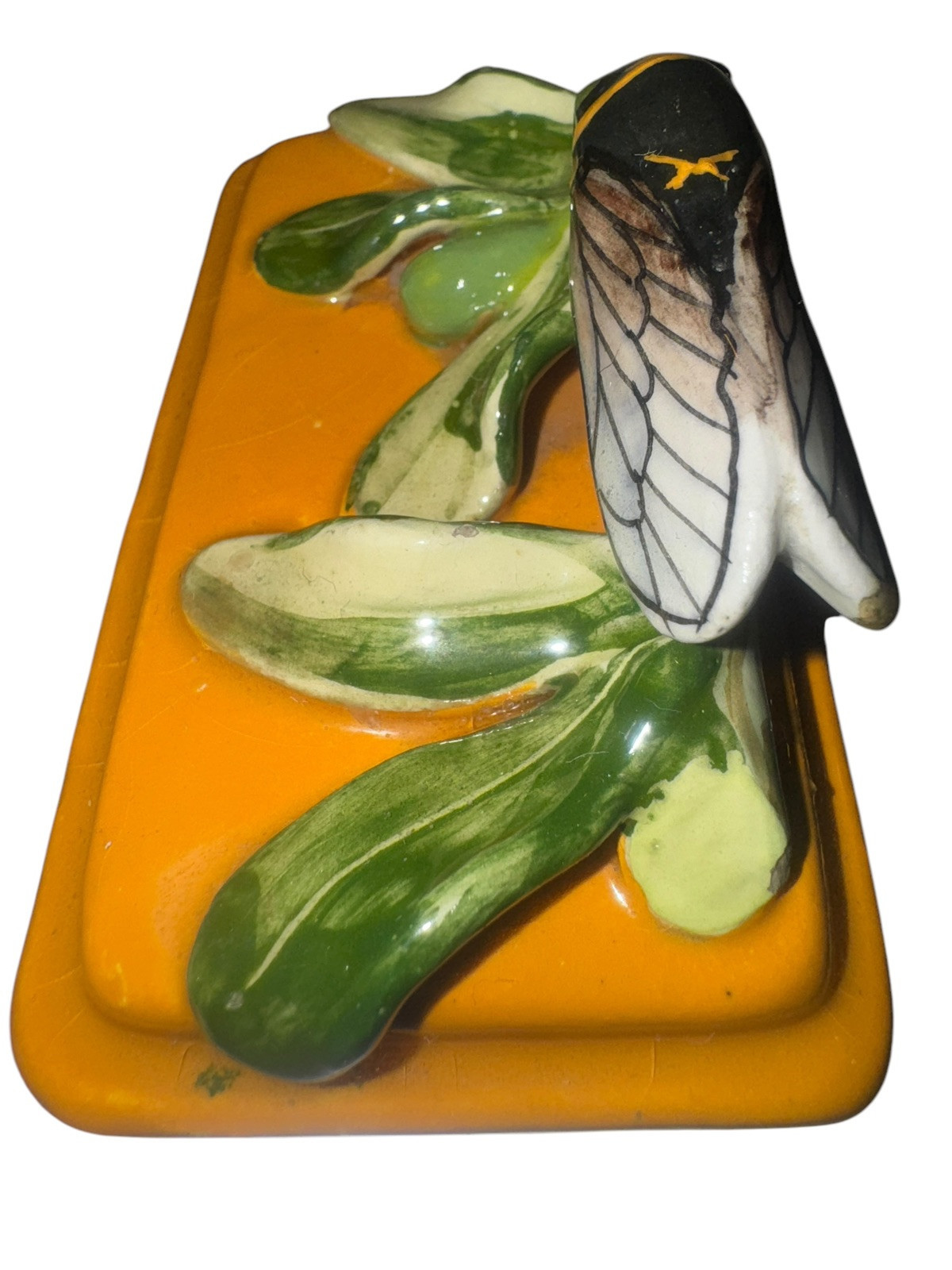
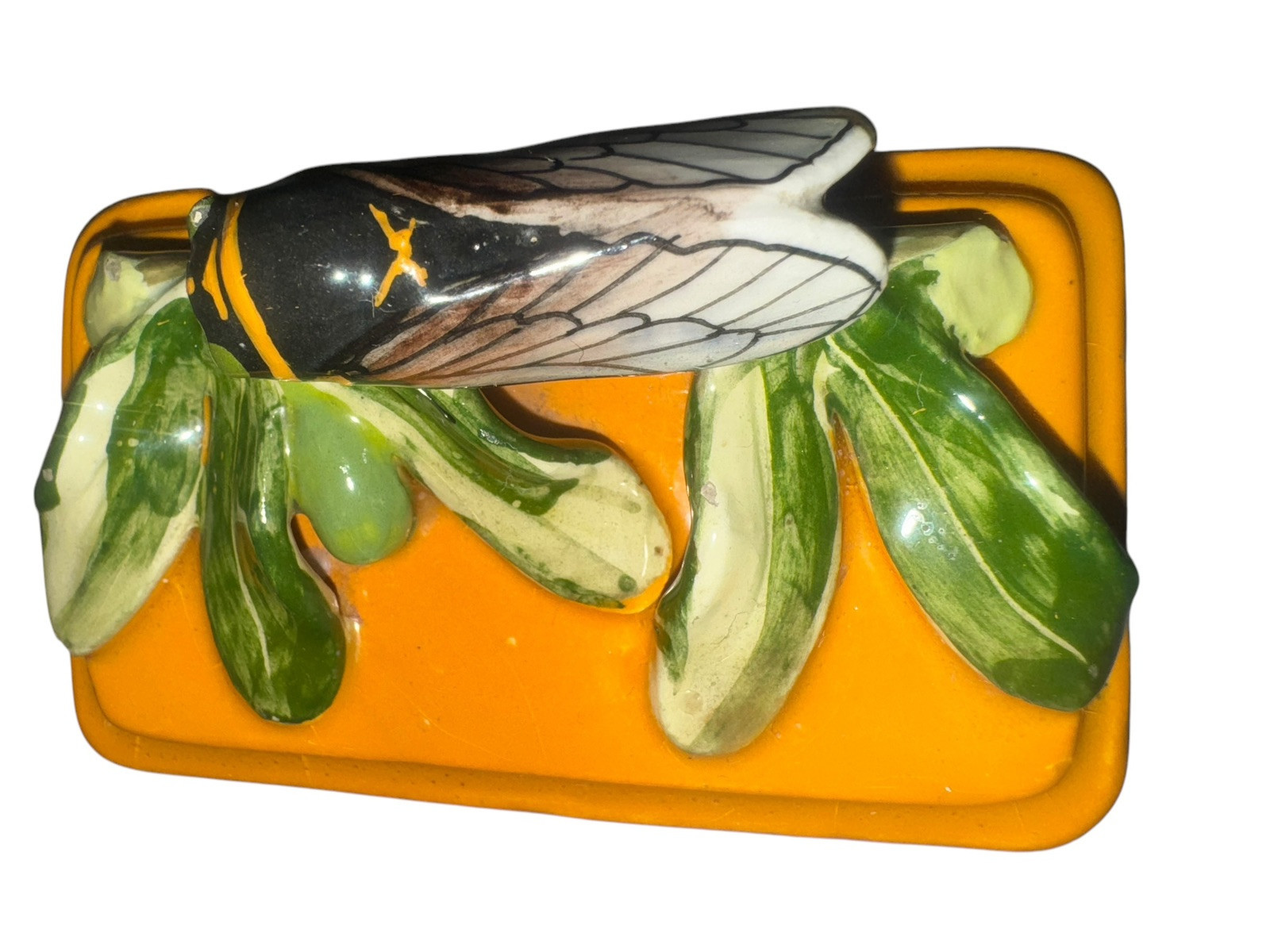
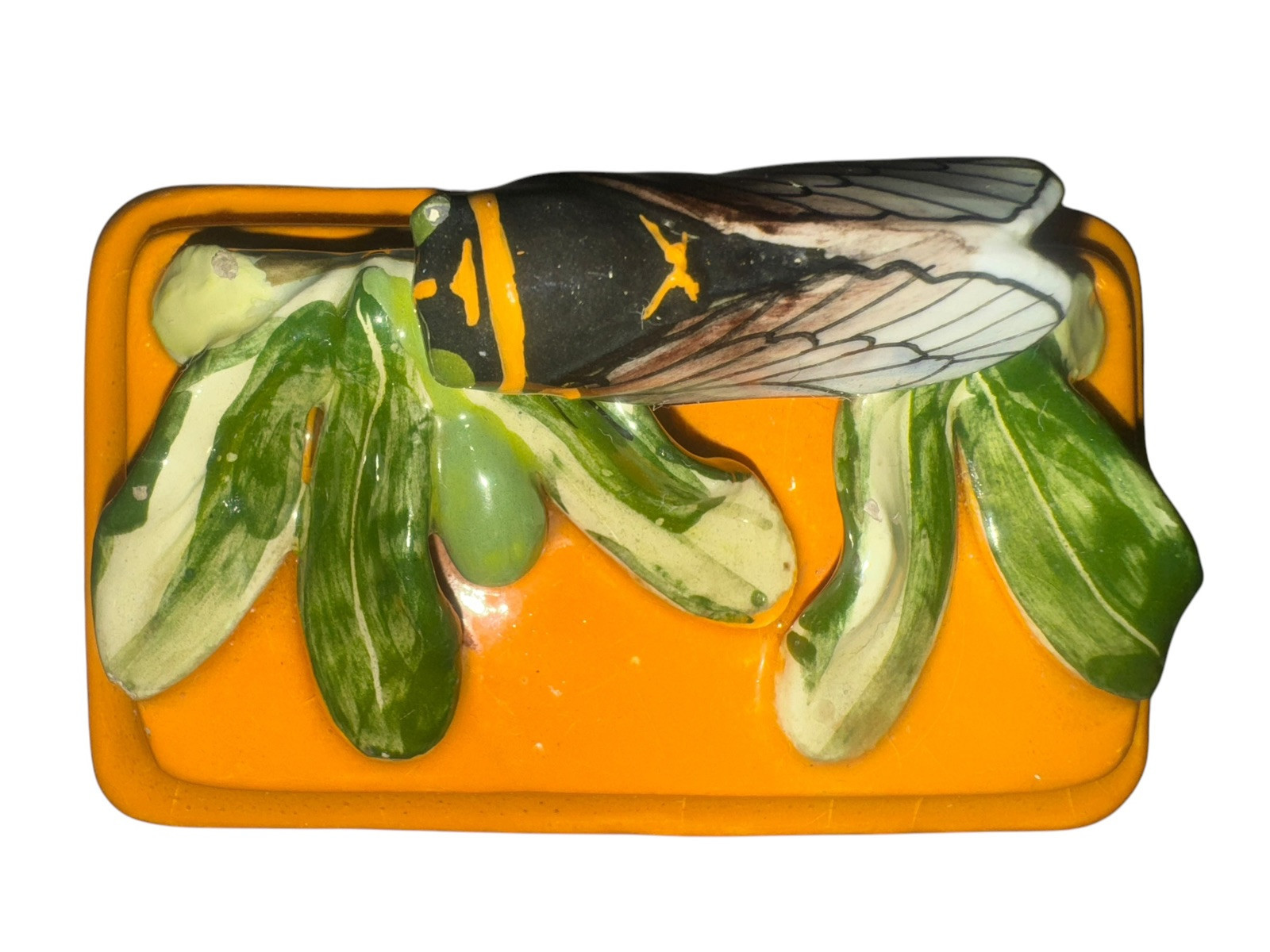
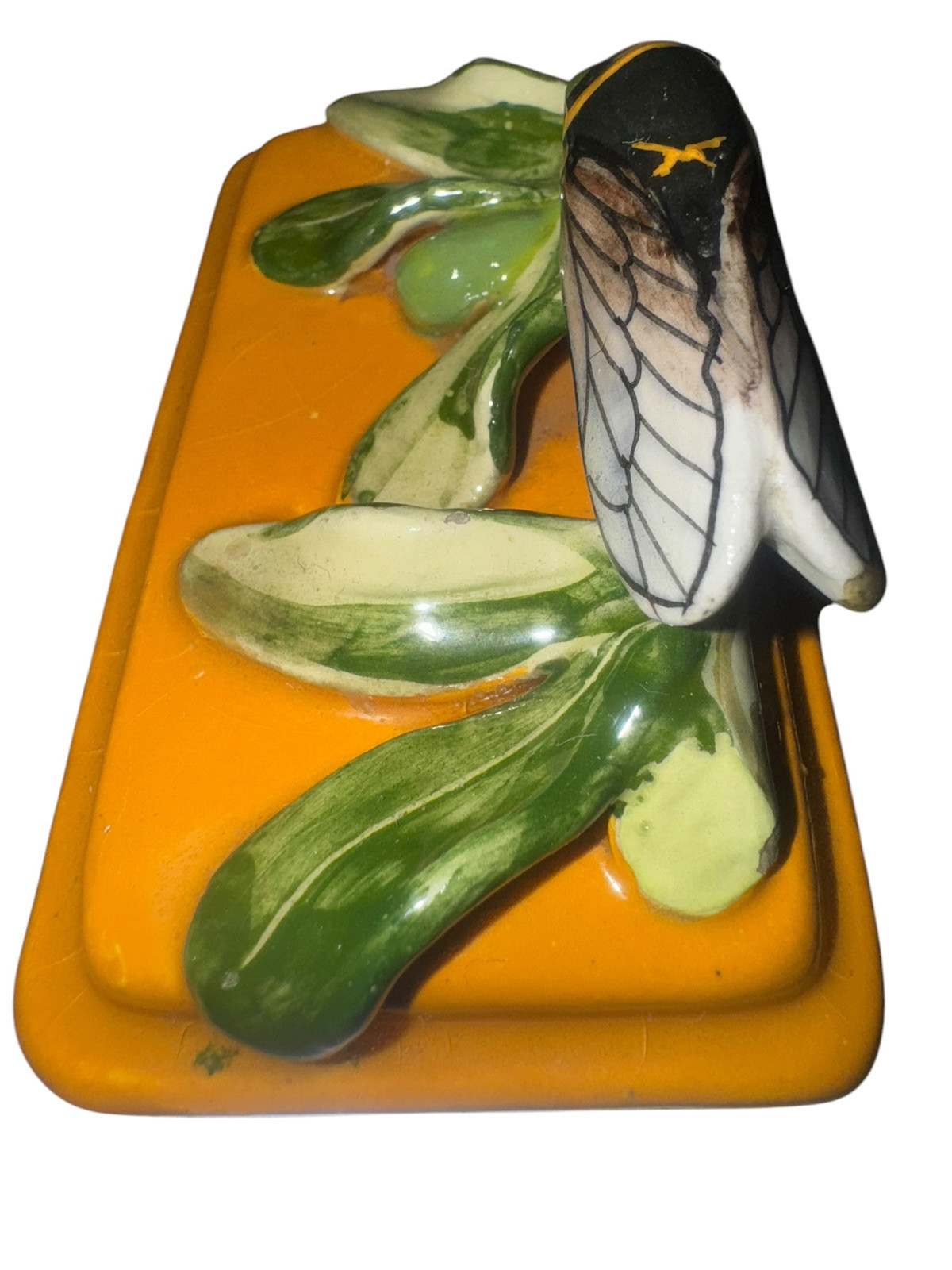
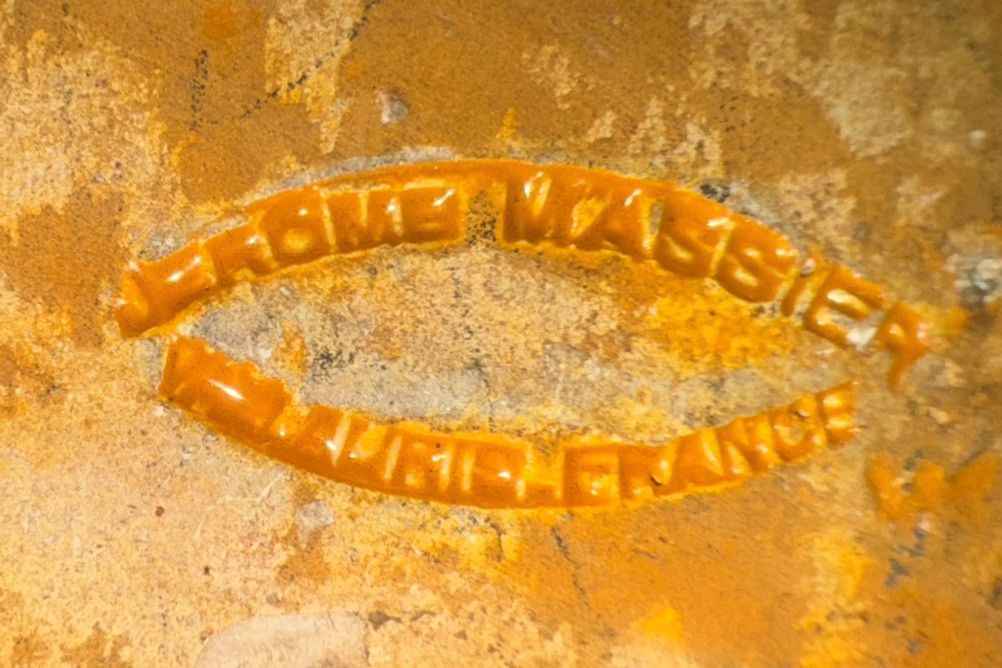
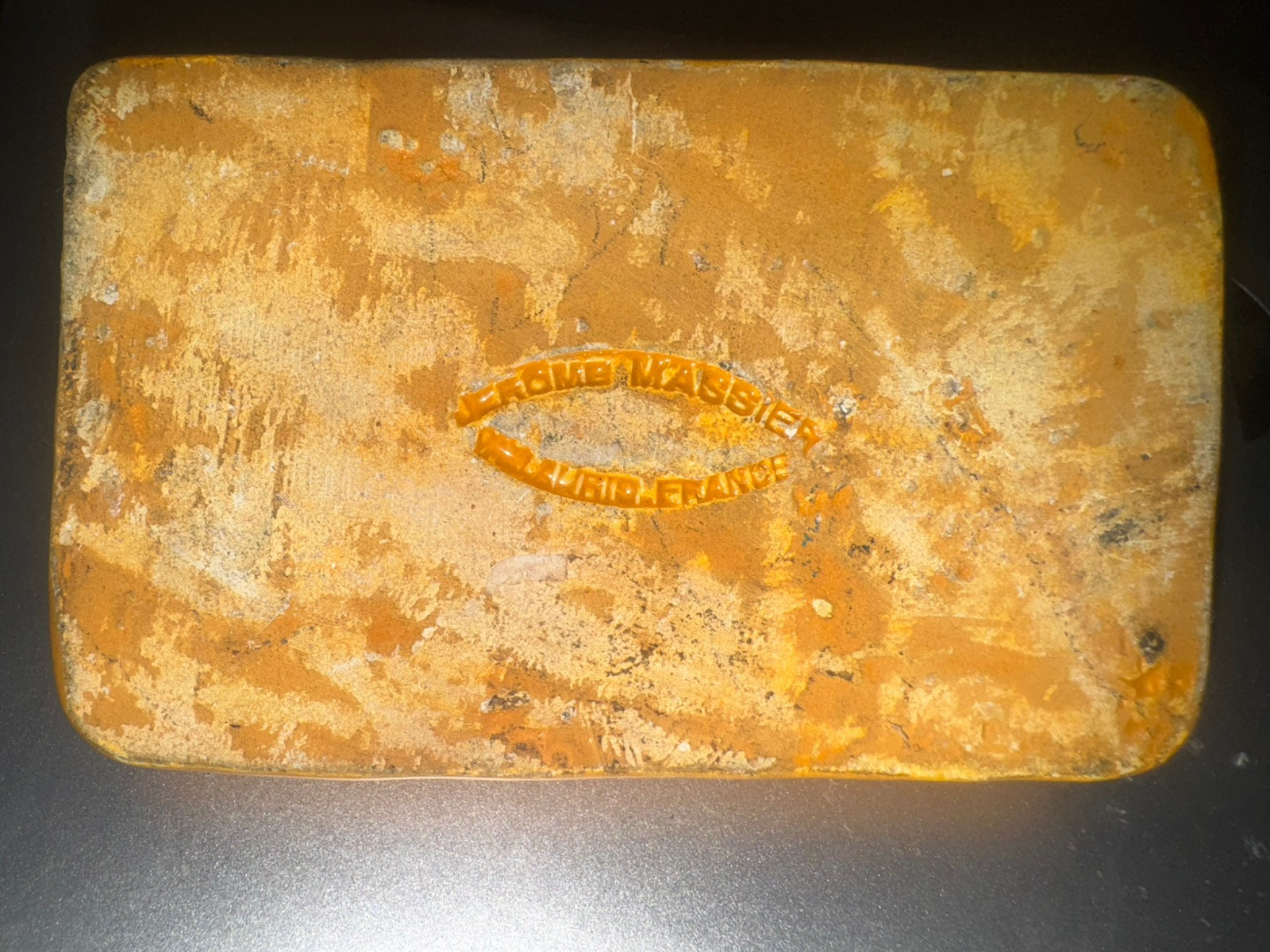
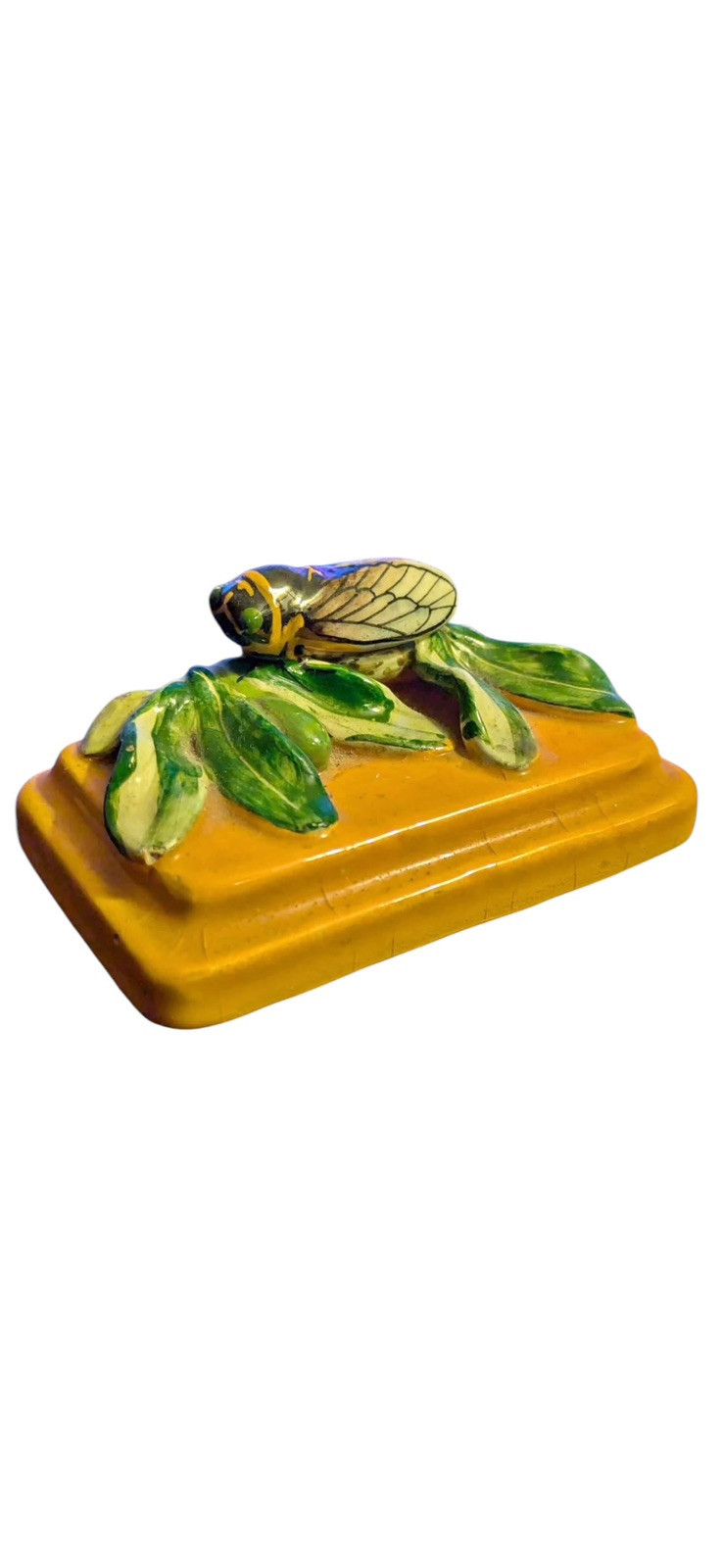
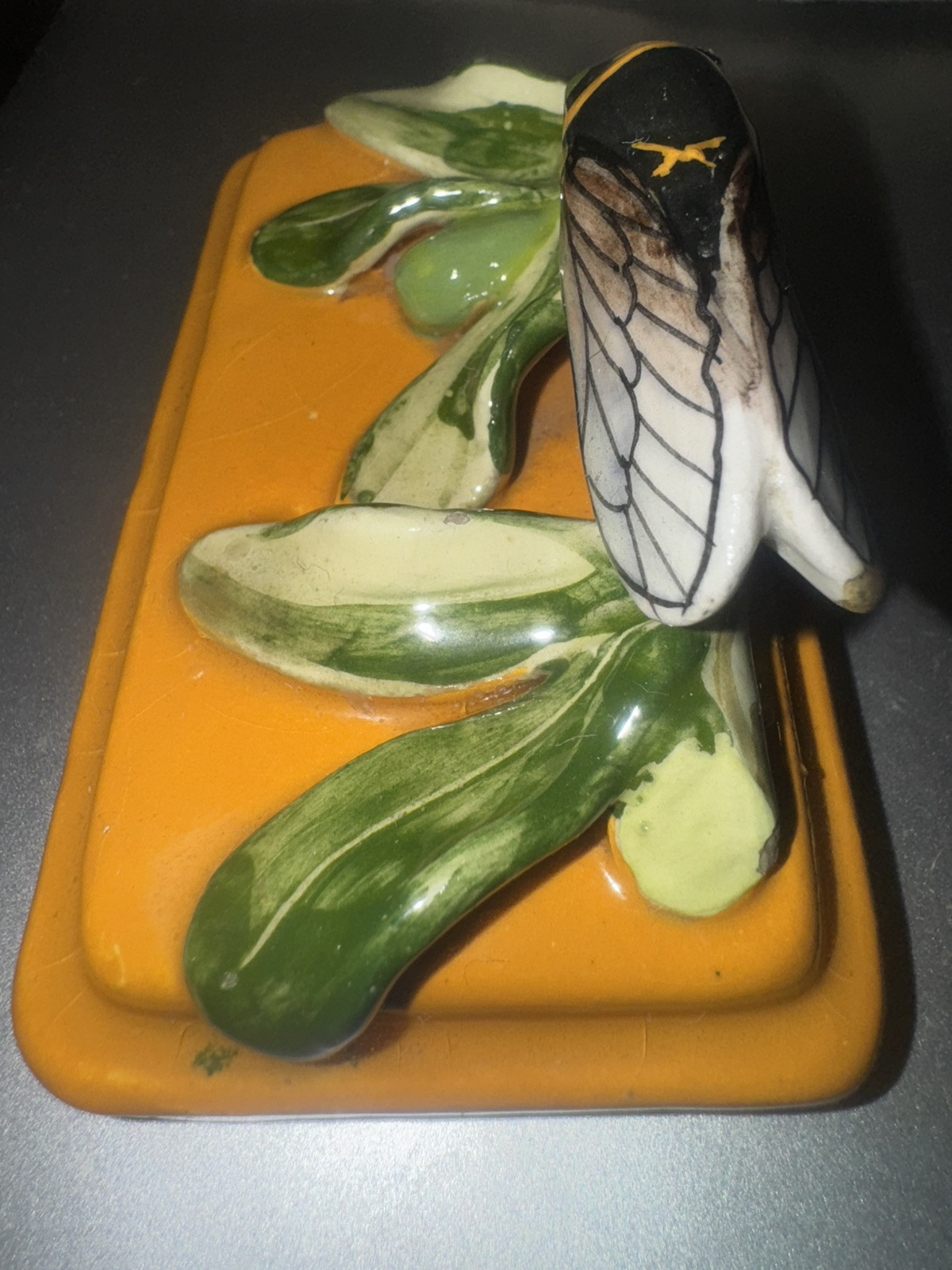
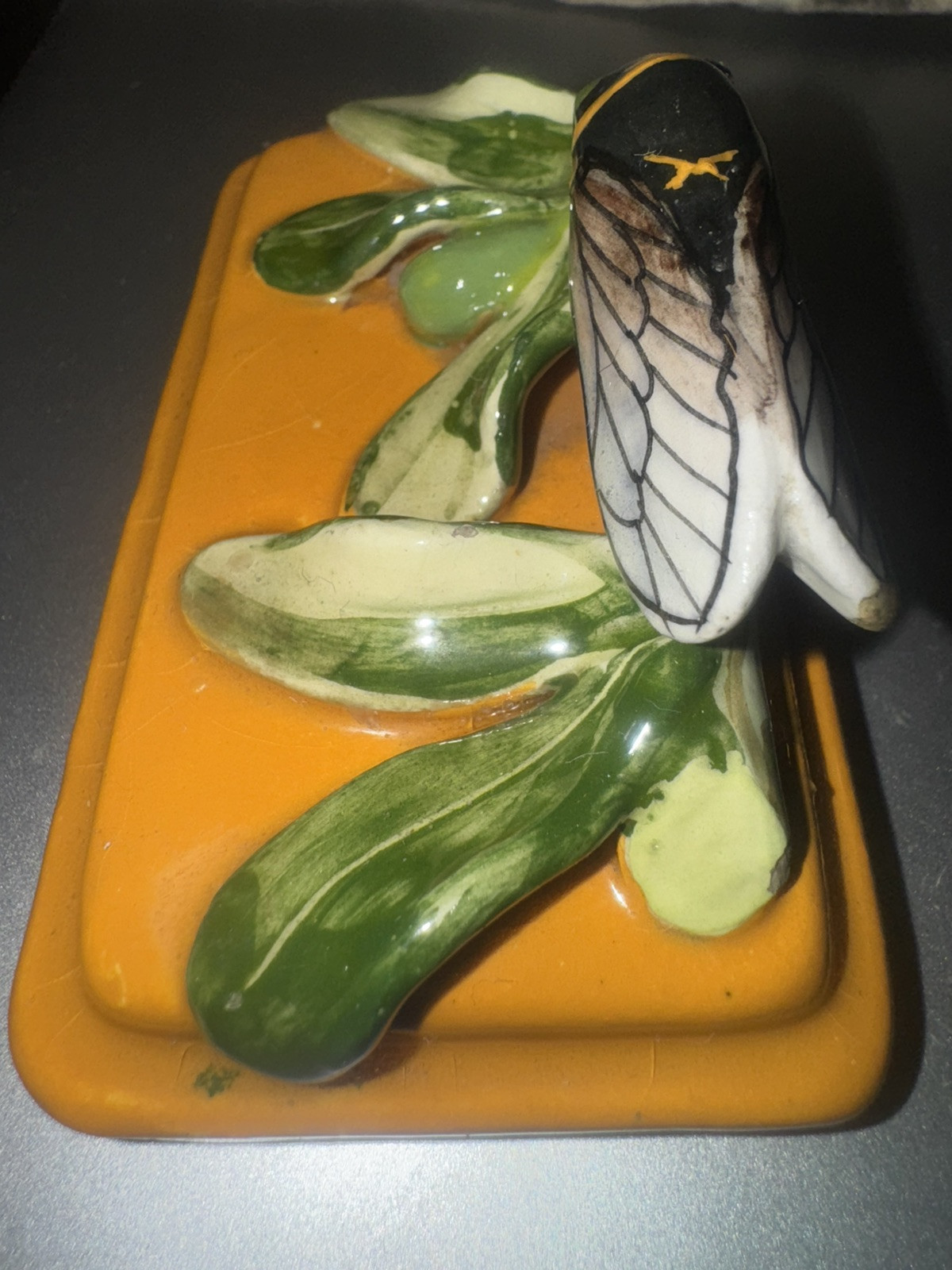
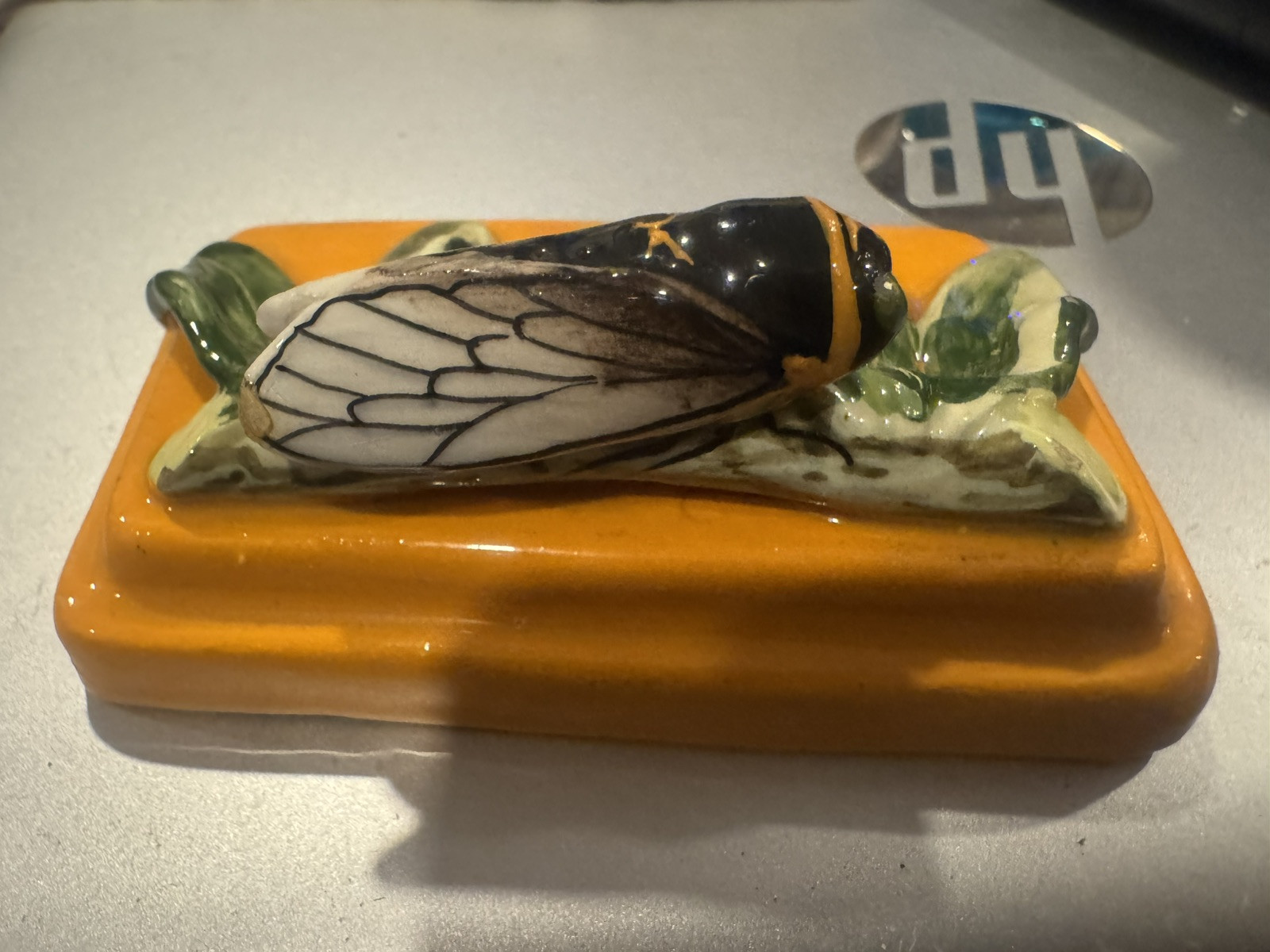
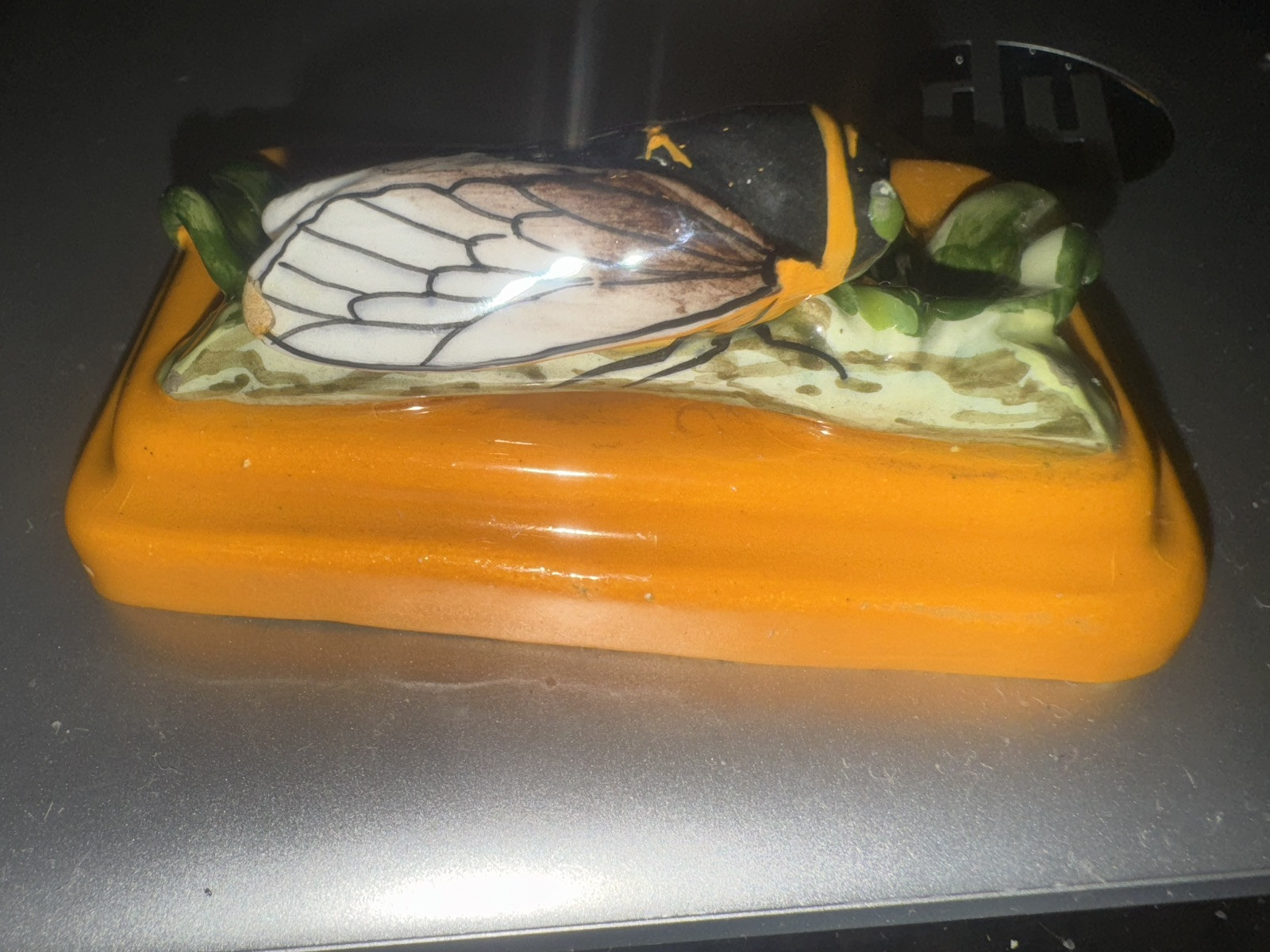
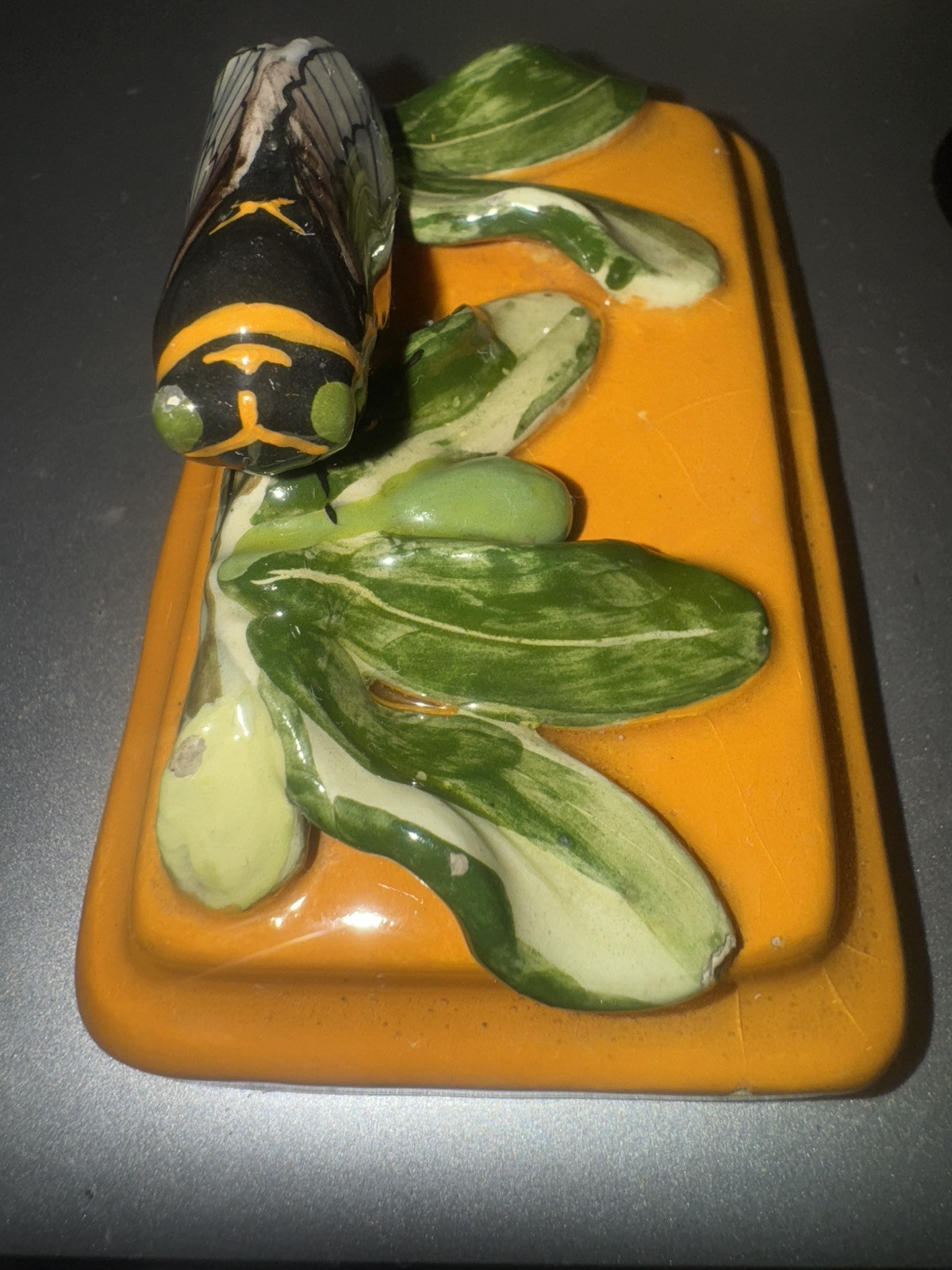
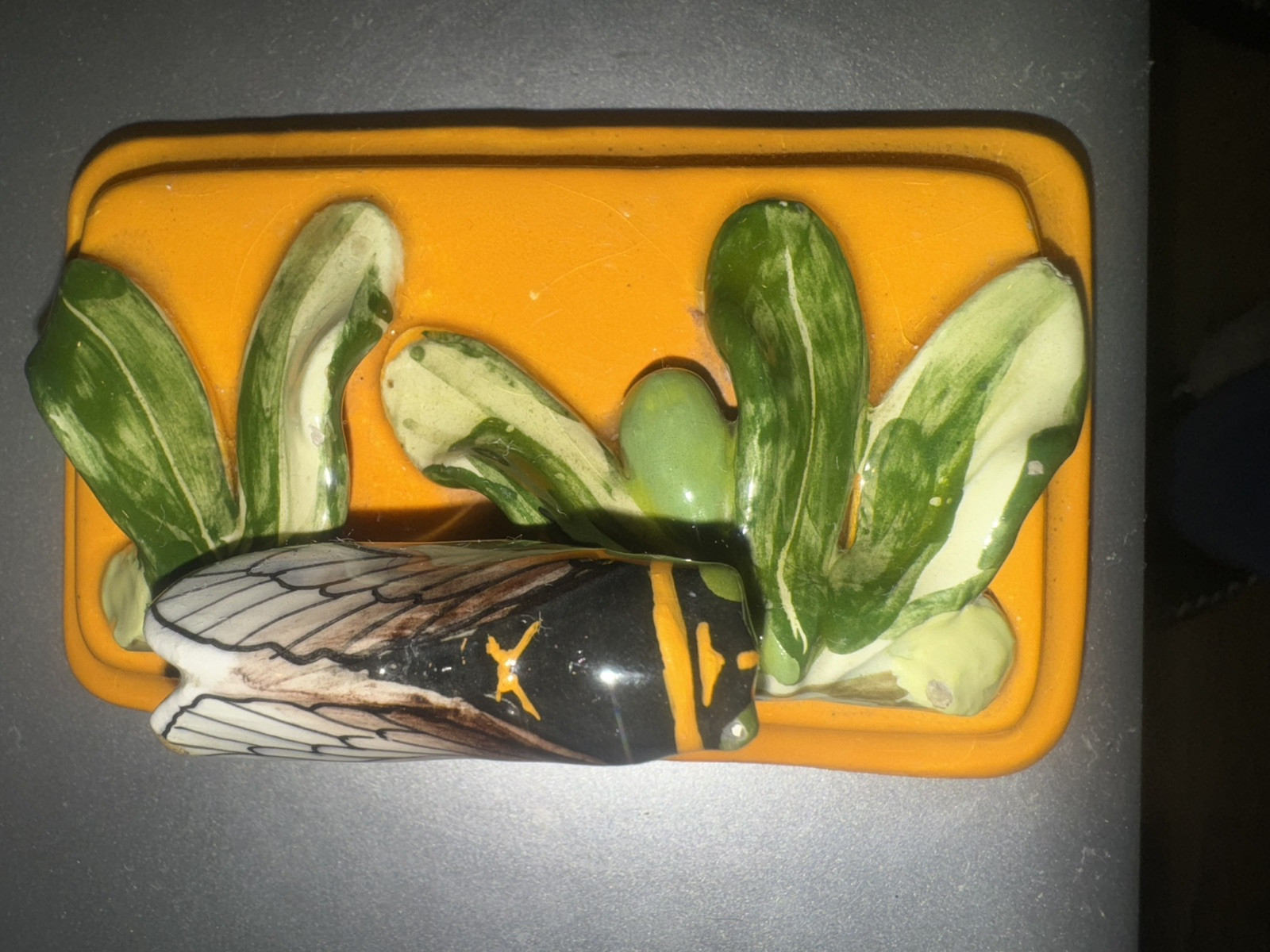
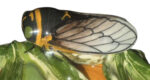
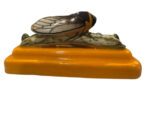
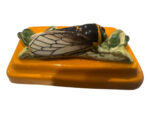
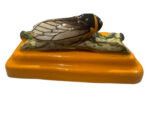
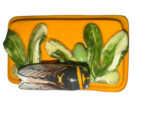
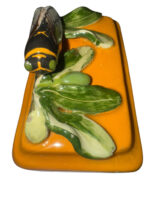
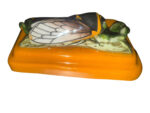
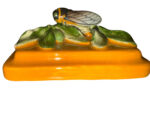
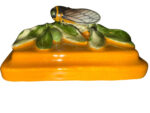
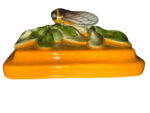
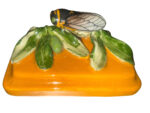
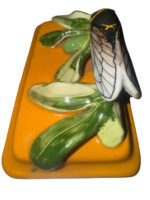
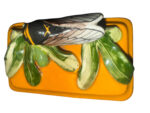
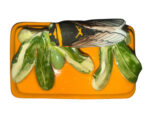
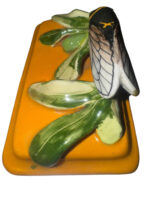
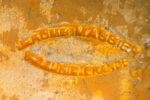
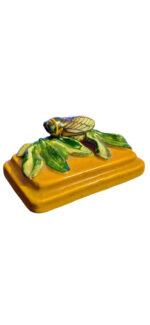
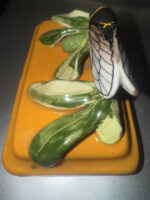
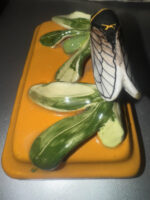
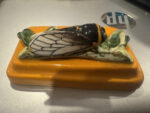
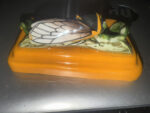
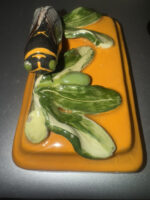
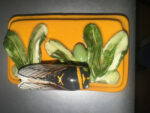
A remarkable example of French Art Nouveau ceramic design, this sculptural cicada is attributed to the celebrated Jérôme Massier Fils pottery of Vallauris, France, and dates to approximately the turn of the twentieth century, circa 1910.
Rather than treating nature as simple surface decoration, the artist transforms the insect itself into the subject and form of the object. The modeled cicada, with its pronounced body, wings, texture, and dimensional presence, captures one of the central ideas of Art Nouveau: the belief that the forms of the natural world could become art.
The result is at once whimsical, sculptural, and distinctly French.
Produced in glazed earthenware or majolica, the piece belongs to an important period in which the Massier family helped redefine the reputation of Vallauris pottery. What had historically been an important center for utilitarian ceramics became, during the late nineteenth and early twentieth centuries, a center for increasingly experimental artistic pottery.
The cicada is particularly appropriate to this tradition. Insects, flowers, leaves, birds, amphibians, and other natural forms appeared repeatedly in Art Nouveau design, where artists looked toward the living world for inspiration rather than simply repeating historical ornament.
Here, nature does not merely decorate the ceramic.
Nature becomes the ceramic.
Measurements
Please refer to the photographs for measurements and scale.
Condition
Condition is consistent with age and use. Please examine all photographs carefully, as they form an important part of the description and document the surface, glaze, modeling, marks, and condition of this antique ceramic.
Research & Historical Notes
The Massier Family and the Transformation of Vallauris
The name Massier occupies an important place in the history of French artistic ceramics.
The family’s pottery tradition in Vallauris stretches back generations, but during the second half of the nineteenth century the Massiers helped lead a dramatic transition from traditional utilitarian pottery toward ceramic objects conceived as works of decorative art.
Official histories from Vallauris identify Clément Massier, Delphin Massier, and Jérôme Massier Fils among the principal figures responsible for this transformation. Their workshops experimented with glazed earthenware, innovative color effects, metallic lustres, sculptural forms, and increasingly imaginative decoration.
By the turn of the twentieth century, Massier pottery could include vases, jardinières, architectural ceramics, decorative vessels, and naturalistically modeled animals and other sculptural forms.
That diversity became part of what made the Massier workshops so significant.
Who Was Jérôme Massier Fils?
The name can be confusing because there were multiple generations of Massier potters.
Jérôme Massier Fils was Jean-Baptiste Massier, born in 1850 and deceased in 1916. He was the son of the elder Jérôme Massier and worked within the family ceramic tradition at Vallauris.
He used the designation “Jérôme Massier Fils” to distinguish his production from that of his father.
Like his cousins Clément and Delphin, Jérôme Massier Fils participated in the development of artistic ceramics that helped establish Vallauris as one of France’s most recognizable pottery centers.
His work is particularly associated with glazed earthenware, polychrome decoration, naturalistic modeling, and forms influenced by the evolving decorative vocabulary of the late nineteenth century and Art Nouveau period.
Vallauris and the Birth of Artistic Ceramics
Vallauris, located on the French Riviera, possessed a pottery tradition long before Art Nouveau emerged.
The area’s clay resources supported a thriving production of practical cooking and household wares. During the nineteenth century, however, the local industry began to change.
The Massier family played a major role in that transition.
According to the town’s own ceramic history, the arrival of Italian potter Gaetano Gandolfi in the Massier workshop during the nineteenth century introduced new approaches to molding and glazed earthenware. Subsequent generations expanded those techniques and increasingly pursued decorative and artistic ceramics.
By the late nineteenth century, the workshops were experimenting with glaze chemistry, surface treatment, color, molded decoration, and sculptural pottery.
The Massiers were therefore not simply producing traditional pots with additional decoration. They were participating in a larger transformation in which ceramics could occupy the same aesthetic territory as sculpture, painting, glass, metalwork, and the decorative arts.
Art Nouveau and the Natural World
This cicada is an especially appealing object through the lens of Art Nouveau.
Art Nouveau developed during the late nineteenth century and reached its height around the turn of the twentieth century. Across France and Europe, designers moved away from rigid historical revival styles and sought inspiration in nature.
Flowers twisted into furniture.
Vines became architectural ornament.
Dragonflies appeared in jewelry.
Leaves became handles.
Insects, birds, aquatic creatures, and exotic plants entered glass, ceramics, metalwork, textiles, posters, and sculpture.
Artists were fascinated not simply by the appearance of nature but by its movement, irregularity, growth, and structure.
A cicada rendered as a three-dimensional ceramic object perfectly expresses that idea.
Rather than painting an insect onto an otherwise conventional vessel, the ceramicist allows the creature’s anatomy and silhouette to determine the visual impact of the work.
That distinction is crucial to understanding Art Nouveau.
The movement did not merely place pictures of nature onto objects.
It frequently allowed nature to determine the object itself.
The Cicada in Southern French Culture
The cicada also has a particular resonance in southern France and Provence, where the insect is closely associated with summer, warmth, and Mediterranean life.
Its unmistakable song is part of the sensory landscape of southern France, making the cicada a particularly appropriate subject for pottery produced at Vallauris on the Côte d’Azur.
Within decorative arts, the cicada could therefore operate on several levels at once: as a naturalistic subject, as an Art Nouveau motif, and as an emblem of the Mediterranean environment in which the Massier workshops worked.
This connection between regional identity and natural form makes cicada ceramics especially evocative examples of French decorative art.
Majolica, Barbotine and Glazed Earthenware
Massier pottery is often described using terms including majolica, barbotine, faïence émaillée, and glazed earthenware.
Majolica generally refers to earthenware covered with colorful opaque or translucent glazes that emphasize modeled relief and sculptural detail.
In France, the related term barbotine is frequently associated with molded or relief-decorated earthenware and highly naturalistic ceramic forms.
The Massier workshops became particularly well known for experimentation with glaze and color. Their production ranged from richly colored naturalistic majolica to sophisticated metallic lustre surfaces.
The Majolica International Society describes Massier ceramics as an important bridge between nineteenth-century majolica and the developing Art Nouveau aesthetic, emphasizing the family’s use of vivid glaze colors and naturalistically modeled forms.
Why the Massiers Matter
The importance of the Massier family extends beyond the beauty of individual objects.
Their work represents a moment when pottery was being reconsidered as an artistic medium.
Instead of separating the potter from the artist, the late nineteenth-century art pottery movement increasingly blurred the boundary between craftsmanship and fine art.
The Massiers surrounded themselves with painters, sculptors, modelers, and designers while continually experimenting with glaze, color, and form. Their workshops also participated in international exhibitions and marketed their ceramics to the increasingly cosmopolitan population visiting the French Riviera.
That combination of traditional craftsmanship, artistic experimentation, international exposure, and modern marketing helped establish Vallauris as a major name in decorative ceramics.
Decades later, Vallauris would experience another extraordinary artistic renaissance with the arrival of Pablo Picasso in the late 1940s.
But the foundations of Vallauris as a center for art pottery rather than simply utilitarian pottery had been established much earlier, and the Massier family was central to that story.
A Small Sculpture With a Larger Story
This Jérôme Massier Fils cicada embodies many of the qualities that make turn-of-the-century French ceramics so compelling.
It is playful yet sophisticated.
Naturalistic yet stylized.
Decorative yet sculptural.
Most importantly, it illustrates the fundamental Art Nouveau idea that beauty did not need to be confined to painting or traditional sculpture.
An insect, a flower, a lamp, a bowl, or a household object could become an opportunity for artistic expression.
More than a century later, this wonderfully modeled cicada still captures that philosophy.
It is not simply a piece of pottery decorated with nature.
Nature is the design.
Closing
Thank you for visiting Art & Beautiful Things, where we enjoy finding and preserving beautiful pieces from the past. We invite you to explore our collection and The Museum for additional examples of historic art, ceramics, glass, and decorative objects whose stories deserve to be preserved.
 (248) 617-7717
 mona@artandbeautifulthings.com