- 80s
- Art
- Abstract
- Art Deco
- Atomic
- Brutalist
- Ceramics & Pottery
- China & Porcelain
- Collectibles
- Decor
- Delightfully Kitschy
- Fashion
- Folk
- Fun
- Furniture
- Glass
- Gothic
- Holiday
- Historical Significance
- Hollywood Regency
- Industrial
- Kitchen
- Lighting
- Metal
- Mid Century
- Mid Century Modern
- Modern
- Off The Wall
- Old World
- Pop Art
- Primitive
- Rustic
- Salvage
- The Beauty Of Asia
- The Beauty of All Europe
- The Beauty of Canada
- The Beauty of France
- The Beauty of Italy
- The Beauty of Scandinavia
- The Beauty of the UK
- The Classics
- Whimsical
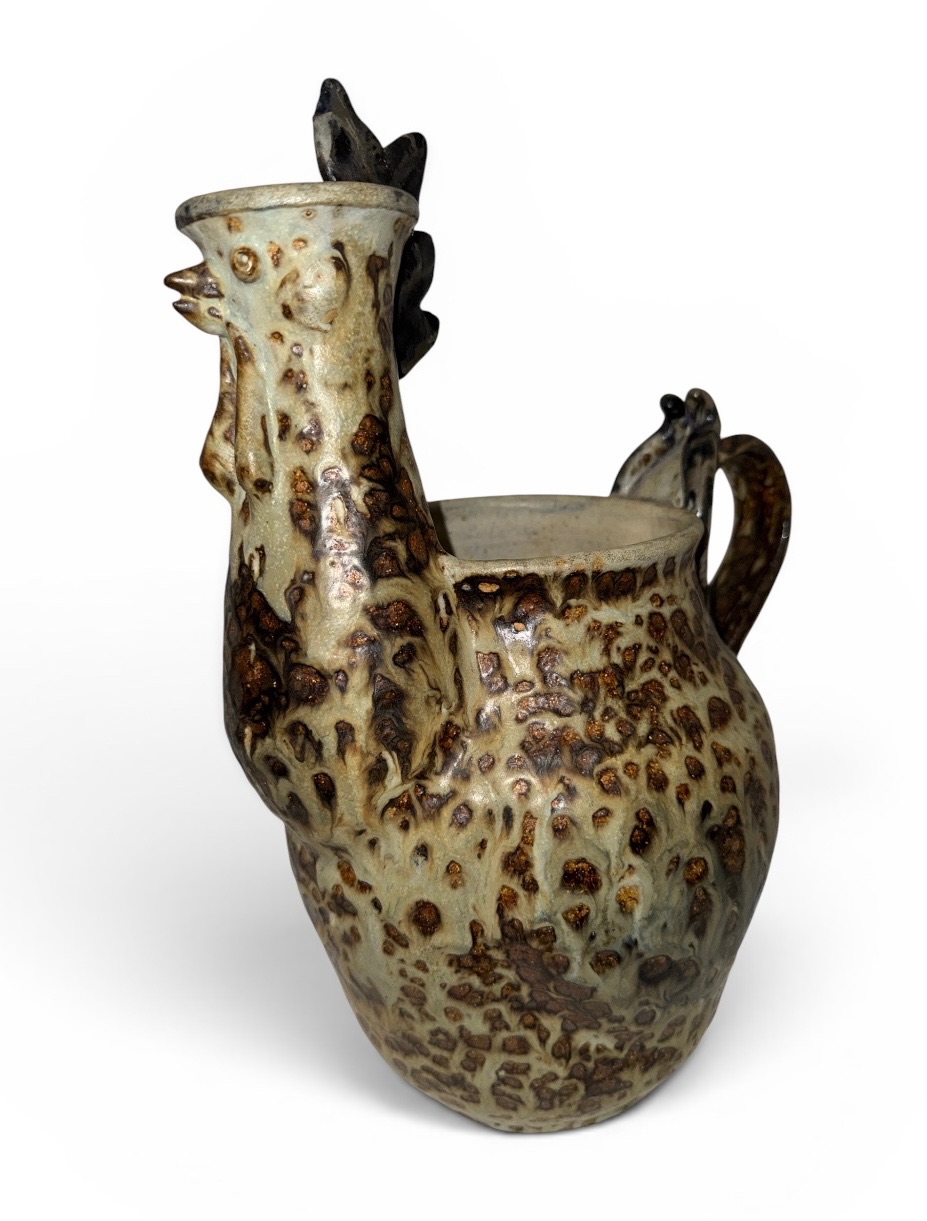
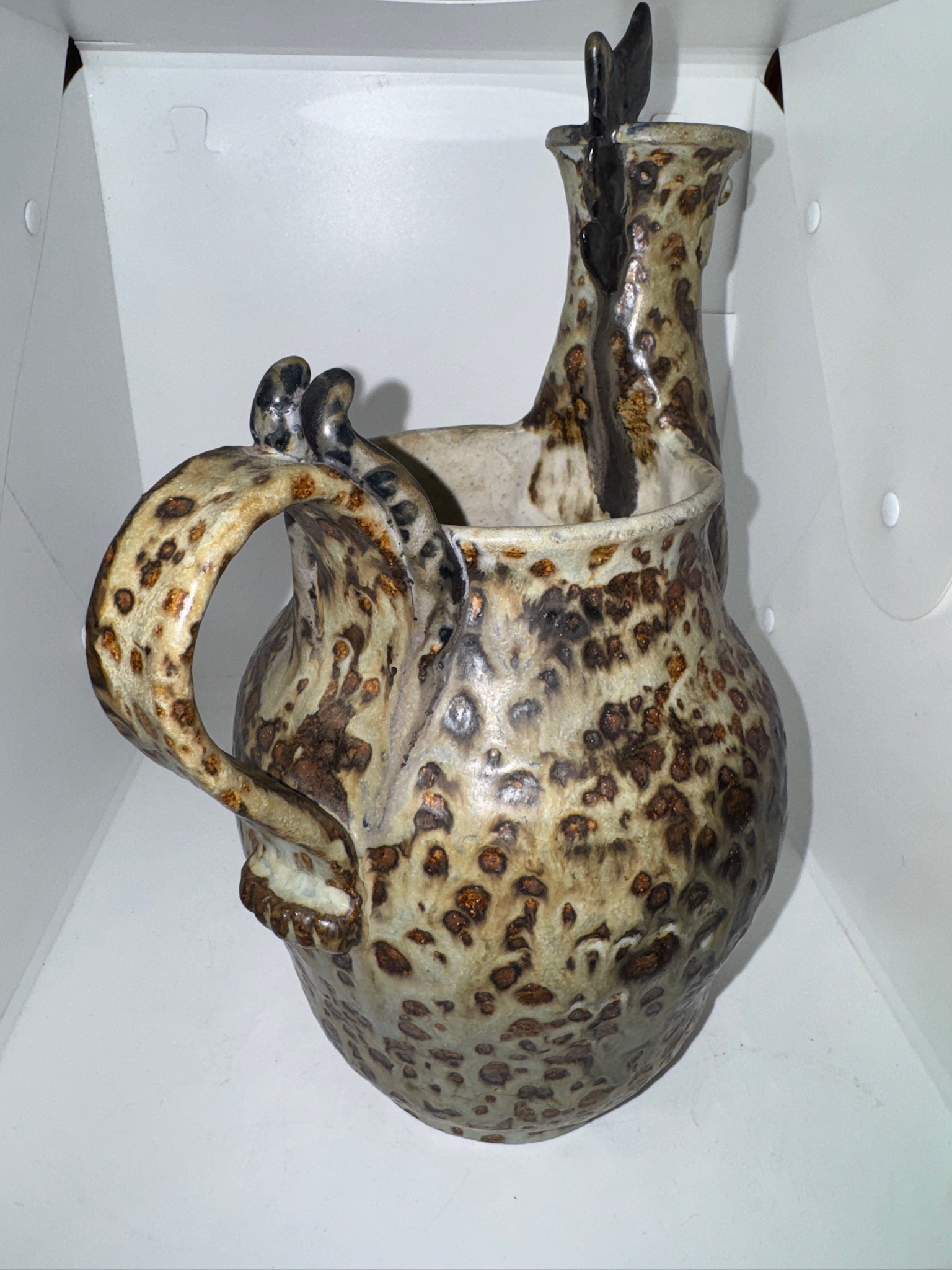
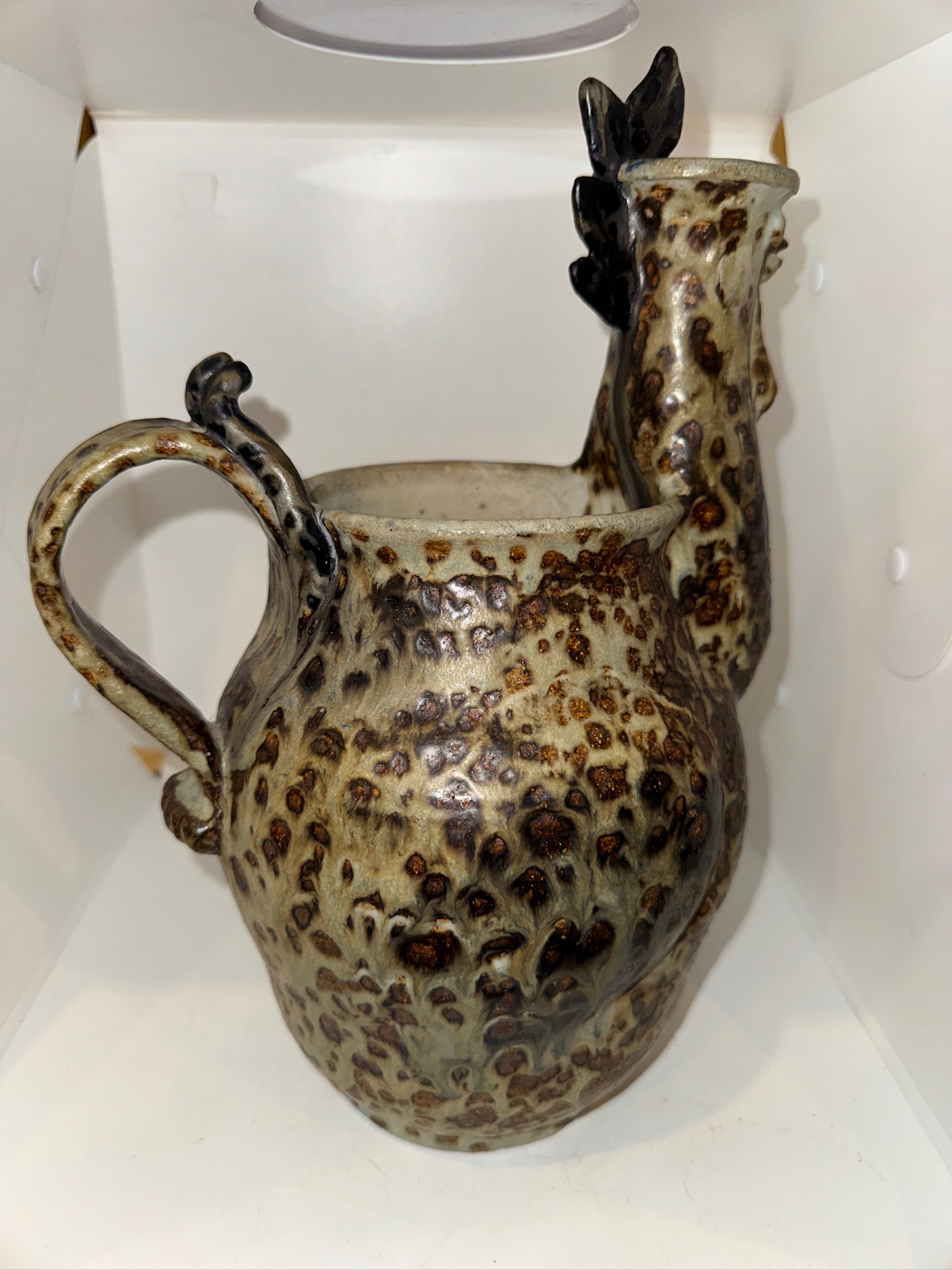
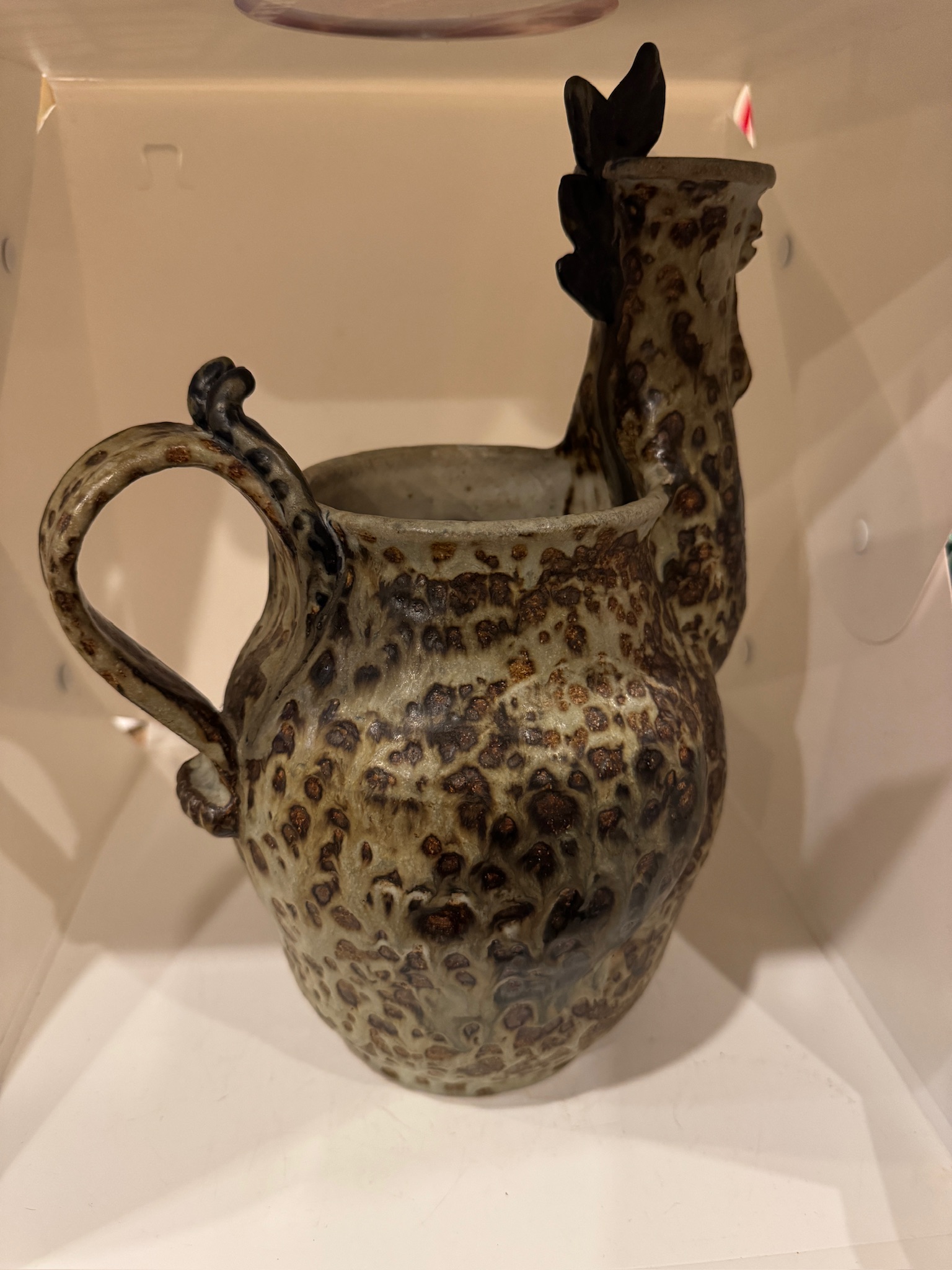
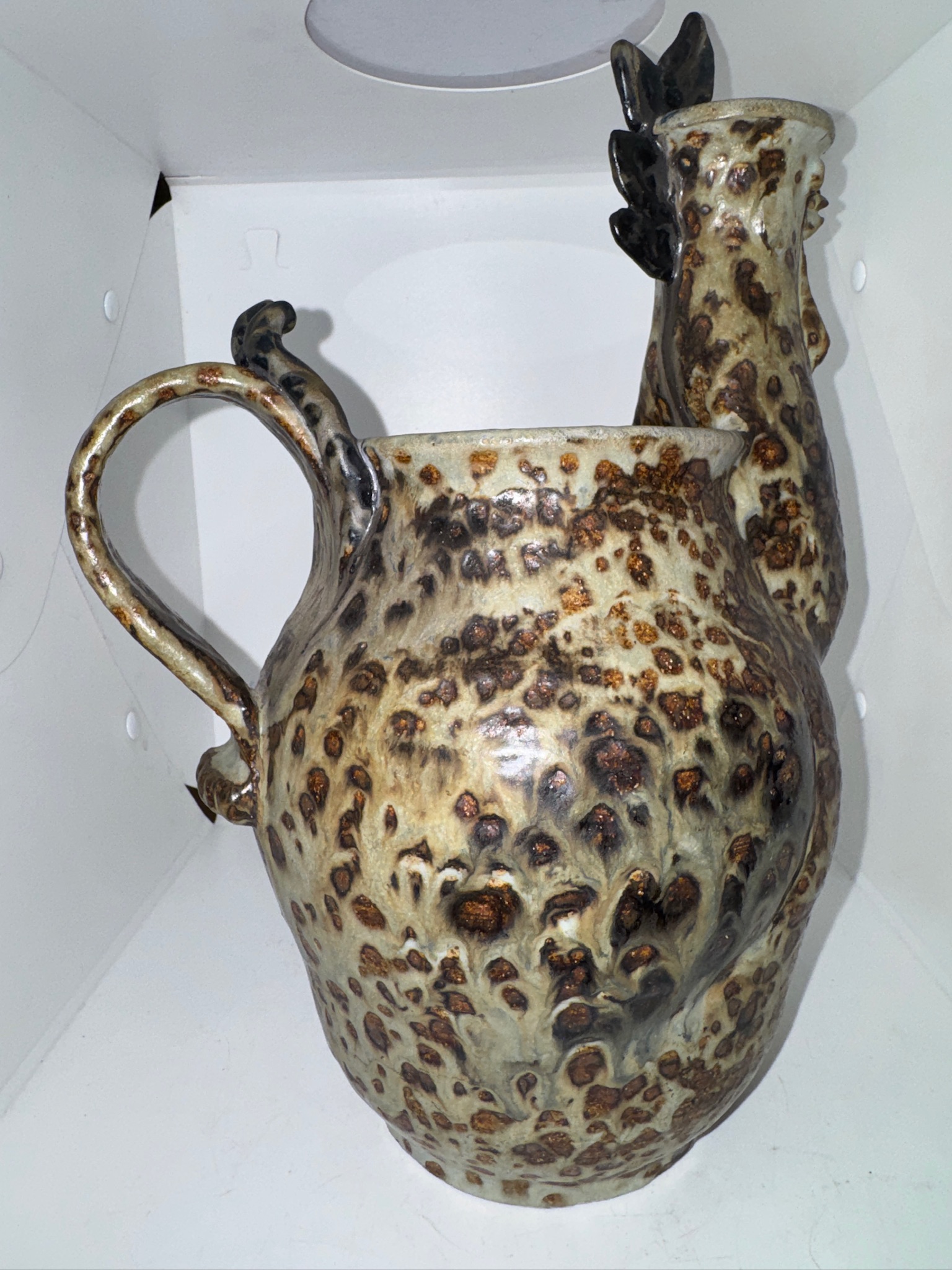
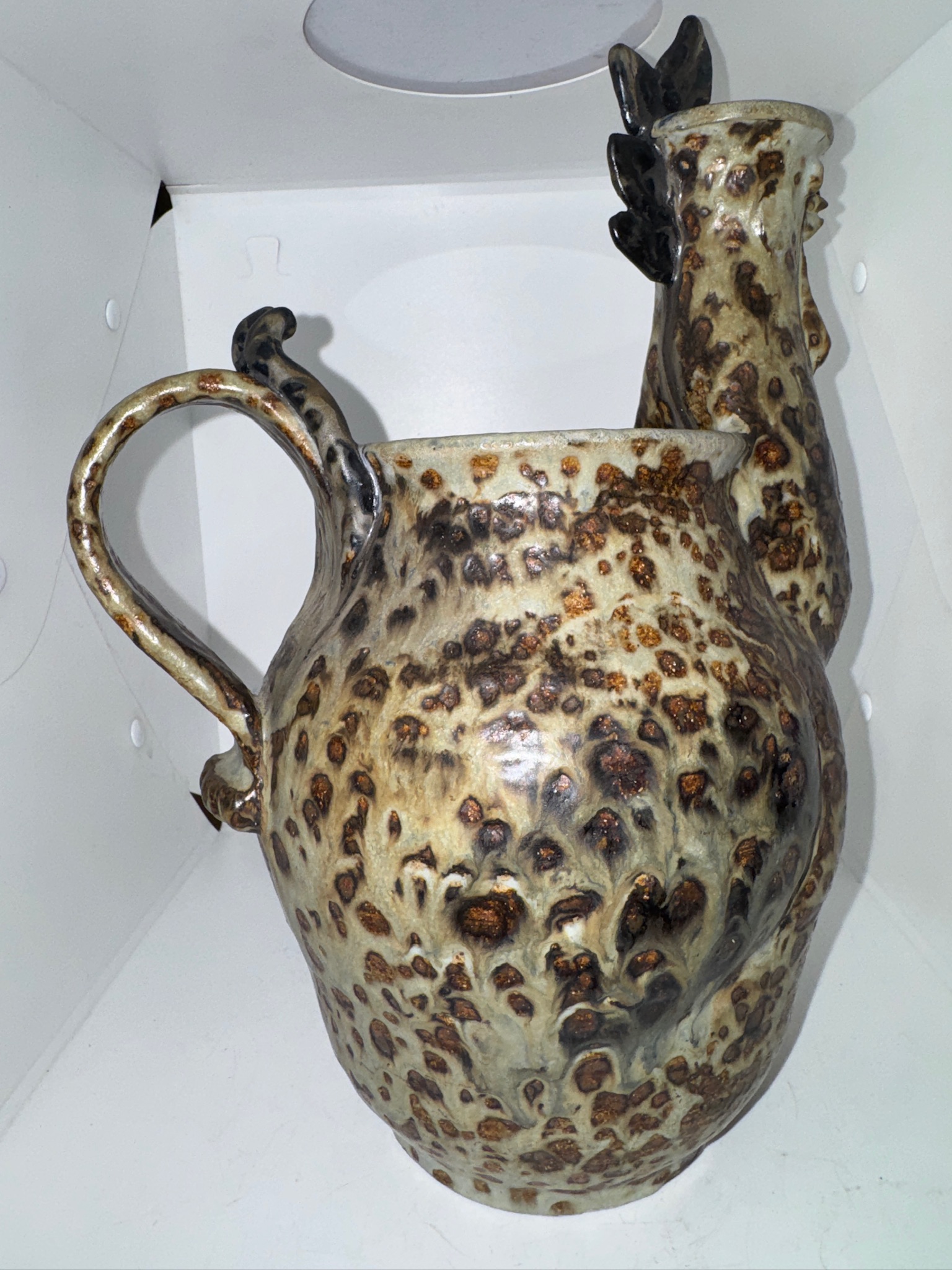
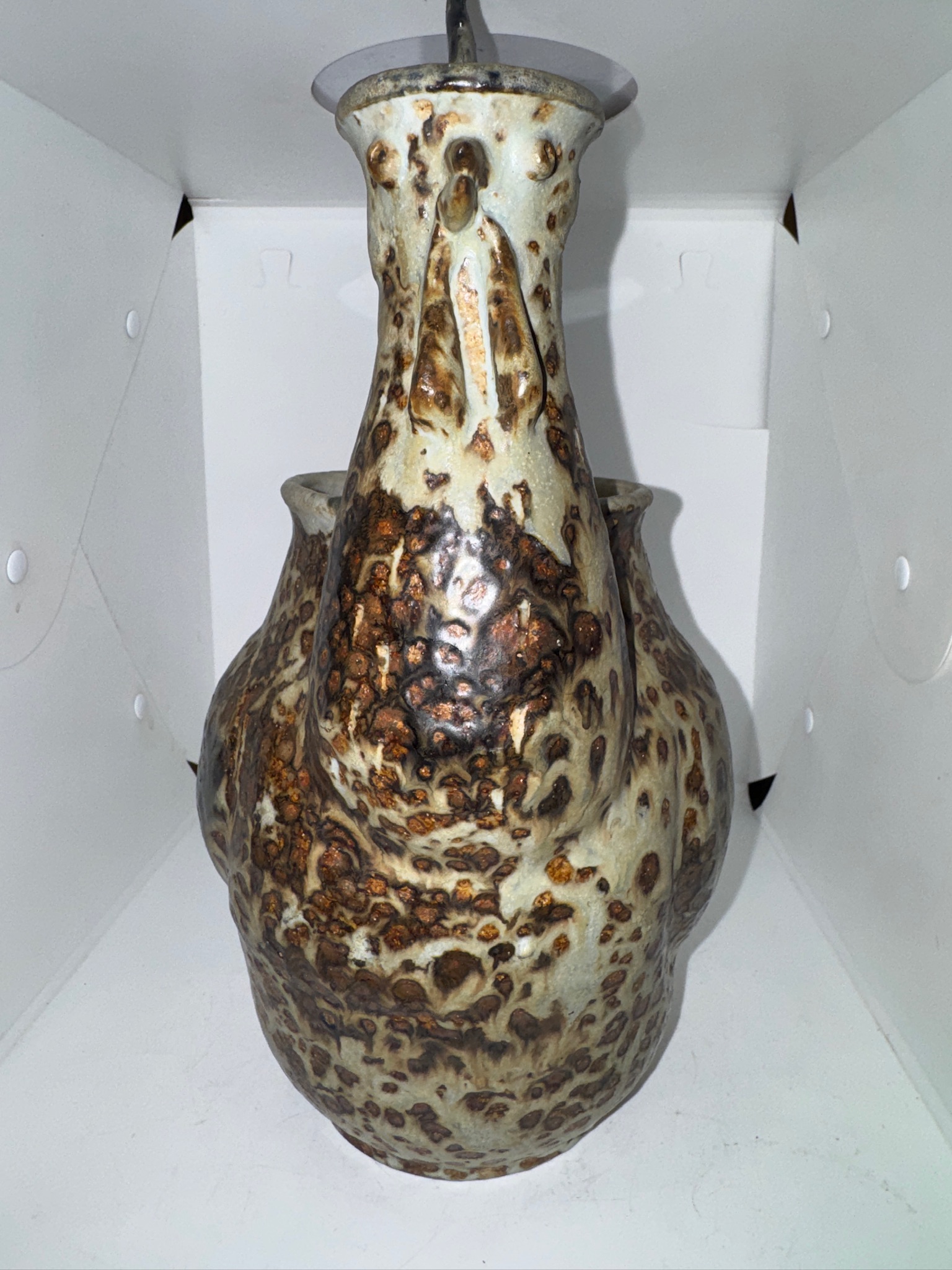
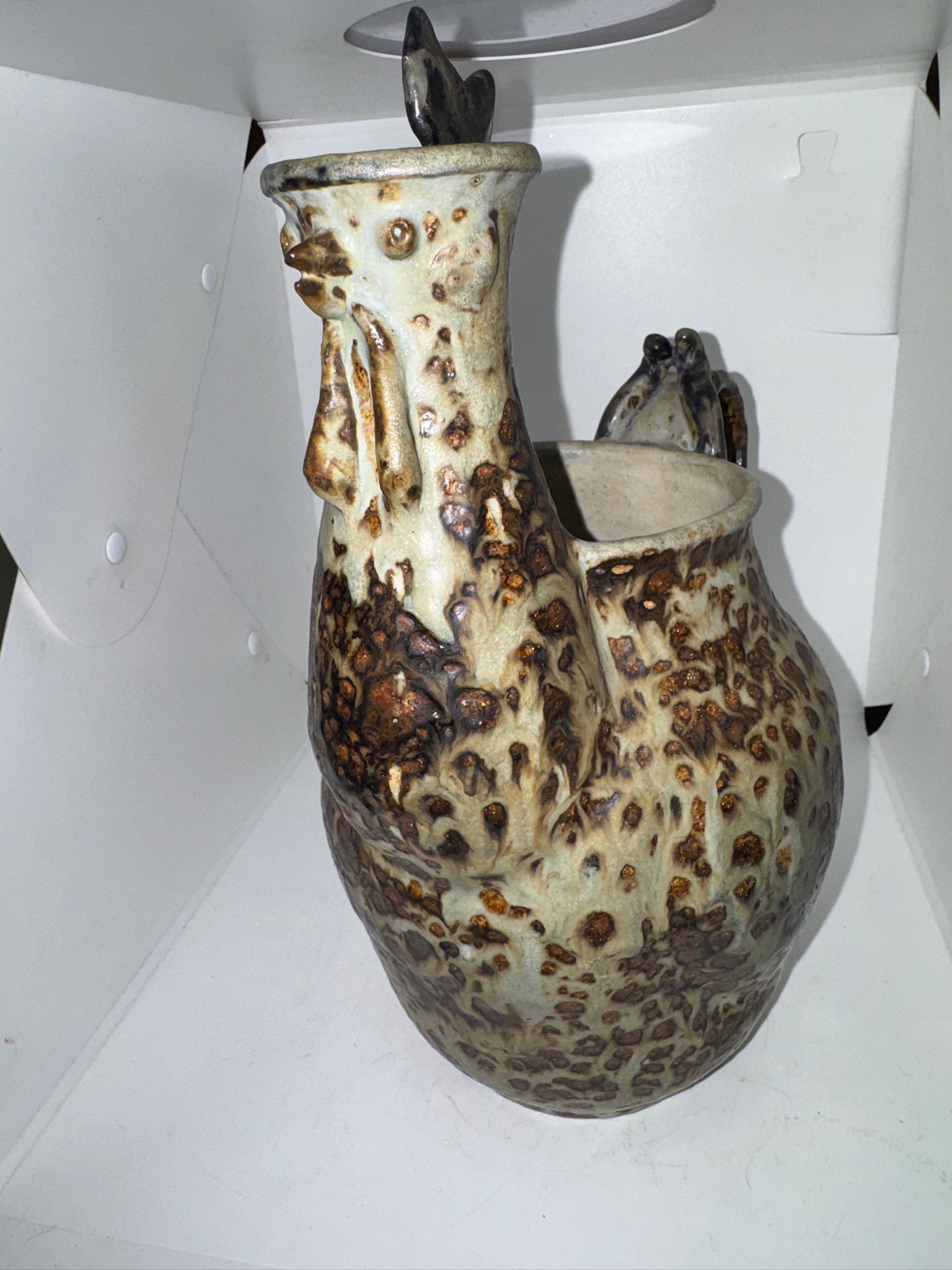
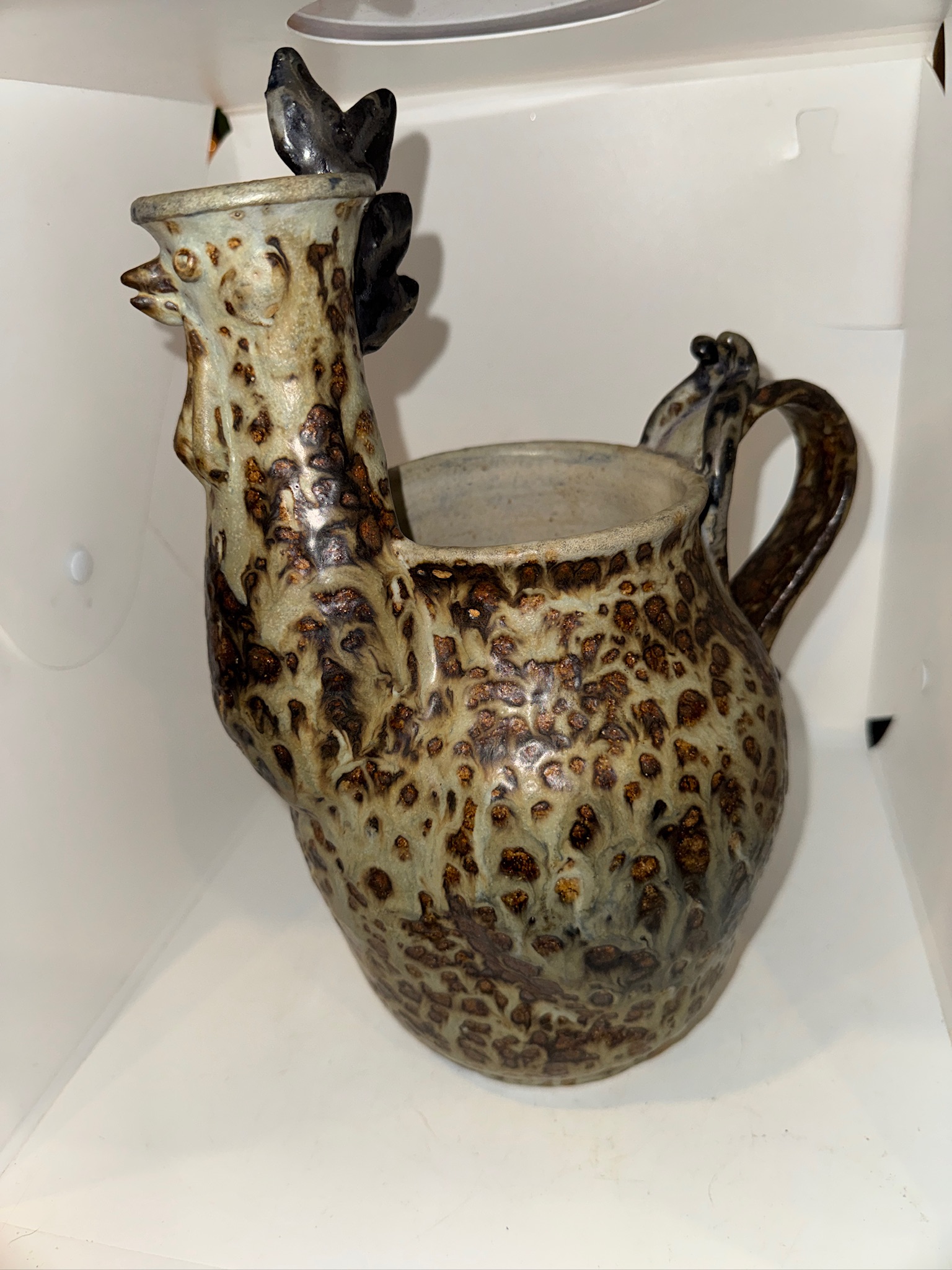
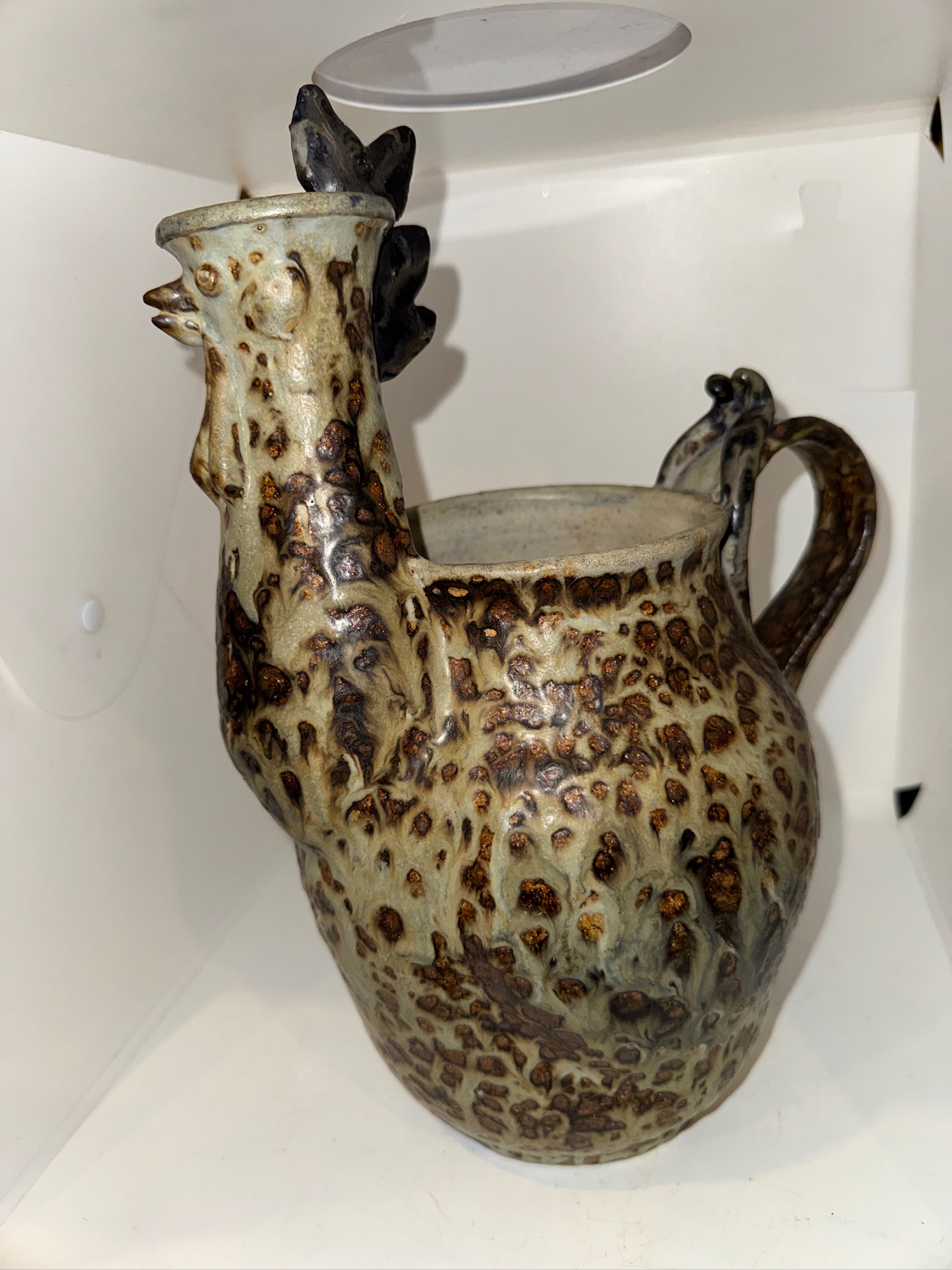
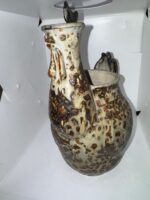
Few decorative arts objects capture the intersection of sculpture, craftsmanship, and functionality quite like studio pottery. This signed Lazlo Steiner rooster pitcher stands as a wonderful example of the artistic freedom and individuality that helped define the studio pottery movement during the twentieth century. Combining expressive figural design, richly textured glazing, and handcrafted ceramic artistry, the piece functions equally well as a decorative sculpture and a collectible work of ceramic art.

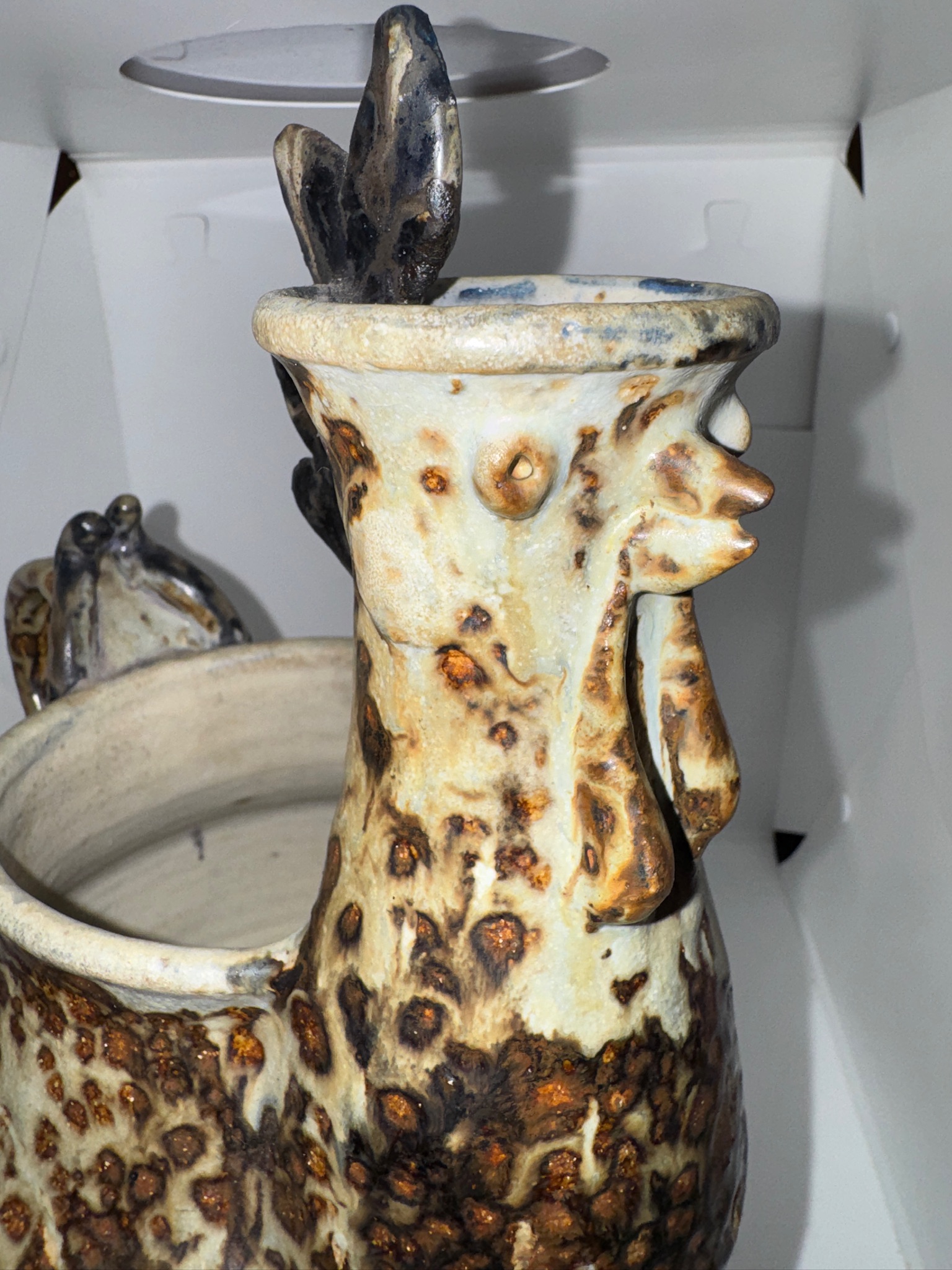
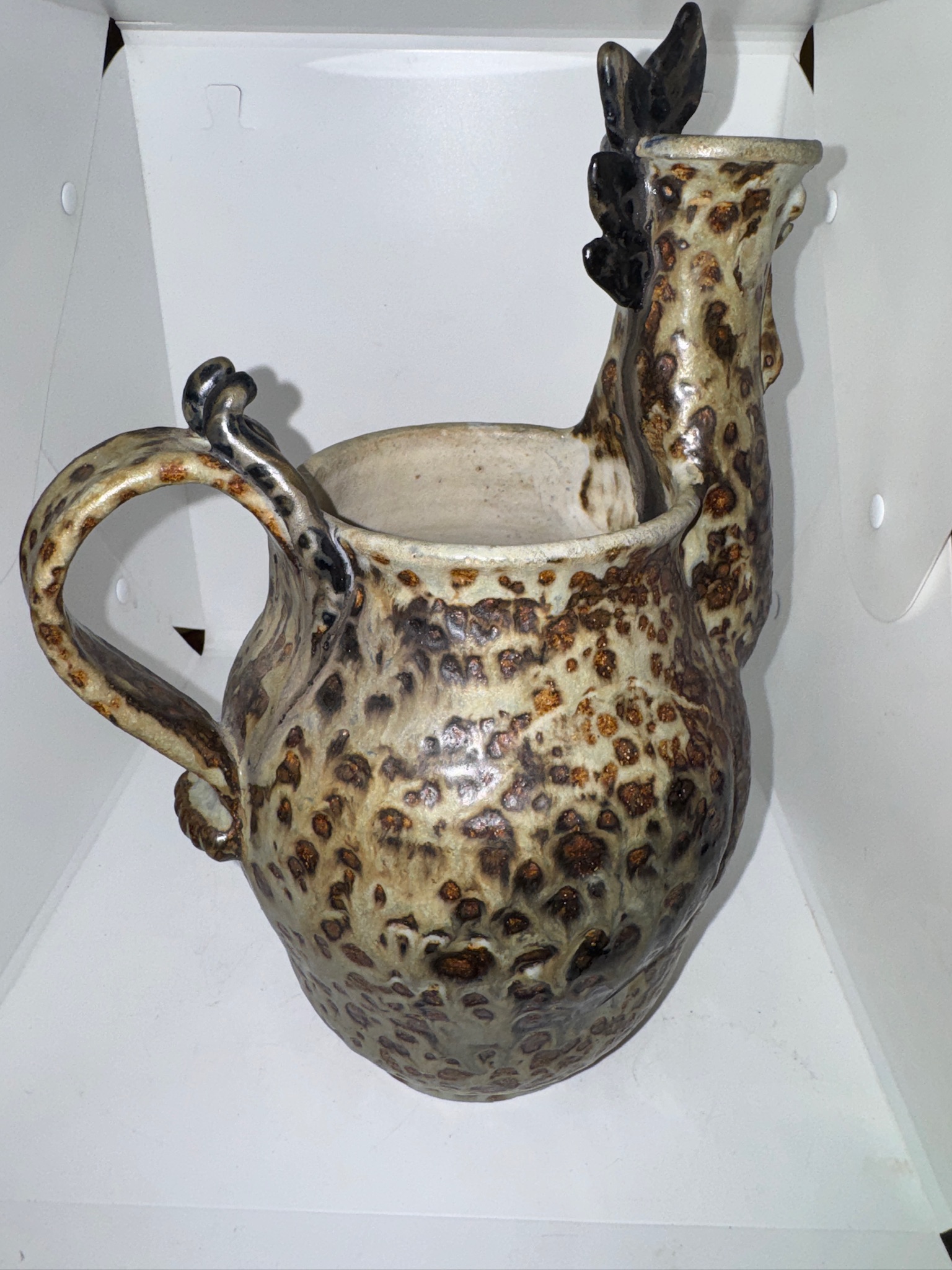
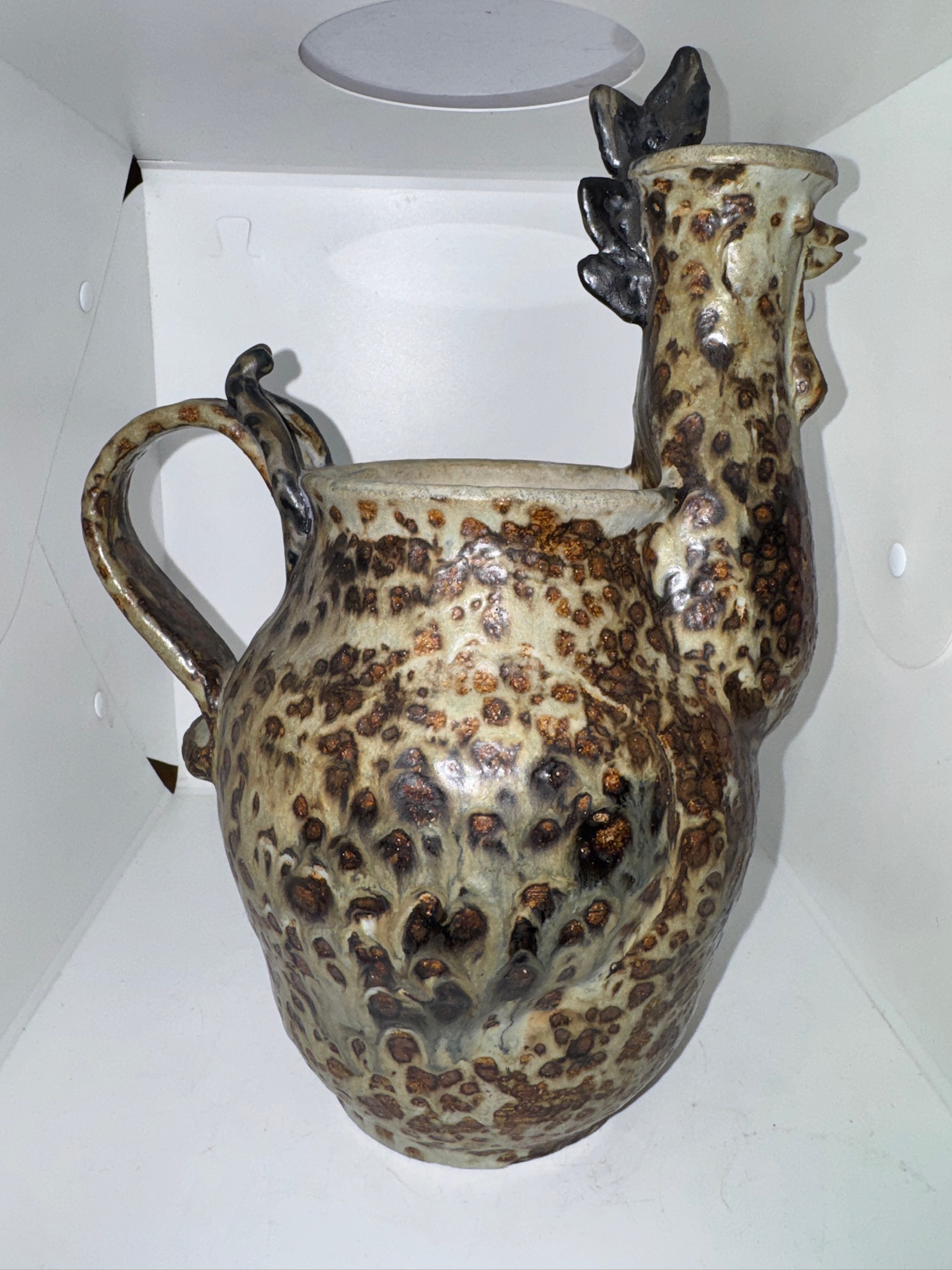
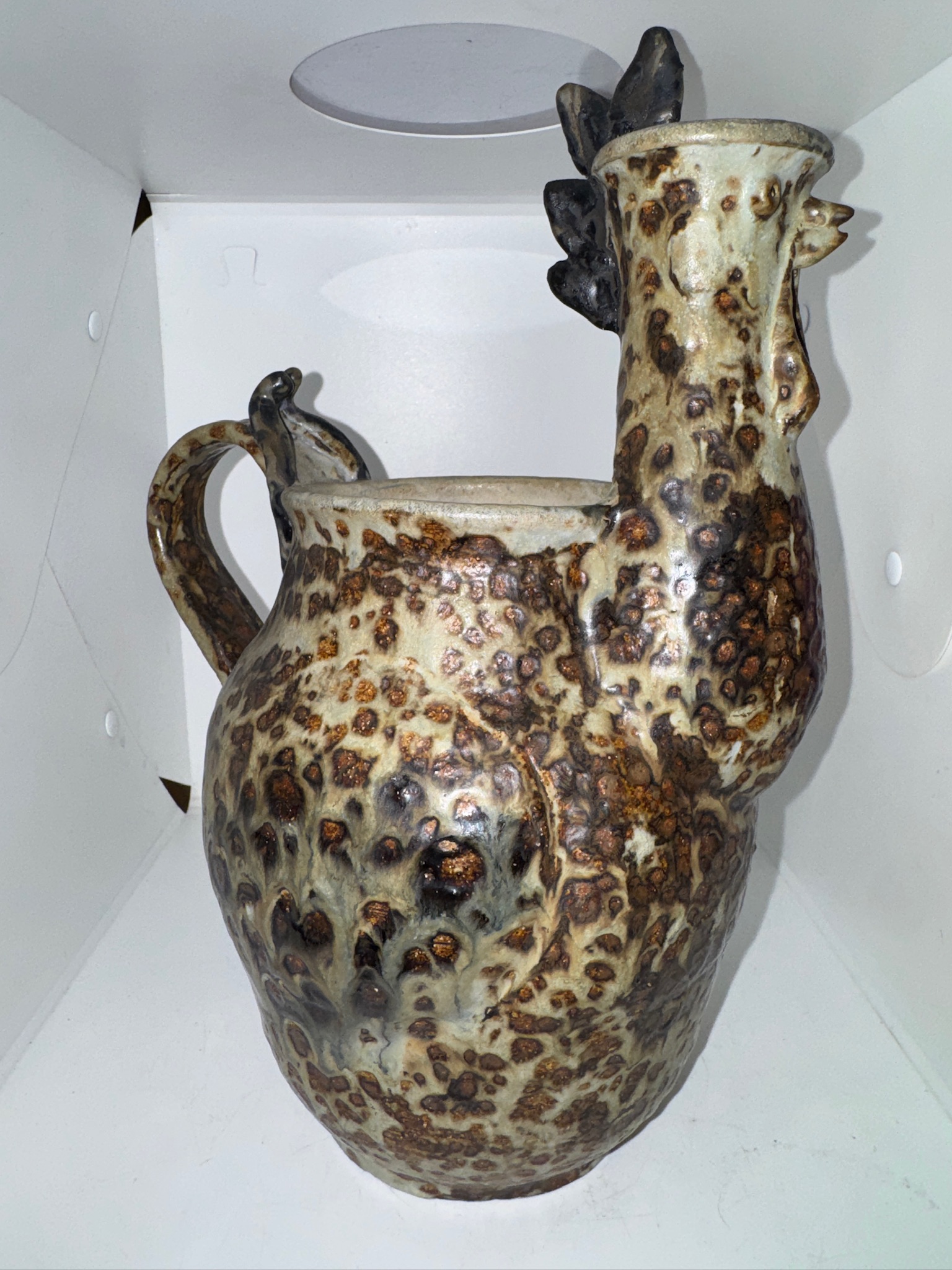
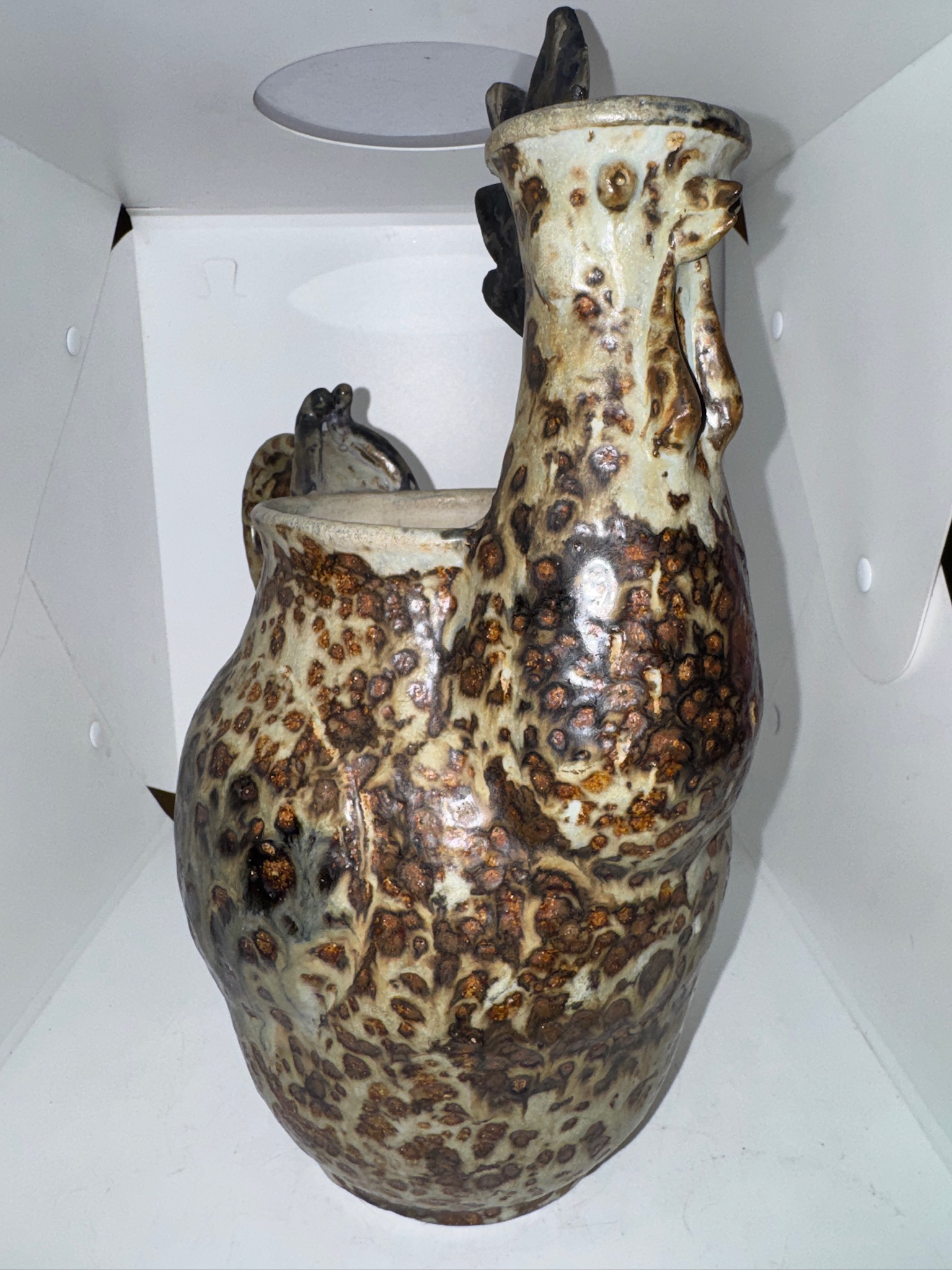
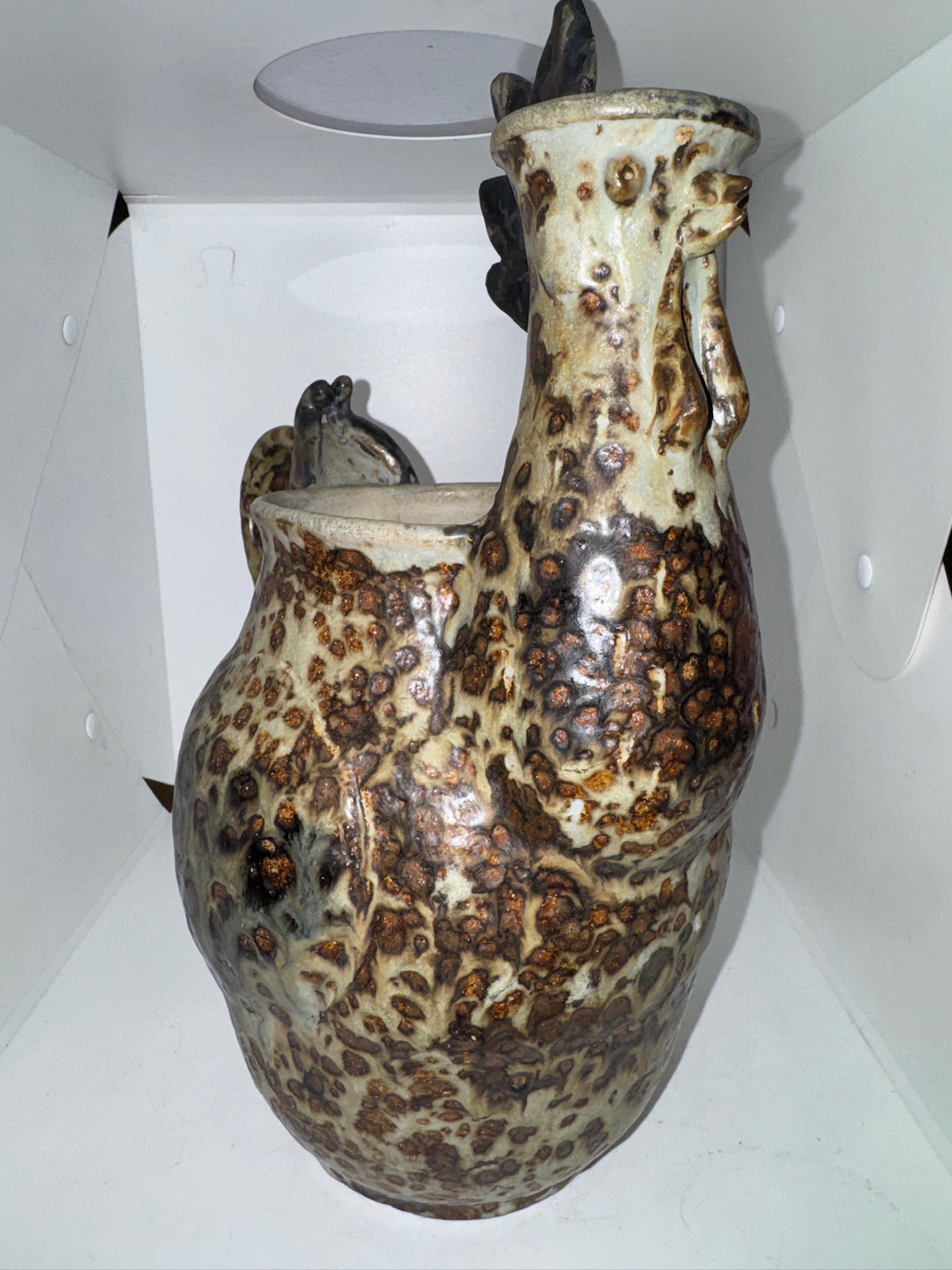
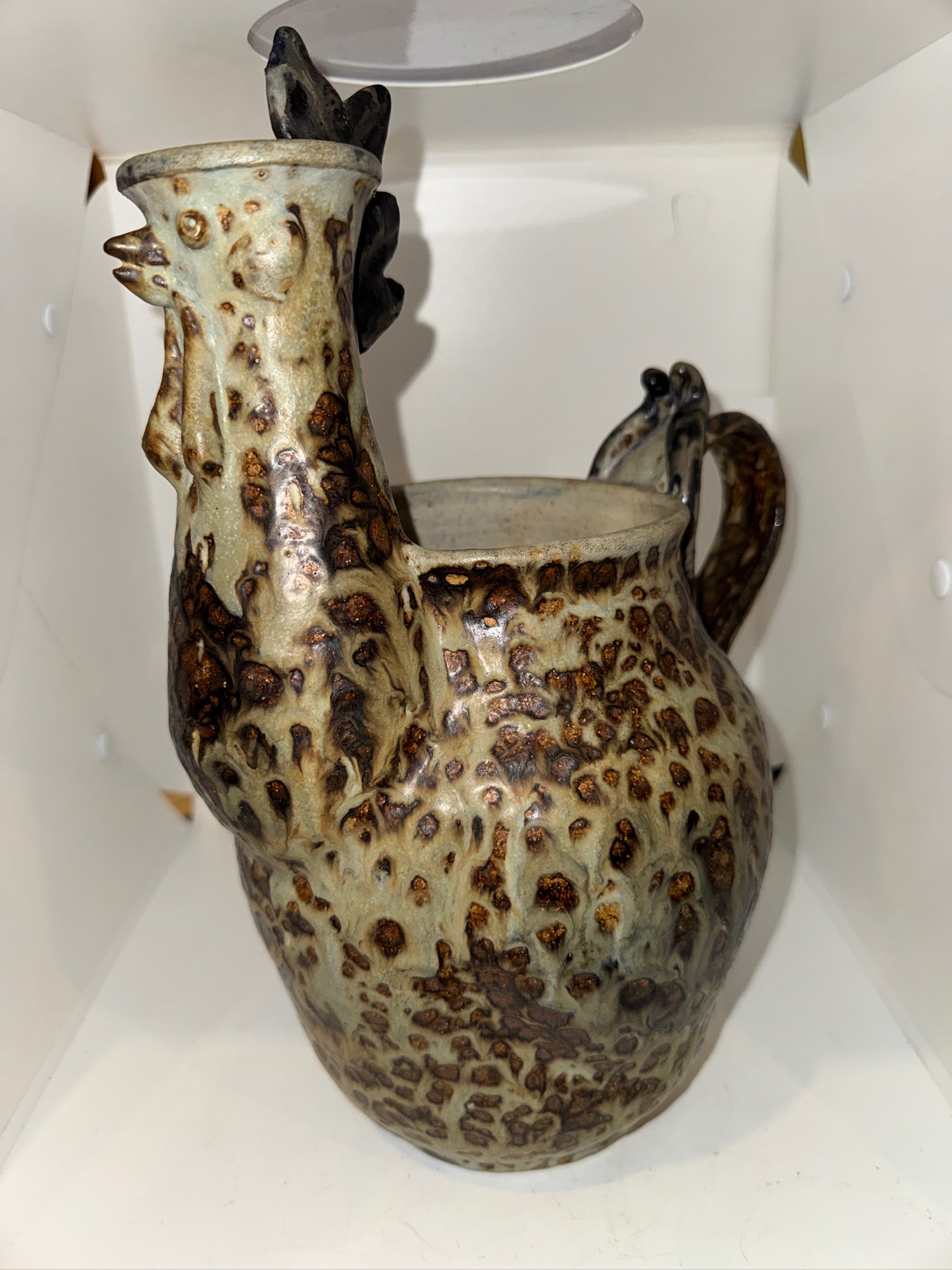
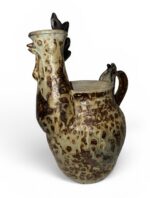
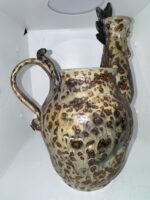
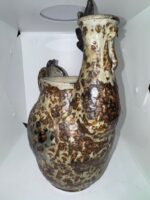
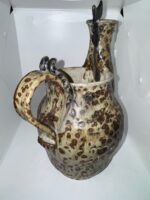
At approximately 12 inches tall, the pitcher immediately commands attention through its striking silhouette. The vessel transforms a traditional utilitarian form into something far more imaginative, with an elongated neck terminating in a stylized rooster head while sculptural tail feathers rise dramatically from the rear. The result is a vessel that feels alive with personality and movement while maintaining the balanced proportions necessary for practical use.
Artist / Maker History
Lazlo Steiner is known among collectors of studio pottery for creating highly distinctive handmade ceramic works that blend artistic expression with traditional craftsmanship. Like many studio potters of the twentieth century, Steiner embraced the philosophy that everyday objects could be elevated into works of art through thoughtful design, skilled execution, and an intimate understanding of clay and glaze.
The studio pottery movement emerged as a response to increasing industrialization and mass production. Rather than producing identical factory-made wares, studio potters sought to create unique objects that reflected the hand and vision of the individual maker. This emphasis on artistry, experimentation, and craftsmanship helped establish studio ceramics as a respected category within the decorative arts.
Collectors continue to appreciate signed studio pottery because each piece represents a singular artistic statement. Variations in form, glazing, firing conditions, and surface treatment ensure that no two examples are exactly alike. Works by recognized studio potters such as Steiner remain highly sought after by collectors who value authenticity, individuality, and handcrafted quality.
About the Piece
This exceptional rooster pitcher beautifully showcases the qualities that have made studio pottery enduringly popular among collectors and interior designers alike.
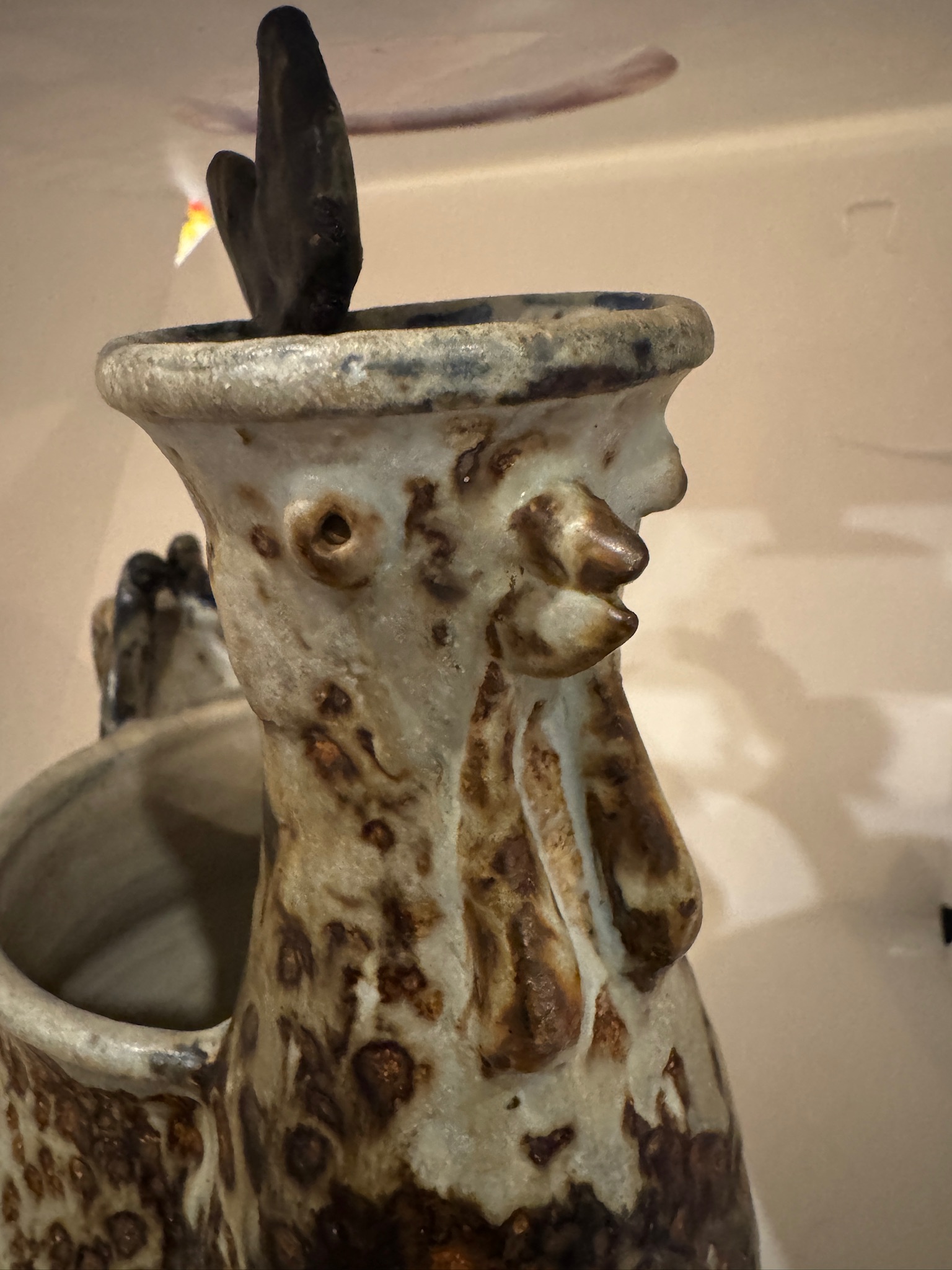
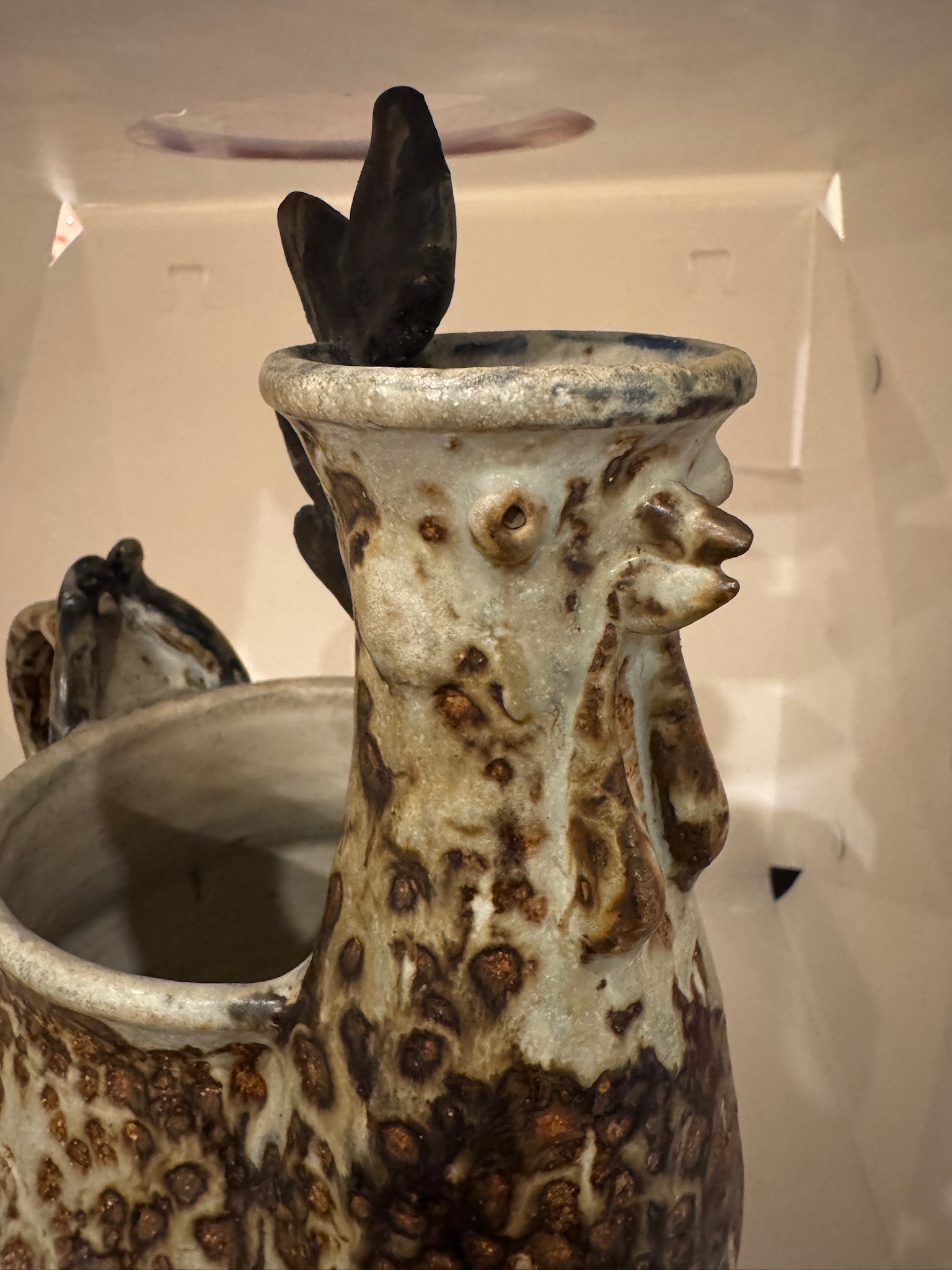
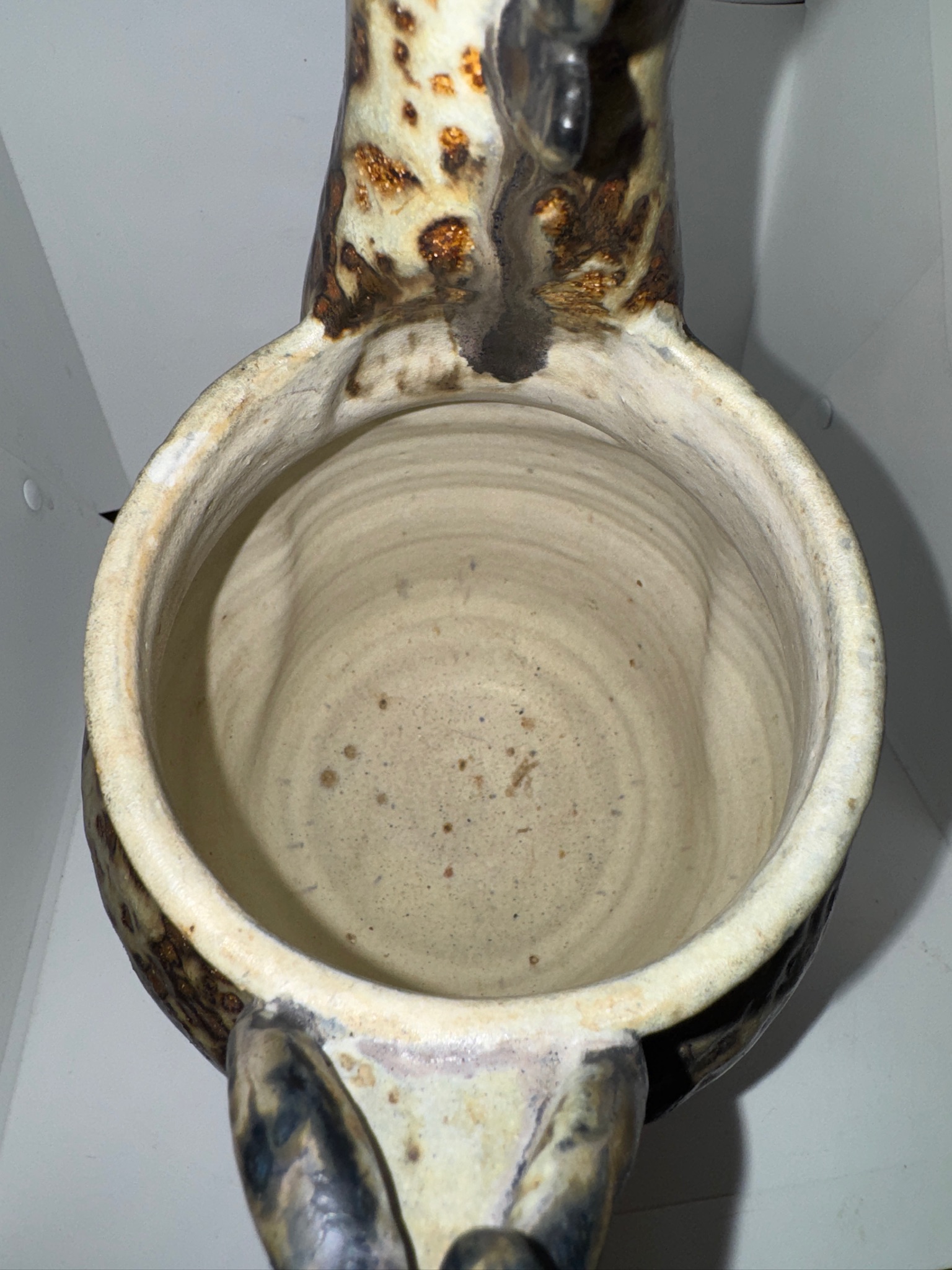
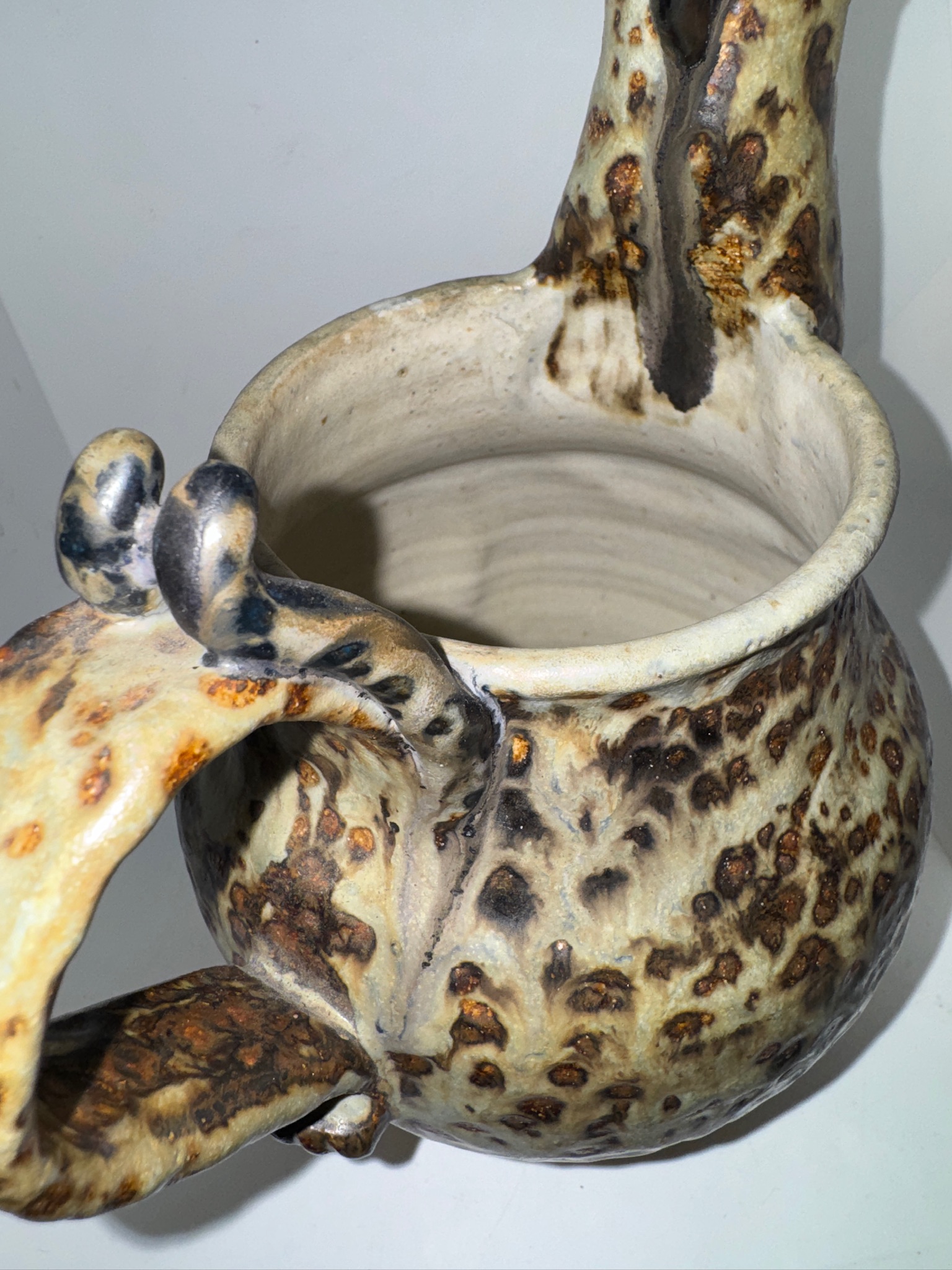
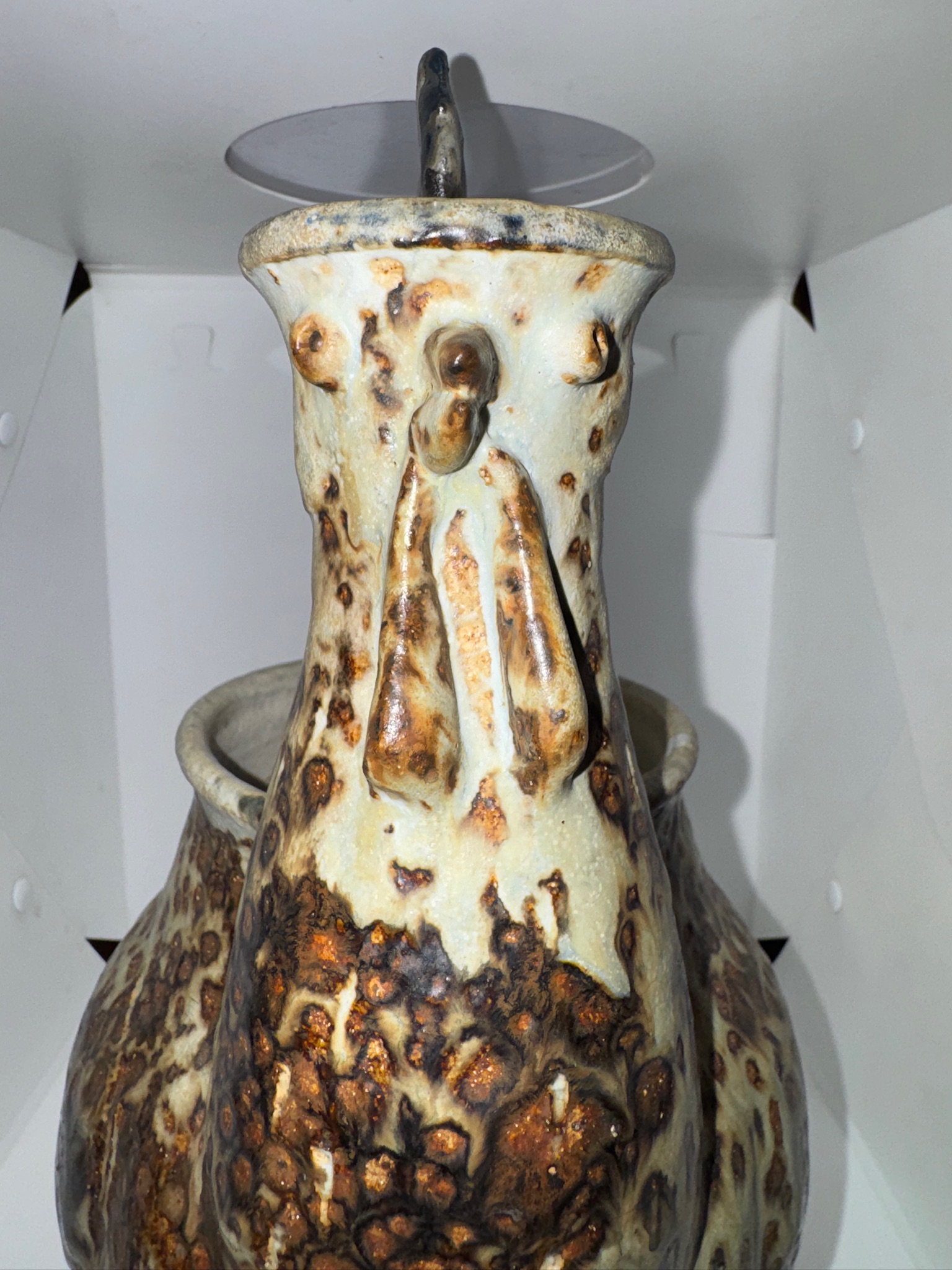
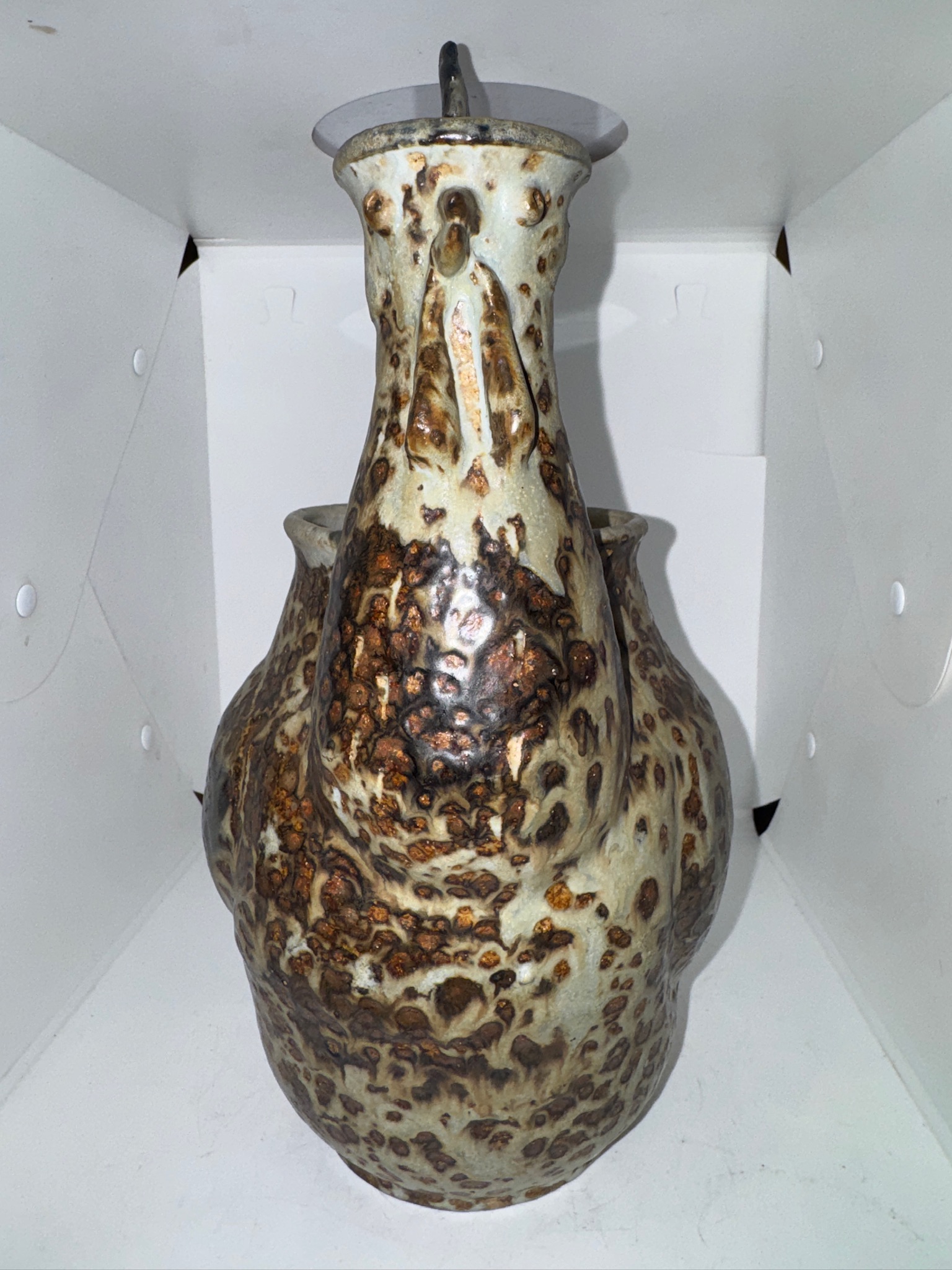
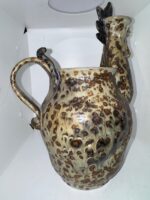
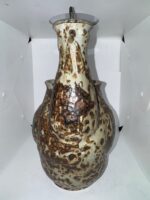
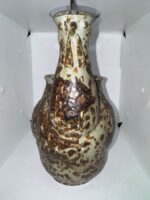
The vessel features a rounded, bulbous body that provides a strong visual foundation for the dramatic sculptural elements above. Rising from the body is an elongated neck that culminates in a stylized rooster head complete with beak and comb detailing. The rear of the vessel features expressive tail feathers that introduce movement and visual balance to the composition.
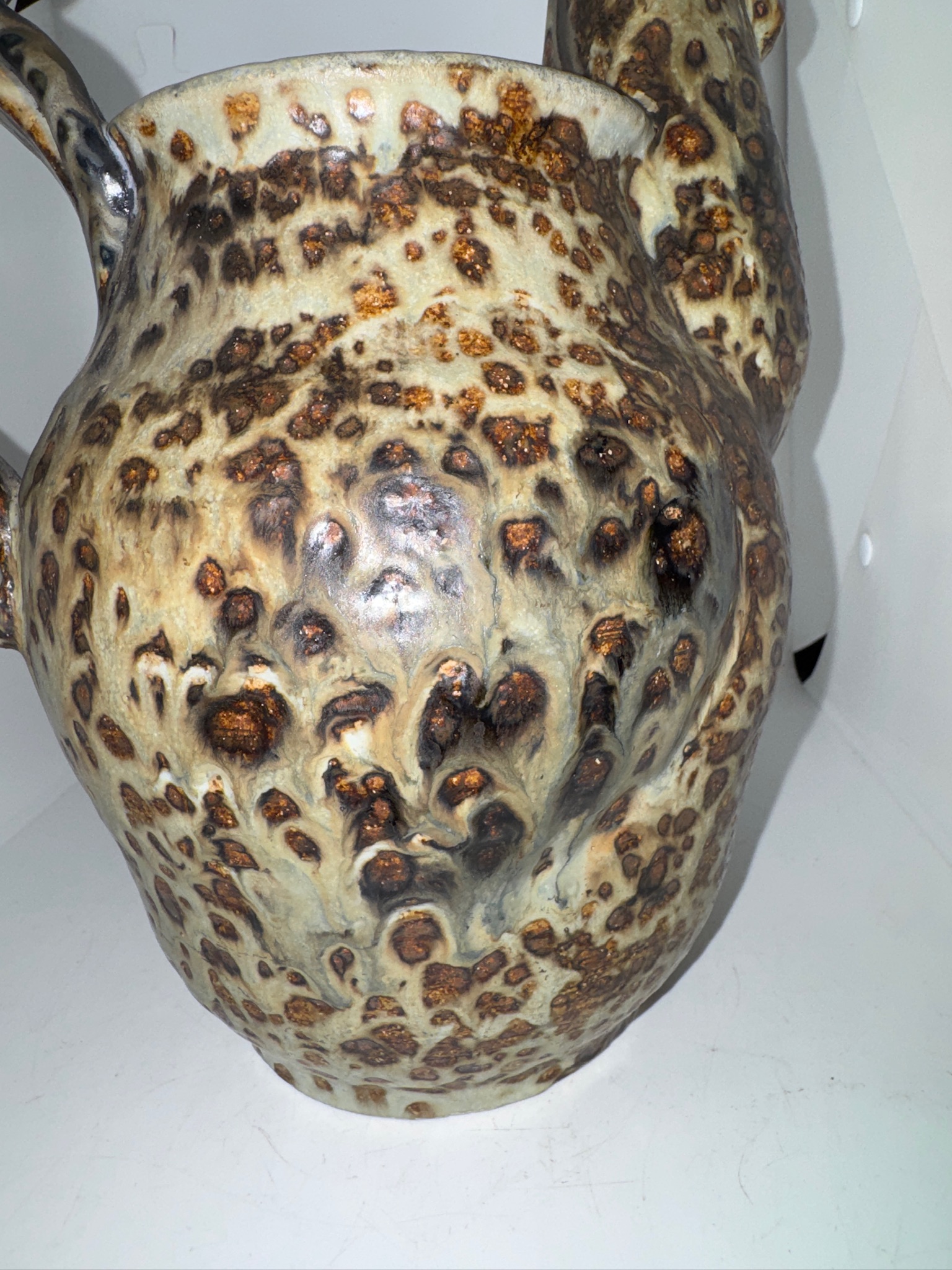
Perhaps the most compelling aspect of the piece is its remarkable glaze treatment. The surface displays a heavily textured pattern of raised organic forms beneath a richly varied glaze palette consisting of cream, brown, amber, charcoal, and subtle earth-toned accents. The glaze appears to pool and break across the textured surface, creating exceptional visual depth and complexity.
This type of glaze work is particularly admired among pottery collectors because it demonstrates both technical skill and artistic sensitivity. Light interacts differently across the varied surface, highlighting the dimensional qualities of the piece and revealing new details as viewing angles change. The result is an object that remains visually engaging from every perspective.
The coloration evokes natural elements such as stone, bark, weathered earth, and mineral formations. These organic references further reinforce the connection between studio pottery and the natural world, a recurring theme among many ceramic artists throughout the twentieth century.
The overall aesthetic balances several important design influences. Elements of Mid Century Modern design can be seen in the clean structural form and sculptural emphasis. There are also strong connections to organic modernism, Brutalist ceramics, and folk art traditions. This versatility allows the piece to complement a wide variety of interior styles ranging from rustic and farmhouse settings to sophisticated contemporary spaces.
Whether displayed on a bookshelf, console table, cabinet, or curated pottery shelf, the pitcher possesses the type of visual presence that naturally becomes a conversation piece. Its sculptural qualities allow it to function as decorative art even when not being used as a vessel, making it an excellent addition to collections focused on studio ceramics, Mid Century design, or handmade decorative arts.
Collectibility
Signed studio pottery continues to experience growing interest among collectors, designers, and enthusiasts of handmade decorative arts. Unlike mass-produced ceramics, each handmade example reflects the direct involvement of the artist throughout the creative process.
Several characteristics contribute to the desirability of this particular piece:
• Signed Lazlo Steiner example
• Distinctive rooster form
• Sculptural presentation
• Richly textured glaze surface
• Strong decorative presence
• Functional vessel form
• Handmade studio pottery craftsmanship
• Mid Century era aesthetic appeal
Animal-form ceramics have long occupied a special place within pottery collecting. Roosters in particular are celebrated for their dramatic silhouettes and symbolic associations with vitality, energy, and rural tradition. Artists frequently return to avian subjects because they offer opportunities for expressive interpretation while maintaining immediate visual recognition.
The combination of figural design, artistic glazing, and signed attribution enhances the appeal of this example for collectors of studio pottery, Mid Century ceramics, folk art, and decorative sculpture.
As appreciation for handmade objects continues to grow, signed studio pottery remains an increasingly important collecting category. Pieces that successfully balance artistic expression with functional design often prove especially desirable because they embody the original ideals of the studio pottery movement.
Condition
Very good vintage condition consistent with age and use.
The piece presents beautifully with strong coloration, excellent sculptural detail, and attractive glaze variation throughout. Surface characteristics, firing irregularities, and glaze variations are consistent with handmade studio pottery and should be viewed as part of the artistic process rather than flaws. Please review all photographs carefully as they form an important part of the description.
Measurements
Approximate Dimensions:
Height: 12 inches
Width: 8 inches
Depth: 8 inches
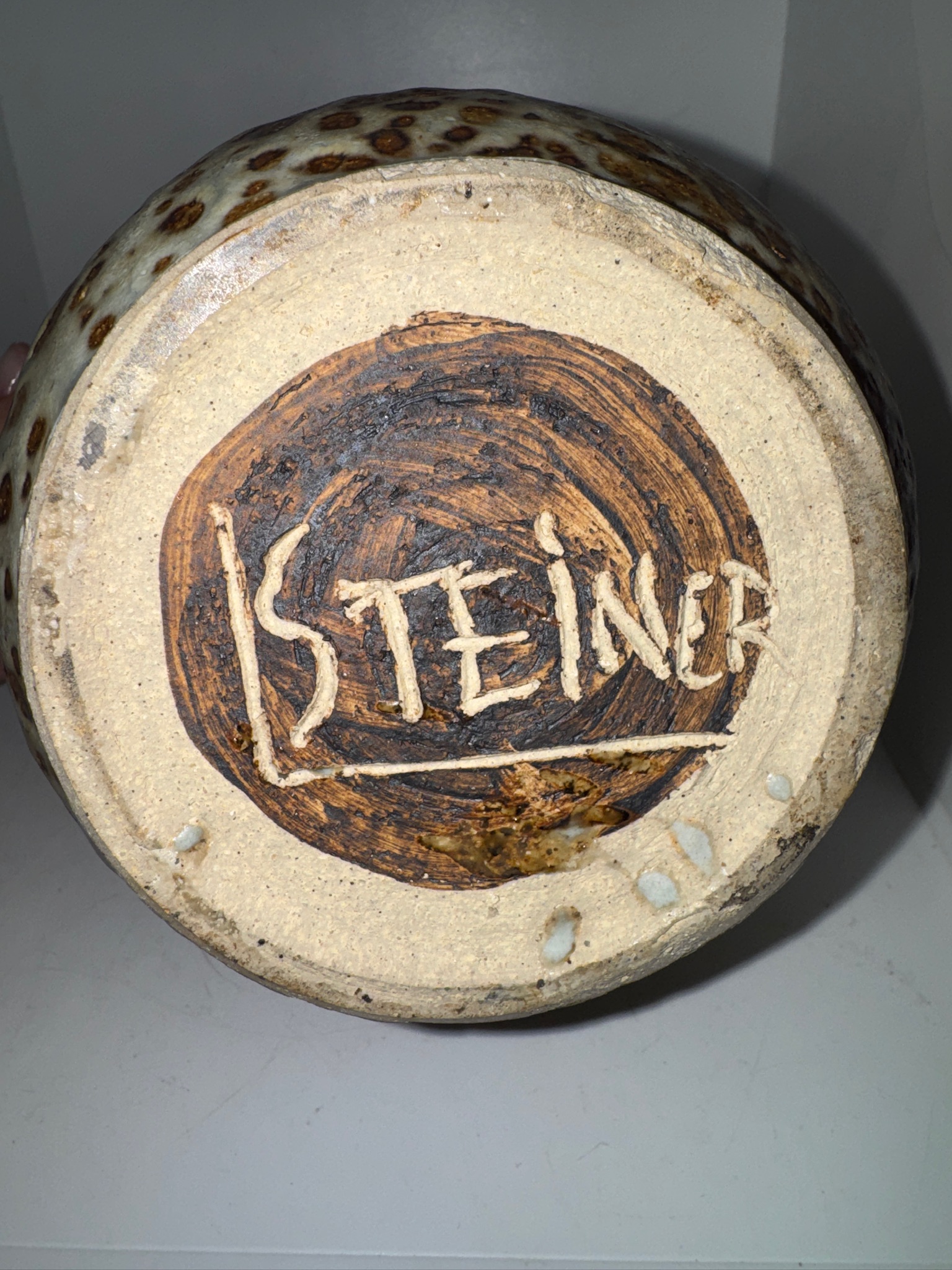
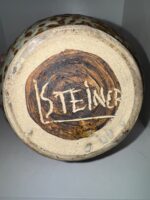
Signed “LSteiner” on the underside.
This signed Lazlo Steiner rooster pitcher represents everything collectors appreciate about studio pottery: individuality, craftsmanship, artistic expression, and timeless decorative appeal. Its sculptural form, richly textured glaze, and handmade character allow it to function as both a practical vessel and an engaging work of ceramic art. Whether added to an established pottery collection or displayed as a standalone decorative statement, it offers the warmth and authenticity that only handcrafted studio ceramics can provide.
Thank you again for visiting Art and Beautiful Things.
| Weight | 6 lbs |
|---|---|
| Dimensions | 16 × 12 × 12 in |