- 80s
- Art
- Abstract
- Art Deco
- Atomic
- Brutalist
- Ceramics & Pottery
- China & Porcelain
- Collectibles
- Decor
- Delightfully Kitschy
- Fashion
- Folk
- Fun
- Furniture
- Glass
- Gothic
- Holiday
- Historical Significance
- Hollywood Regency
- Industrial
- Kitchen
- Lighting
- Metal
- Mid Century
- Mid Century Modern
- Modern
- Off The Wall
- Old World
- Pop Art
- Primitive
- Rustic
- Salvage
- The Beauty Of Asia
- The Beauty of All Europe
- The Beauty of Canada
- The Beauty of France
- The Beauty of Italy
- The Beauty of Scandinavia
- The Beauty of the UK
- The Classics
- Whimsical
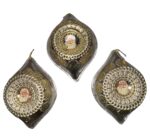
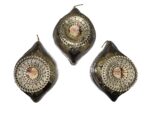
A Trio of Vintage European Translucent Plastic Christmas Ornaments | Dresden Style Santa Medallions
$365.00
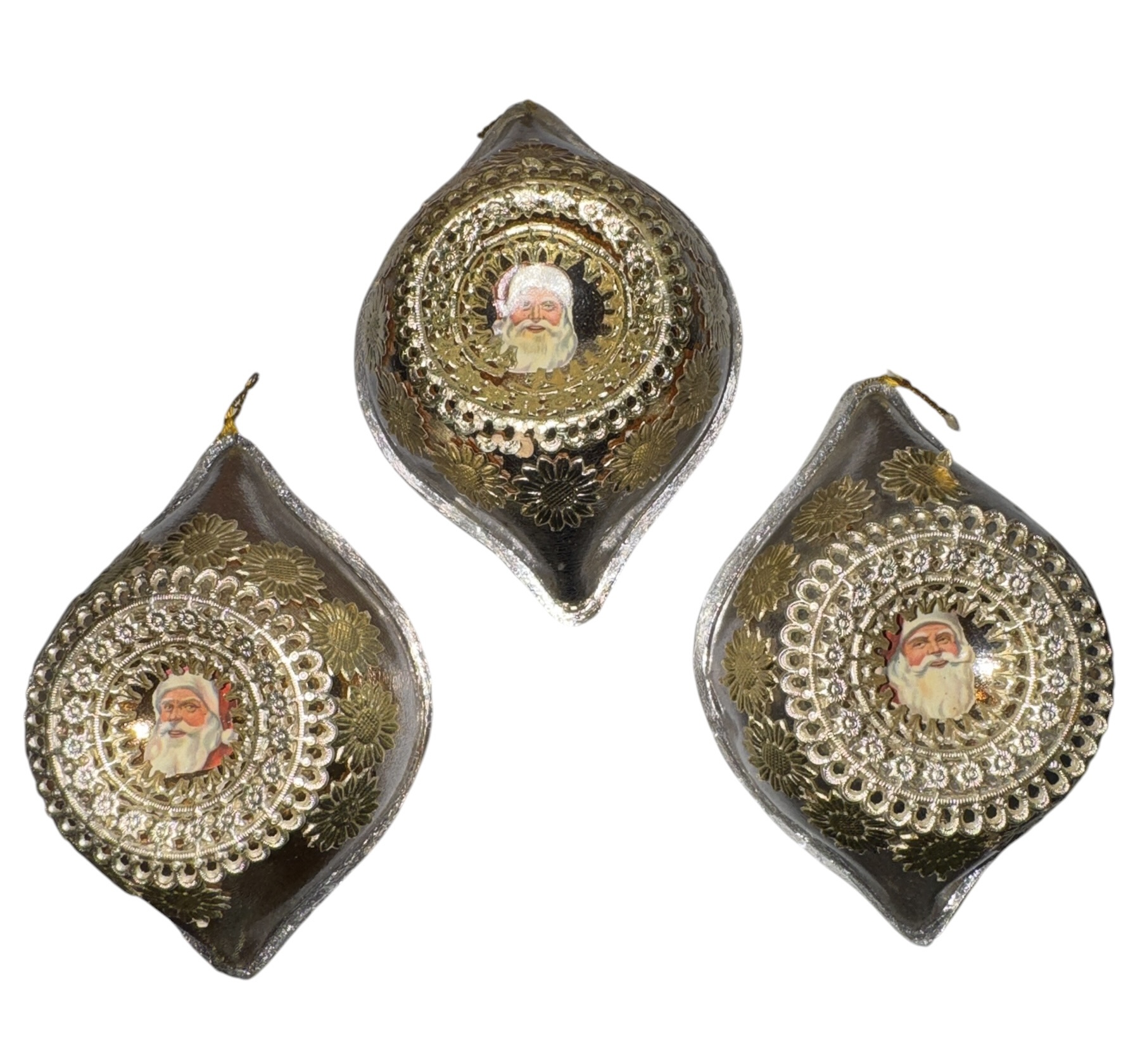
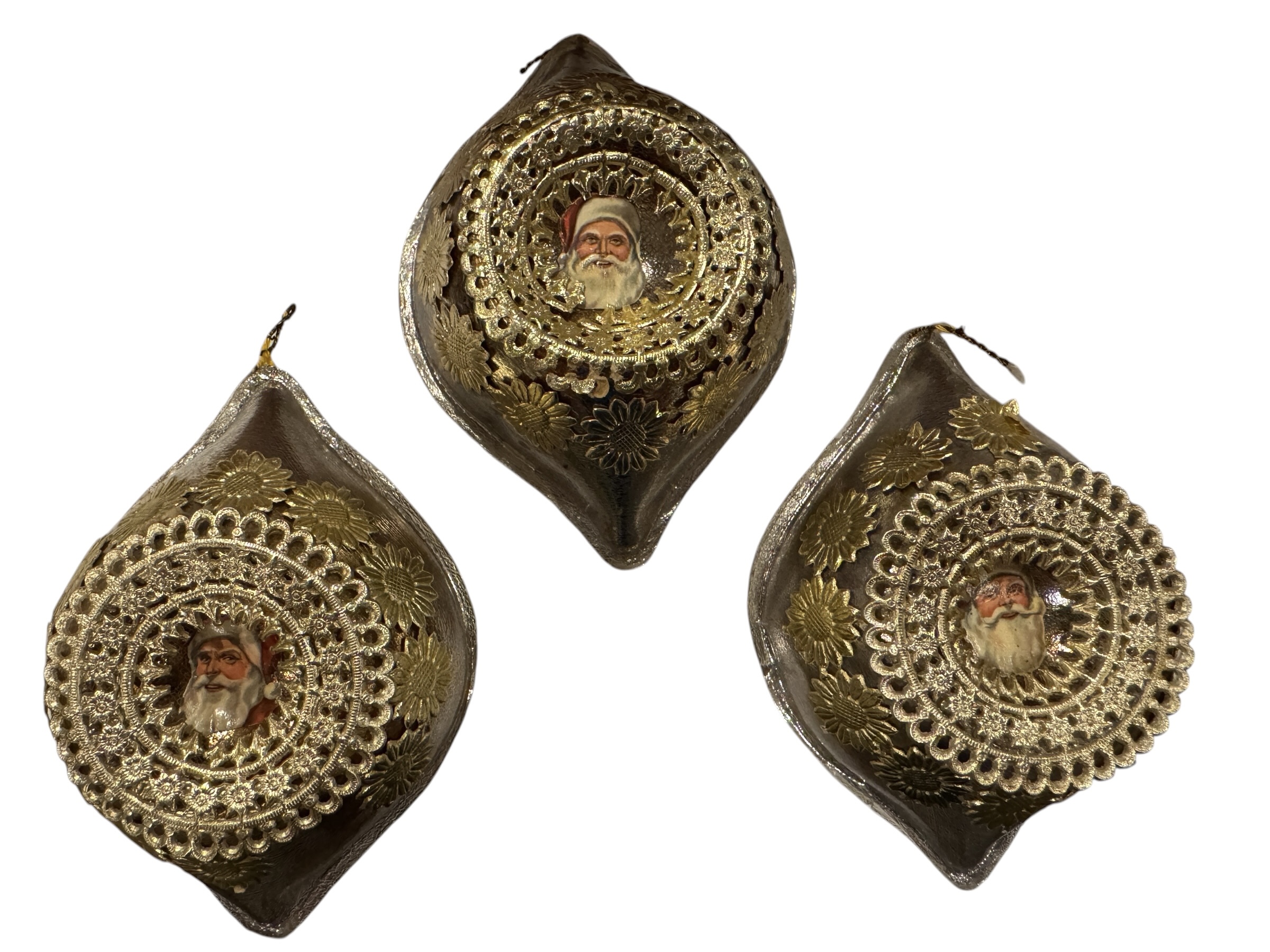
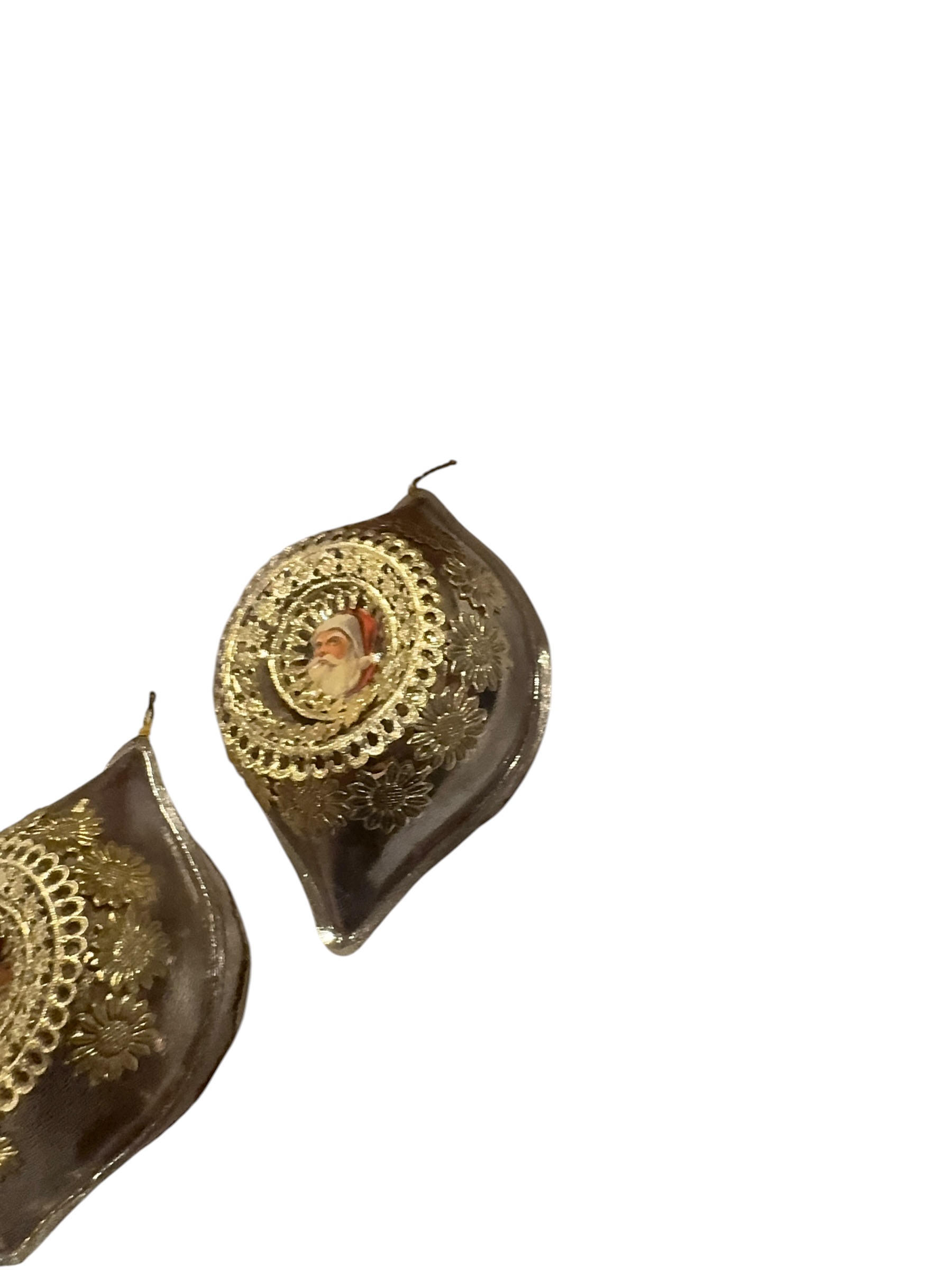
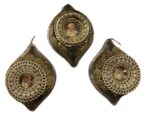
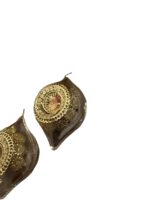
There are moments in the history of Christmas ornamentation where tradition, necessity, and innovation quietly converge—resulting in pieces that feel both familiar and entirely unique. This exceptional set of three vintage European Christmas ornaments captures one of those moments with remarkable beauty and nuance.
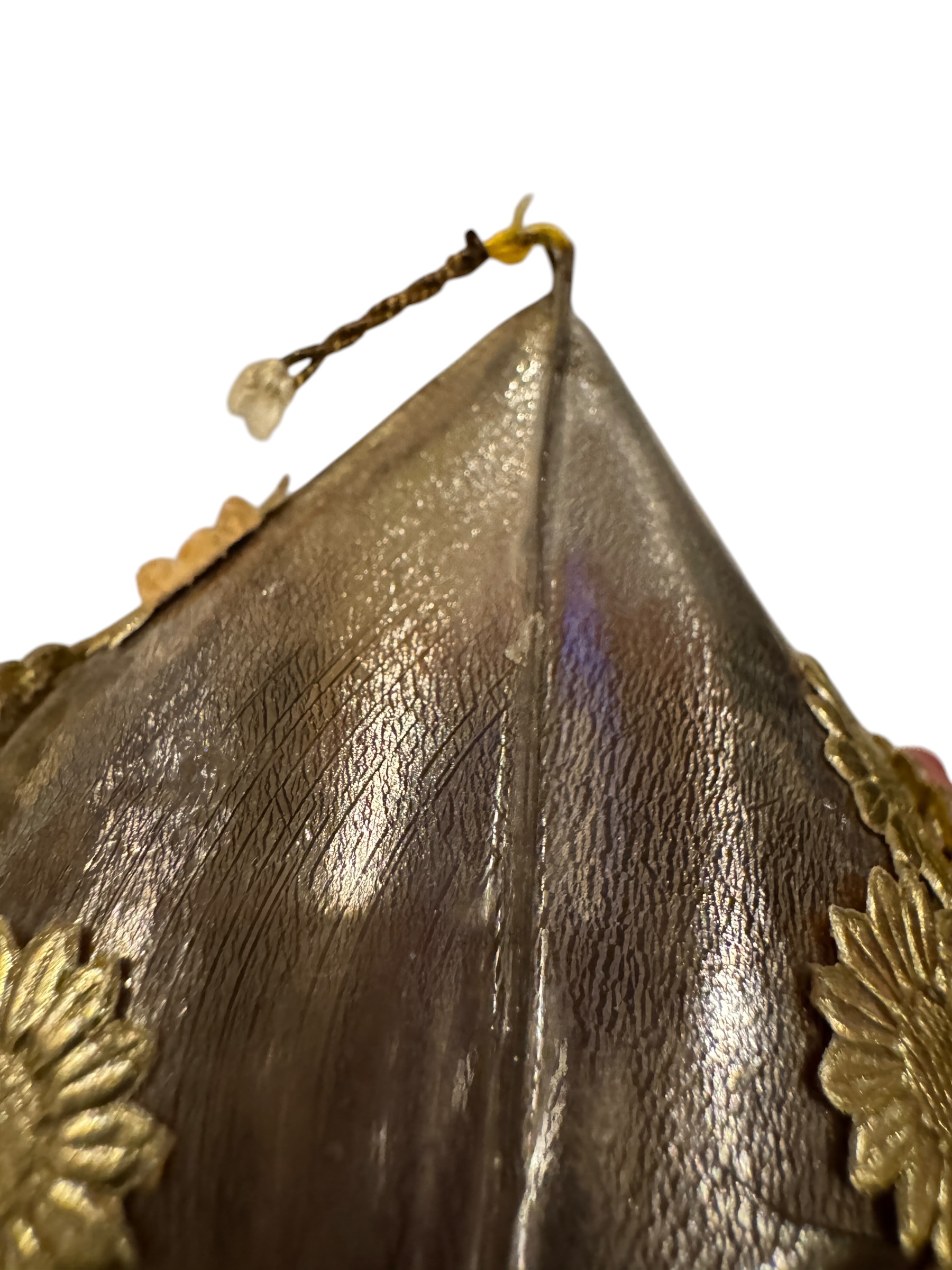
Dating to the mid-20th century, likely produced in the years following World War II, these ornaments represent a fascinating transitional period in decorative arts. As traditional glassmaking centers in Europe—particularly in Germany—faced disruption during and after the war, artisans began to explore alternative materials and techniques. Among these innovations was the use of early molded plastics—often celluloid or similar compositions—which allowed for lightweight, delicately formed, and intricately detailed ornaments.
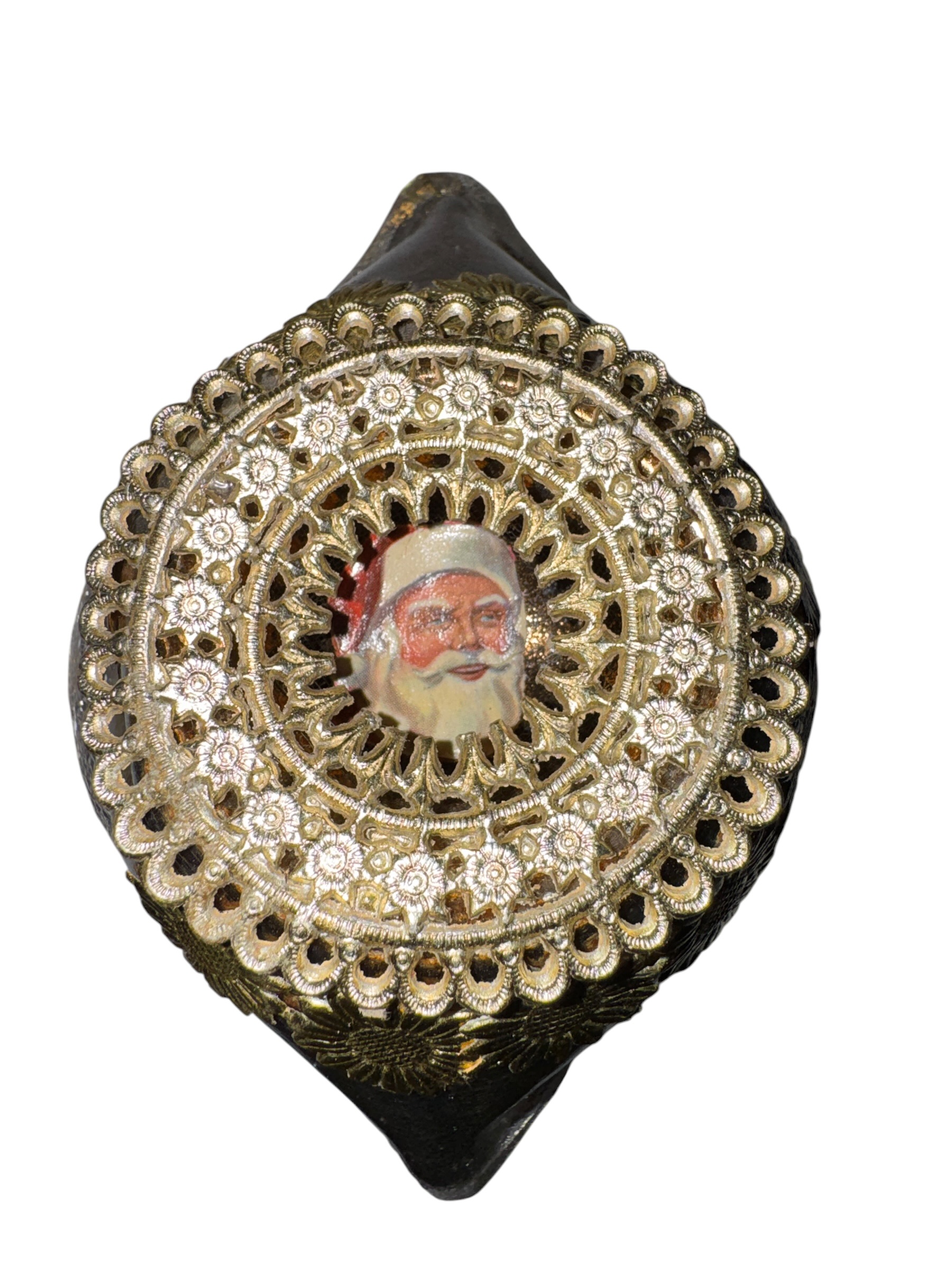
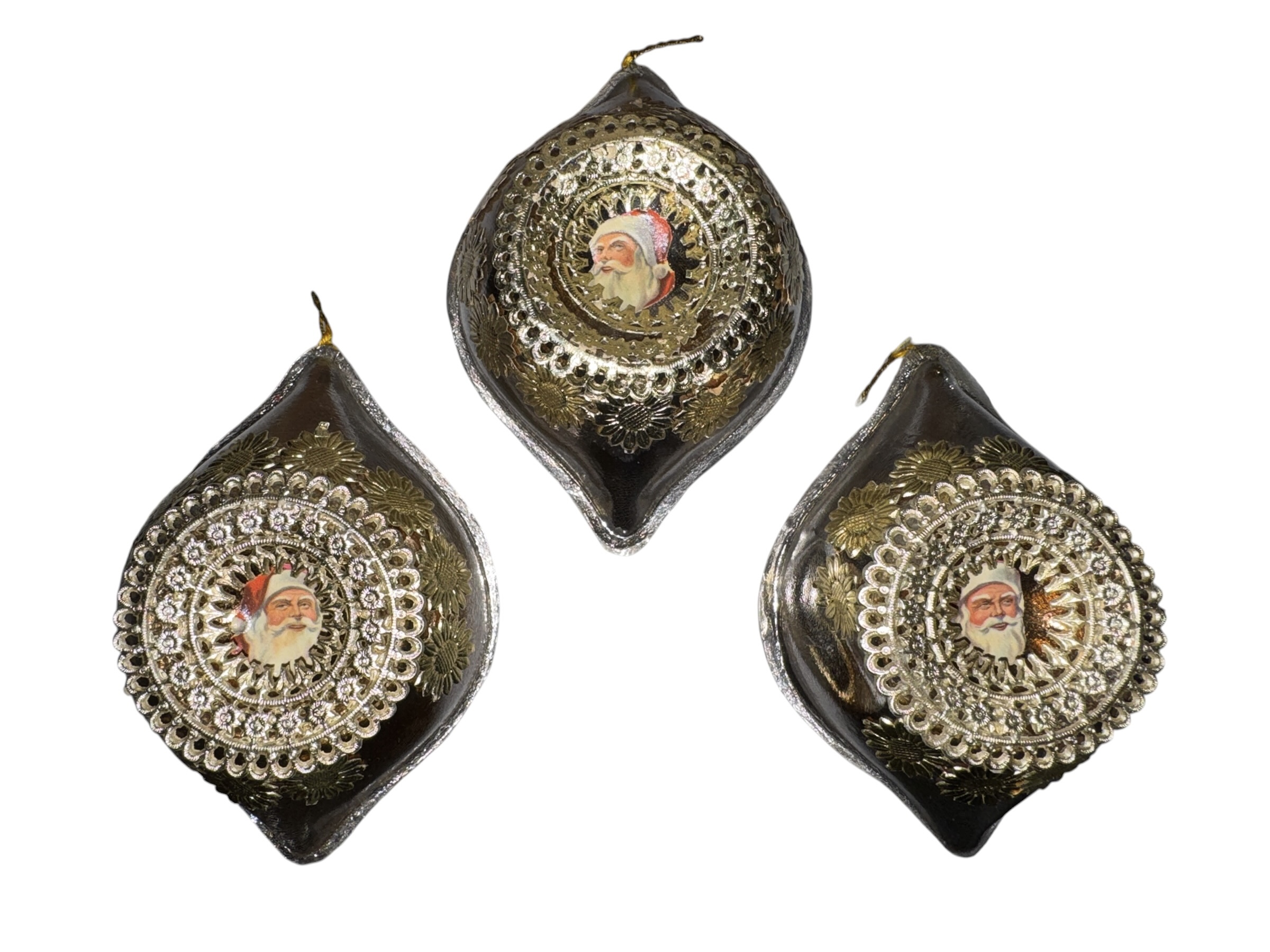
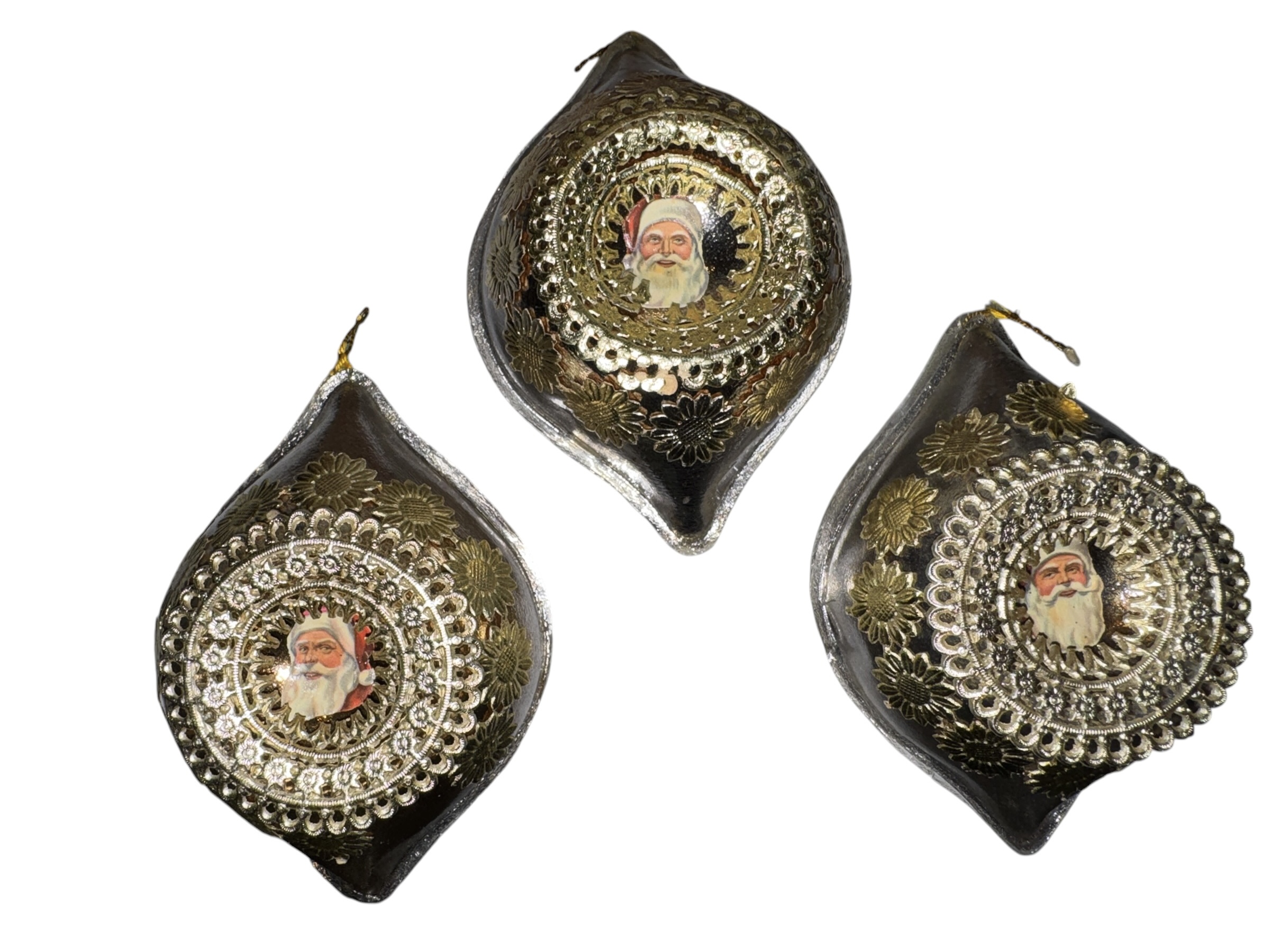
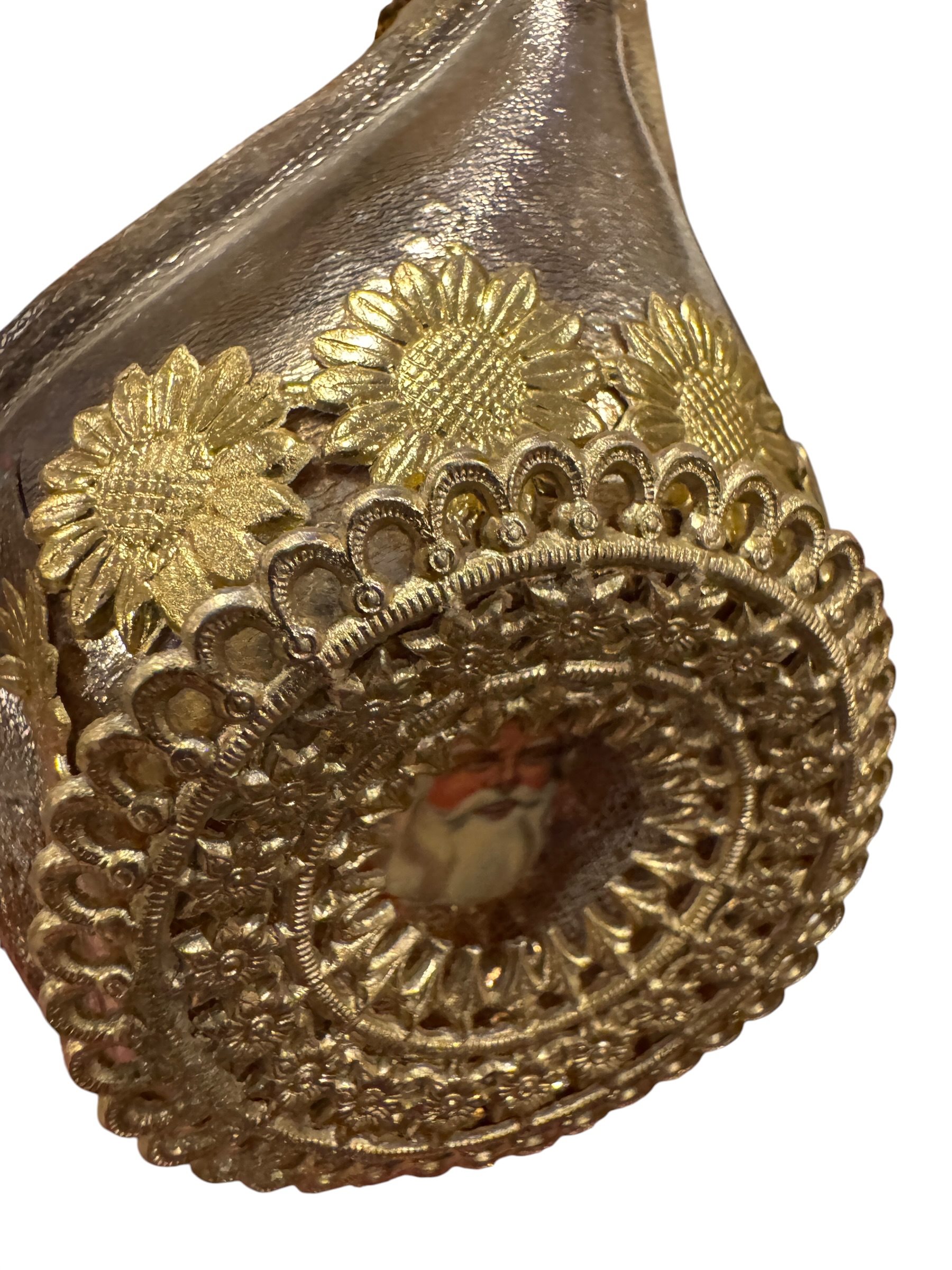
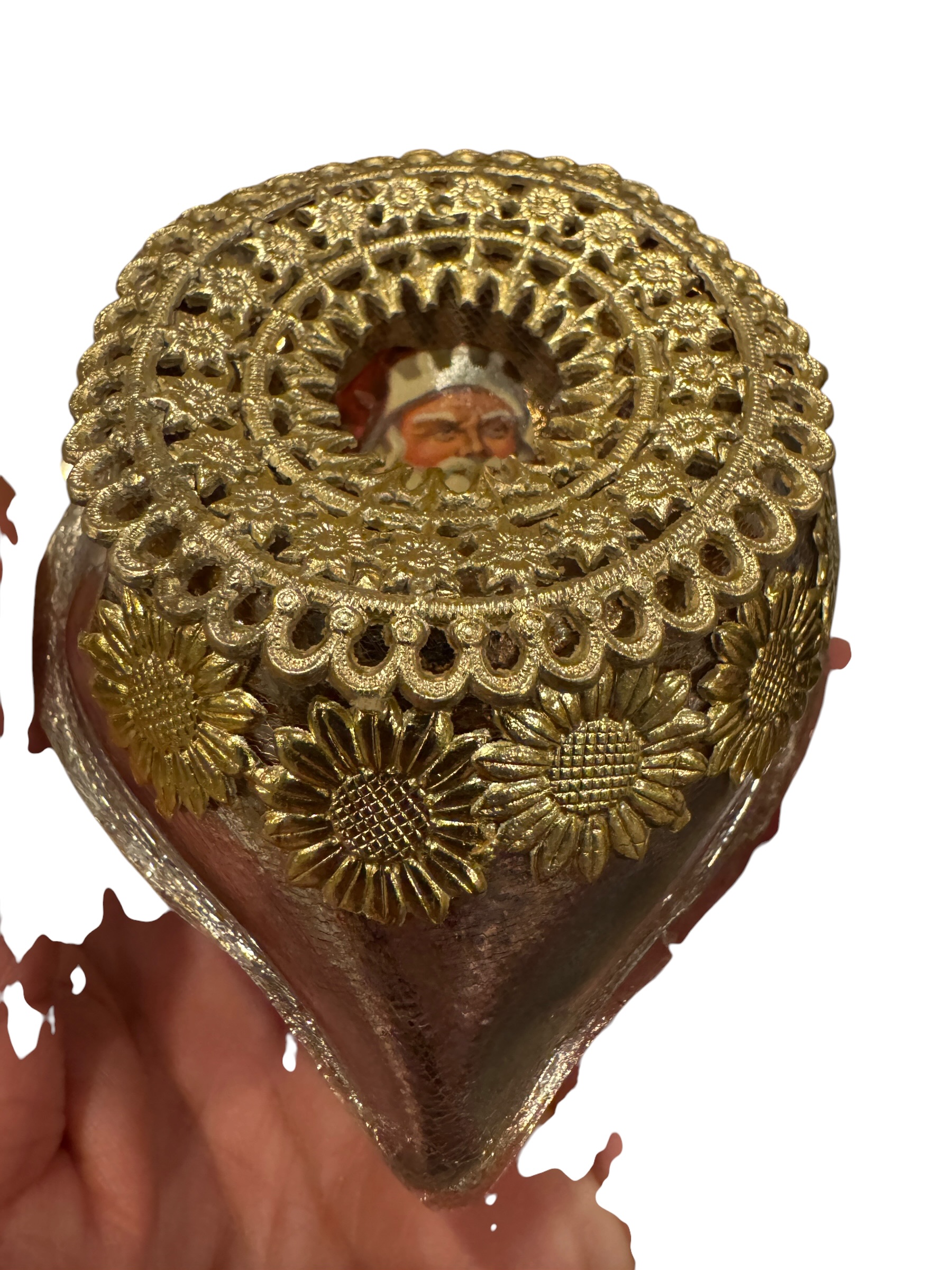
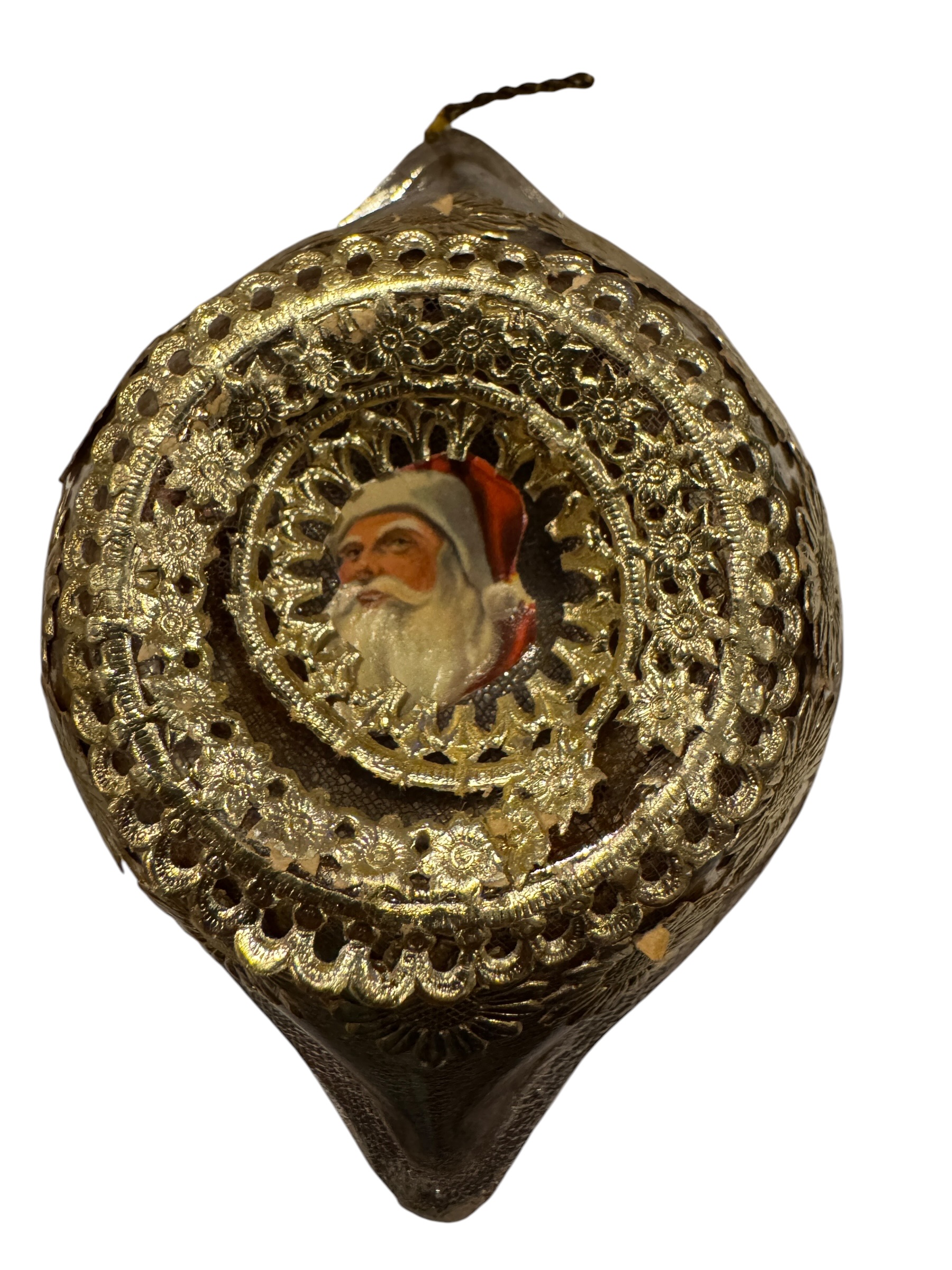
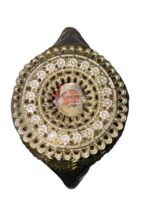
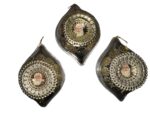
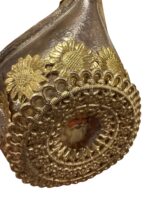
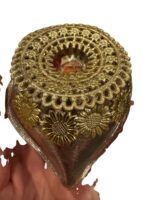
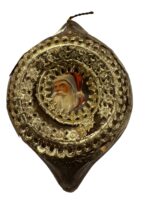
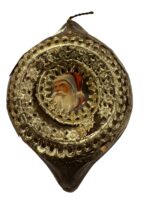
Each ornament in this curated trio has been molded in two halves and carefully joined, a hallmark of early plastic ornament construction. What elevates these pieces far beyond simple molded forms, however, is the extraordinary level of hand-applied embellishment. At the center of each ornament rests a finely detailed Santa Claus lithograph insert—warm, expressive, and unmistakably vintage in character. Surrounding this central figure is a remarkable lace-like medallion, echoing the aesthetic of earlier German Dresden ornaments, traditionally crafted from embossed paper.
This Dresden-inspired influence is unmistakable. The ornate circular framing, with its delicate openwork and repeating floral motifs, pays homage to 19th-century German ornament traditions while embracing newer materials and methods. Beneath the medallion, a fine netting layer adds depth and dimension, creating a subtle interplay between transparency and texture that is rarely encountered in more common examples.
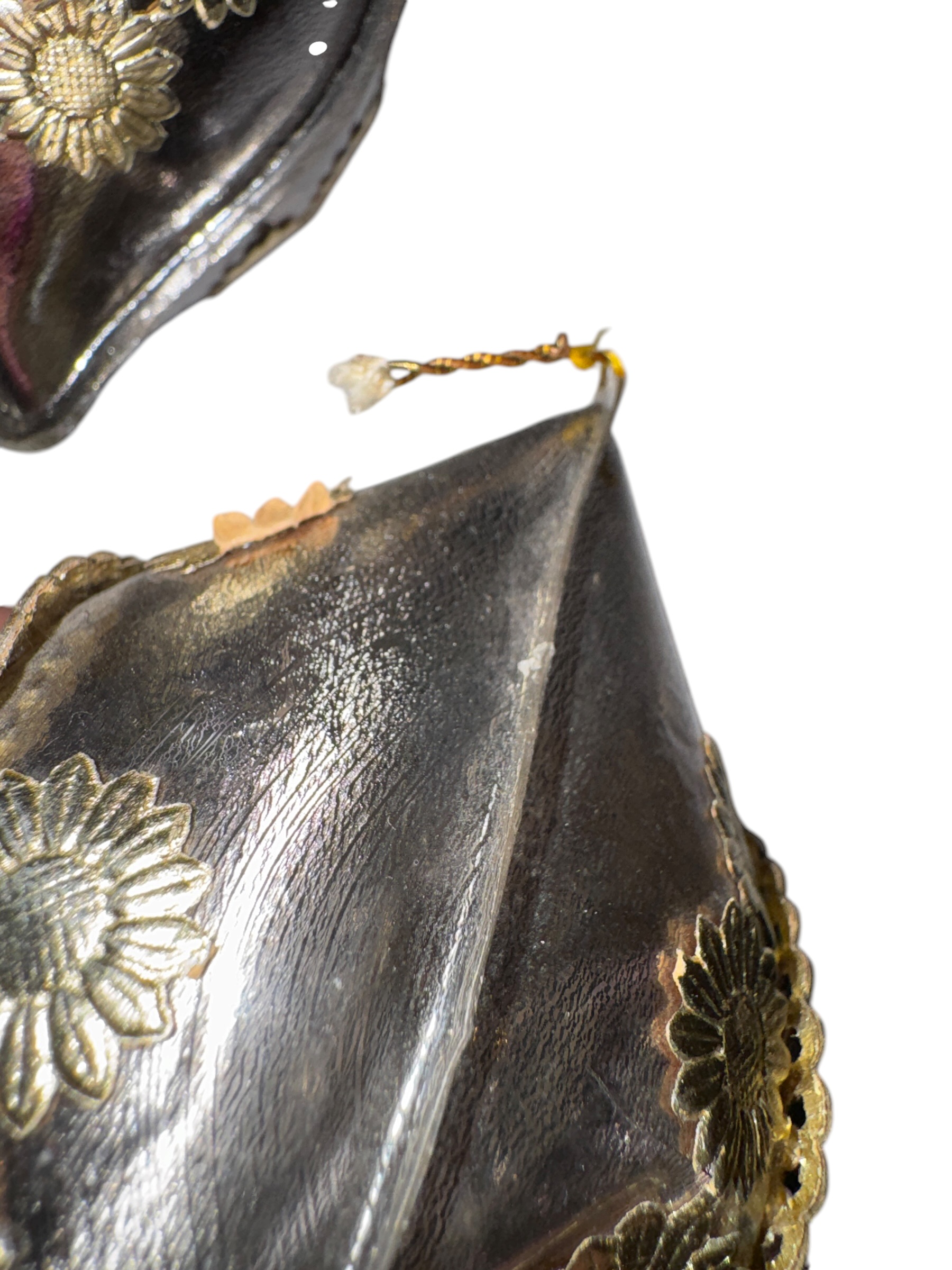
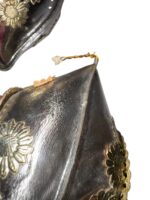
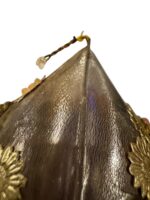
One of the most captivating qualities of these ornaments lies in the remarkable thinness of the molded material. When held to the light, the body of each ornament reveals a gentle translucency—allowing light to softly pass through the form. This creates a luminous depth that enhances the layered construction, illuminating the delicate netting, gilded detailing, and central Santa medallion from within. It is a quiet yet striking effect, one that speaks to both the material innovation of the period and the refined decorative sensibility behind their creation.
Further enhancing their visual richness are the applied gilded floral elements that adorn the body of each ornament. These raised, daisy-like motifs introduce a sculptural quality and warmth in tone that suggests hand-finishing rather than purely industrial production. It is this combination—molded base, layered materials, and applied decoration—that points to a European workshop tradition where craftsmanship remained central, even as materials evolved.
While precise attribution is often difficult with ornaments of this type, the stylistic elements suggest a strong connection to continental European production, with possible ties to Italian export workshops that emerged in the post-war period. Northern Italy, in particular, became an important center for decorative production during this time, influenced by both local artistry and the legacy of German ornament design. These pieces beautifully embody that cross-cultural exchange.
What makes this set especially compelling is its cohesion. The three ornaments share a unified design language while maintaining subtle variations in their decorative application—evidence of hand-finishing rather than strict factory uniformity. Together, they form a harmonious grouping that feels intentional, curated, and deeply rooted in a specific moment of design history.
Condition:
This set presents beautifully and displays exceptionally well. One ornament does show a soft indentation to one side of the body. This does not detract from its visual presence when displayed, and given the thinness and flexibility of the material, it may be possible for an experienced hand to gently coax the form back; however, it has been left as found to preserve its integrity. All three retain their delicate structure, dimensional detailing, and striking decorative surfaces.
From a collector’s perspective, early plastic ornaments of this quality occupy a unique and increasingly appreciated niche. They bridge the gap between fragile antique glass and later mass-produced holiday décor, offering both historical significance and enduring visual appeal. Their survival—particularly in a cohesive grouping such as this—adds to their desirability.
In the context of a thoughtfully curated holiday collection, these ornaments offer something increasingly rare: authenticity without excess, ornamentation without ostentation, and history that can be both seen and felt. Whether displayed on a tree or as part of a seasonal vignette, they bring with them a quiet elegance and a story worth preserving.
At Art & Beautiful Things, we believe that objects like these are more than decorative—they are fragments of cultural history, meant to be enjoyed, cared for, and ultimately passed on. This set of three is offered with that spirit in mind.
| Weight | 1 lbs |
|---|---|
| Dimensions | 6 × 6 × 6 in |