(248) 617-7717
 mona@artandbeautifulthings.com




- 80s
- Art
- Abstract
- Art Deco
- Atomic
- Brutalist
- Ceramics & Pottery
- China & Porcelain
- Collectibles
- Decor
- Delightfully Kitschy
- Fashion
- Folk
- Fun
- Furniture
- Glass
- Gothic
- Holiday
- Historical Significance
- Hollywood Regency
- Industrial
- Kitchen
- Lighting
- Metal
- Mid Century
- Mid Century Modern
- Modern
- Off The Wall
- Old World
- Pop Art
- Primitive
- Rustic
- Salvage
- The Beauty Of Asia
- The Beauty of All Europe
- The Beauty of Canada
- The Beauty of France
- The Beauty of Italy
- The Beauty of Scandinavia
- The Beauty of the UK
- The Classics
- Whimsical
Shiny Brite: The American Christmas Ornaments That Defined a Generation

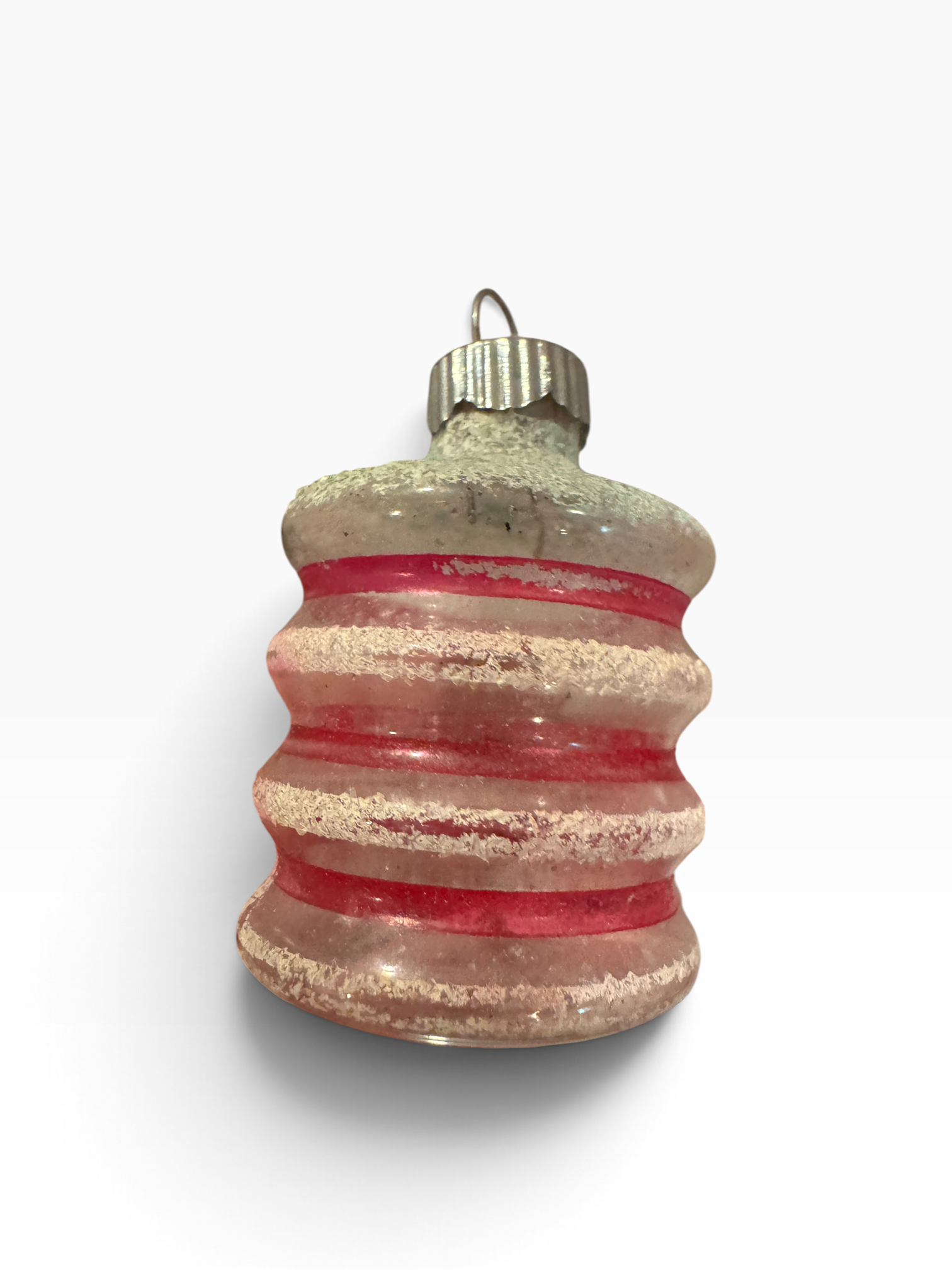
There are certain Christmas decorations that seem to carry memory inside them.
A Shiny Brite ornament can do that almost instantly.
Perhaps it is the thinness of the glass, the slightly faded stripes, the tiny scratches earned through decades of Christmas mornings, or the familiar cardboard box that once emerged from an attic every December. For many Americans, Shiny Brite ornaments are not simply vintage decorations. They are part of the visual language of Christmas itself.
Yet the history behind these colorful glass ornaments is far more interesting than their cheerful appearance suggests.
Shiny Brite grew from European glassmaking traditions, American industrial innovation, wartime shortages, and the tremendous optimism of the postwar years. Along the way, the company helped transform the American Christmas tree.
And some of the most interesting Shiny Brite ornaments were created during the years when manufacturers could no longer make them particularly “shiny” at all.
Before Shiny Brite: Christmas Ornaments Came from Europe
Long before American factories produced glass Christmas ornaments by the millions, the center of the ornament-making world was Germany.
The town of Lauscha, located in the Thuringian region, became particularly famous for its glasswork. Generations of skilled glassblowers created delicate ornaments by hand, producing everything from simple balls to fruits, nuts, figures, and elaborate molded forms.
By the late nineteenth and early twentieth centuries, German glass ornaments had become immensely popular in the United States.
American retailers imported enormous quantities of them.
One of the businessmen involved in that trade was Max Eckardt, a German-born ornament importer whose experience with European Christmas decorations would eventually help reshape the American industry.
Eckardt understood both the beauty of German glass ornaments and the vulnerability of depending upon overseas production.
By the late 1930s, political tensions in Europe were growing rapidly. War threatened the supply of German ornaments that American retailers had relied upon for decades.
Eckardt began looking for another solution.
Max Eckardt and the Birth of Shiny Brite
In 1937, Max Eckardt established the Shiny Brite company. His great opportunity came through a partnership with Corning Glass Works.
Corning already possessed machinery capable of producing enormous quantities of glass light bulbs. Rather than creating Christmas ornaments entirely by hand, the company adapted its ribbon machinery to manufacture delicate glass ornament blanks.
The change was revolutionary.
Corning could produce glass ornaments at a scale that traditional European glassblowers simply could not match.
The Corning Museum of Glass notes that the company used machinery originally developed for lightbulb production to create the ornament forms. The clear glass blanks were then sent to decorating facilities, including Eckardt’s New Jersey operations, where workers added silvering, color, and decoration.
By 1940, Corning was producing ornaments on an astonishing scale. Contemporary accounts put production in the tens of millions. The result was a dramatic shift in the American Christmas industry. Glass ornaments no longer had to cross the Atlantic before reaching an American department store.
American factories could make them at home.
Why Were They Called “Shiny Brite”?
The name was wonderfully appropriate.
Early Shiny Brite ornaments typically received an interior coating that created a reflective, silvery appearance. Transparent colored lacquer on the outside allowed that silver interior to glow through the glass.
The result was bright, reflective, and unmistakably festive.
Red became enormously popular, but Shiny Brite ornaments appeared in many colors. Greens, blues, golds, pinks, silvers, and later increasingly adventurous shades filled store displays.
Decorators also added painted stripes, bands, stencils, and other details by hand.
Soon, the familiar round ball was only the beginning.
Shiny Brite ornaments appeared as bells, pine cones, teardrops, finials, icicles, lantern-like shapes, reflectors, and other molded forms.
Then World War II changed everything.
The Unsilvered Shiny Brite Ornaments of World War II
For collectors today, the wartime Shiny Brite ornaments are among the most historically fascinating.
They were created during a period when ordinary manufacturers had to adapt quickly to wartime restrictions.
Materials that had once been readily available for Christmas decorations suddenly had more important uses.
Metal was needed for military production.
Certain pigments and chemicals became difficult or impossible to obtain.
Even the materials that created the brilliant reflective interiors of glass ornaments became restricted.
And that is when Shiny Brite ornaments began looking very different.
When the “Shiny” Disappeared
One of the defining characteristics of a traditional Shiny Brite ornament is its mirrored interior.
However, during World War II, materials used in the silvering process became unavailable or heavily restricted.
The Henry Ford collection includes wartime Shiny Brite ornaments dated approximately 1942–1945 that were produced without the normal silvered interior. Their examples demonstrate how the company changed its decorating methods as wartime material restrictions intensified.
The result was the unsilvered ornament.
Instead of the brilliant mirrored appearance collectors associate with later Shiny Brites, these ornaments often have clear or translucent glass beneath their painted decoration.
Some appear almost transparent.
Others received light washes of color.
Still others feature simple stripes, stencils, or bands of opaque paint.
Because the reflective silver interior was missing, decorators had to create visual interest in other ways.
That necessity produced some wonderfully distinctive ornaments.
Stripes, Paint and Tinsel Replaced the Silver
One solution was remarkably simple: use more decoration on the outside.
Wartime ornaments often feature colorful stripes or painted bands. Red, green, pink, yellow, white, and other shades could create a bright effect even without an interior mirror coating.
Some unsilvered ornaments also received stenciled decoration.
Another clever technique involved placing a small piece or sprig of tinsel inside the clear ornament.
The tinsel caught the Christmas-tree lights and created at least some of the sparkle normally supplied by the silvered interior.
The practice has become one of the charming visual signatures of wartime American ornaments.
Today, collectors sometimes encounter these pieces and initially assume that the silvering has completely disappeared with age.
That certainly can happen to old ornaments.
But an important distinction exists:
Some Shiny Brite ornaments were never silvered in the first place.
Their clear interiors are not necessarily damage.
They can be evidence of wartime production.
Cardboard Caps: Another Wartime Clue
Silvering was not the only thing affected by wartime shortages.
Metal also became increasingly scarce for civilian products.
Early Shiny Brite ornaments typically used small metal caps and wire hangers. As wartime restrictions tightened, manufacturers began substituting other materials.
Cardboard and paper caps appeared.
String sometimes replaced wire.
The Henry Ford preserves Shiny Brite examples from approximately 1943–1945 with folded cardboard hangers and even combinations of cardboard, string, and glue.
These humble little fittings are now incredibly useful to collectors.
An unsilvered ornament combined with a wartime cardboard cap can provide strong evidence that an ornament dates from the World War II period.
The cap that once represented a manufacturing compromise has become part of the ornament’s historical importance.
American Made Became Part of the Story
World War II also changed how Shiny Brite marketed its ornaments.
Before the rise of domestic production, American Christmas trees were filled largely with imported European glass.
Now Shiny Brite could proudly emphasize something different:
American Made.
Original packaging frequently advertised the ornaments’ domestic manufacture. Some boxes even incorporated patriotic imagery.
The Henry Ford preserves wartime Shiny Brite packaging identifying the ornaments as American-made glass Christmas tree decorations.
That message carried enormous significance during the war.
Buying American-made Christmas ornaments was not simply convenient. It fit the larger national mood of self-sufficiency, patriotism, and support for American manufacturing.
A box of ornaments could quietly participate in that story.
After the War: The Shine Returns
When World War II ended in 1945, manufacturing restrictions gradually eased.
Metal caps returned.
So did silvering.
The reflective Shiny Brite look once again lived up fully to its name.
The Henry Ford dates examples with restored silver lacquer and metal caps to the postwar period beginning around 1946.
But Shiny Brite was no longer simply a wartime substitute for German ornaments.
It had become an American Christmas institution.
The late 1940s and 1950s brought tremendous growth in consumer culture. Families purchased new homes, new furniture, new appliances, and new Christmas decorations.
Holiday decorating became brighter and more coordinated.
Shiny Brite was perfectly positioned for that moment.
Christmas in Technicolor
The postwar years gave Shiny Brite an opportunity to become increasingly adventurous.
Traditional red and green remained popular, but ornament colors expanded dramatically.
Pink.
Turquoise.
Blue.
Gold.
Lavender.
Silver.
Pastels and intense jewel tones.
Striped ornaments became particularly recognizable. Some combined two or three colors. Others used snowy white painted decoration over brilliant reflective backgrounds.
Shapes also became more varied.
Round balls shared the tree with bells, teardrops, pine cones, lanterns, tops, reflectors and long finials.
A Christmas tree decorated entirely with Shiny Brite ornaments could become an explosion of color.
Shiny Brite and the Mid-Century Christmas Tree
By the 1950s, American Christmas decorating had embraced modern design.
This was the era of ranch houses, boomerang patterns, Formica kitchens, chrome, starbursts, new plastics, and brilliant colors.
Christmas decorations followed the same cultural shift.
The arrival of the aluminum Christmas tree created perhaps the perfect stage for colorful glass ornaments.
Against shimmering silver branches, pink, turquoise, blue, red, and green ornaments became almost theatrical.
A rotating color wheel could transform the entire tree.
Shiny Brite ornaments fit naturally into that new holiday aesthetic.
Yet they were equally at home on a traditional evergreen.
That versatility helped make them enormously popular.
The Boxes Matter Too
For collectors, the ornament is only part of the story.
Original Shiny Brite boxes can be fascinating historical objects in their own right.
Some held six ornaments.
Others held twelve.
Larger coordinated assortments offered families an instant decorating scheme.
Cardboard dividers kept the fragile glass separated, while brightly printed lids advertised the Shiny Brite name.
Today, an original box tells us things an individual ornament cannot.
It can help establish how ornaments were grouped.
It may show the original color assortment.
Labels can provide manufacturing information.
Graphics can help indicate a period.
And perhaps most importantly, a surviving box preserves the ornaments as a collection.
That matters.
Over the course of eighty years, Christmas ornaments tend to scatter.
One goes to a daughter.
Another goes to a grandson.
A few break.
Others disappear into different storage boxes.
Eventually the original group is lost.
That is why opening an old box and discovering a full or nearly full set can feel like opening a small time capsule.
Hand Decoration and the Beauty of Imperfection
Vintage Shiny Brite ornaments frequently reveal small variations.
A stripe may sit slightly higher on one ornament than another.
Paint thickness may vary.
A stencil may not land perfectly in the center.
Two ornaments from the same box may not look absolutely identical.
Those differences are part of their charm.
Although industrial machinery enabled the glass blanks to be created on a massive scale, much of the decorative work still involved human hands.
That marriage of machine production and hand decoration is one reason old Shiny Brites feel so different from many modern ornaments.
They are uniform enough to create a coordinated tree, yet imperfect enough to retain personality.
How Collectors Date Shiny Brite Ornaments
There is rarely one feature that dates every Shiny Brite perfectly.
Instead, collectors look at several clues together.
The cap is often important. Metal caps, cardboard caps, hook styles, and embossed markings can all offer evidence.
The ornament’s silvering matters as well.
Unsilvered glass combined with wartime-style fittings can suggest production during World War II.
Decoration offers another clue.
Certain colors, stencils, painted bands, shapes, and packaging styles became more common during particular periods.
Original boxes can be particularly helpful because graphics and manufacturing information changed over time.
However, vintage Christmas ornaments have often lived complicated lives.
Caps get replaced.
Sets get combined.
Ornaments migrate from one family box into another.
For that reason, dating should usually involve the entire object rather than one isolated feature.
Why Unsilvered Ornaments Deserve More Attention
For someone unfamiliar with wartime Christmas ornaments, an unsilvered example may initially appear less impressive than a brilliant mirrored Shiny Brite.
It may look faded.
Simple.
Perhaps even unfinished.
But once you understand why it looks that way, the ornament changes.
That clear glass becomes evidence of wartime restriction.
The thin painted stripes become evidence of ingenuity.
The cardboard cap becomes evidence of metal conservation.
The tinsel tucked inside becomes evidence of a decorator trying to create sparkle without the materials normally used to make it.
Suddenly, what appears to be the simplest ornament in the box may have the most interesting story.
That is one of the things that makes collecting vintage Christmas decorations so rewarding.
Beauty is only part of it.
History is often hiding in the details.
Shiny Brite Today
Decades after their original production, vintage Shiny Brite ornaments continue to appear in family collections, estate sales, antique shops, flea markets, and boxes tucked away in attics.
Some remain brilliant.
Others have softened beautifully with age.
Silvering may have mottled.
Paint may have faded.
Metal caps may have darkened.
Boxes may carry handwritten names or old price markings.
Collectors often value those signs of age rather than trying to erase them.
They remind us that these objects were never created to sit behind glass.
They were created to celebrate Christmas.
Families handled them.
Children helped hang them.
They reflected tree lights in living rooms that looked very different from ours.
Then, every January, someone carefully wrapped them and put them away until another Christmas arrived.
More Than a Christmas Ornament
Perhaps that is why Shiny Brite remains so beloved.
These ornaments tell several American stories at once.
They tell the story of an immigrant businessman who saw that the American ornament trade needed to change.
They tell the story of Corning engineers transforming lightbulb machinery into an extraordinary system for producing Christmas decorations.
They tell the story of wartime factories improvising when familiar materials disappeared.
They tell the story of postwar America embracing color, abundance, modern design, and a new vision of Christmas.
And sometimes they tell a much smaller story.
A little painted ornament survives because someone loved it enough to wrap it in tissue paper for eighty Christmases.
That may be the best part of the Shiny Brite story.
The company made ornaments by the millions.
Yet today, when we hold one in our hands, each somehow feels personal.