(248) 617-7717
 mona@artandbeautifulthings.com




- 80s
- Art
- Abstract
- Art Deco
- Atomic
- Brutalist
- Ceramics & Pottery
- China & Porcelain
- Collectibles
- Decor
- Delightfully Kitschy
- Fashion
- Folk
- Fun
- Furniture
- Glass
- Gothic
- Holiday
- Historical Significance
- Hollywood Regency
- Industrial
- Kitchen
- Lighting
- Metal
- Mid Century
- Mid Century Modern
- Modern
- Off The Wall
- Old World
- Pop Art
- Primitive
- Rustic
- Salvage
- The Beauty Of Asia
- The Beauty of All Europe
- The Beauty of Canada
- The Beauty of France
- The Beauty of Italy
- The Beauty of Scandinavia
- The Beauty of the UK
- The Classics
- Whimsical
Arabia of Finland and the Enduring Legacy of Friedl Holzer-Kjellberg

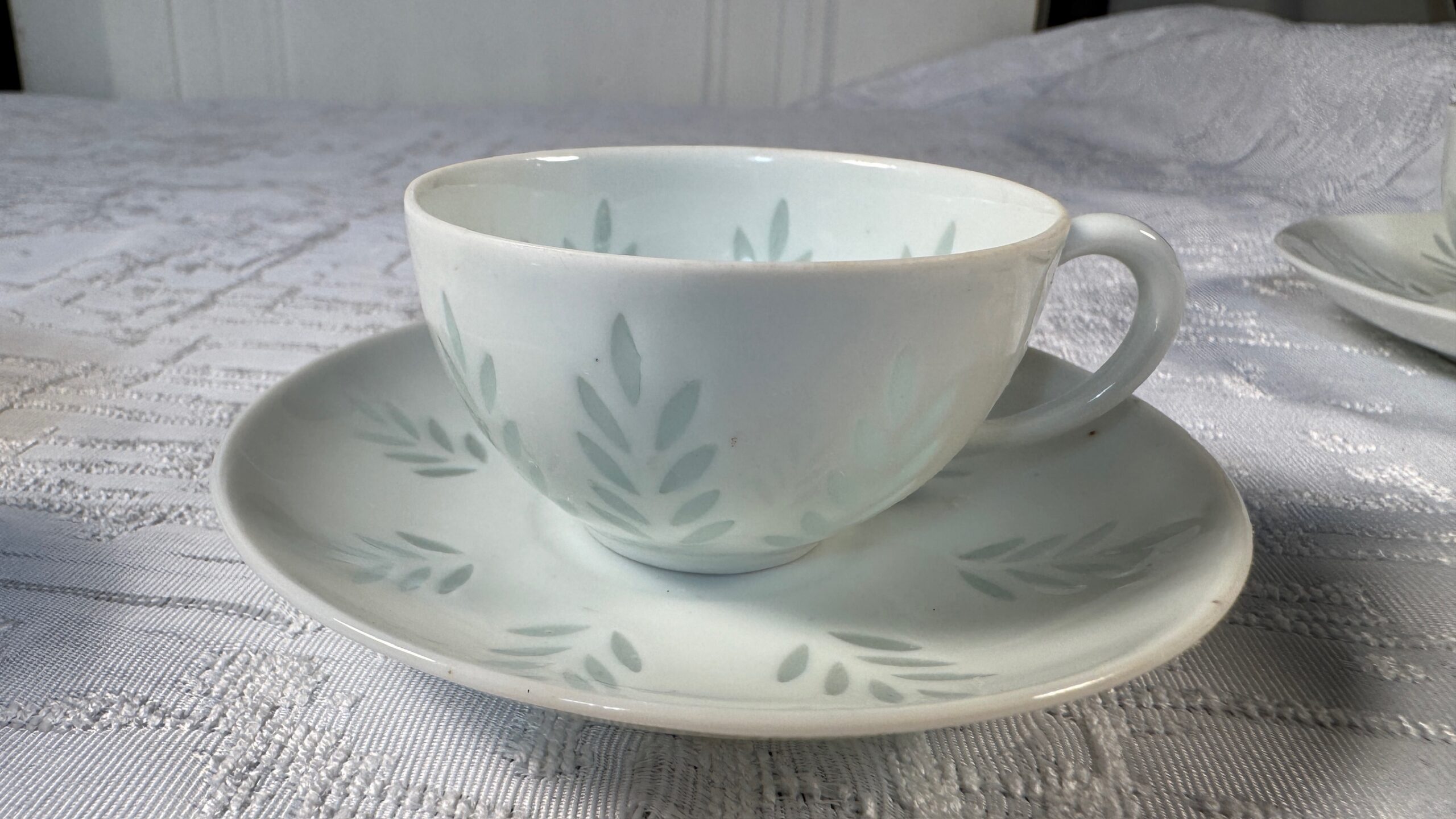
When collectors think of Scandinavian ceramics, a handful of names immediately come to mind: Kaj Franck, Birger Kaipiainen, Ulla Procopé, Esteri Tomula, and perhaps most poetically of all, Friedl Holzer-Kjellberg. While Arabia of Finland is celebrated for its modern tableware and innovative design, one artist transformed the company’s artistic identity through a delicate porcelain technique that remains among the most admired achievements in twentieth-century ceramics. That artist was Friedl Holzer-Kjellberg.
The Story of Arabia of Finland
Founded in 1873, Arabia became Finland’s most important ceramics manufacturer and eventually one of the most influential names in Scandinavian design. Originally established as a subsidiary of the Swedish ceramics firm Rörstrand, the factory grew into a powerhouse of innovation and craftsmanship. Throughout the twentieth century, Arabia attracted some of the greatest ceramic artists in Finland, helping to define what is now recognized worldwide as Finnish design.
Unlike many European porcelain manufacturers that relied heavily on tradition, Arabia embraced artistic experimentation. The company encouraged designers to develop unique glazes, forms, and decorative techniques. This environment allowed artists such as Kaj Franck, Birger Kaipiainen, Ulla Procopé, and Esteri Tomula to create work that remains highly collectible today.
Yet among these celebrated designers, Friedl Holzer-Kjellberg occupies a special place because her work bridged European craftsmanship, Chinese ceramic traditions, and Scandinavian modernism.
Who Was Friedl Holzer-Kjellberg?
Born in Austria in 1905 as Elfriede Amalie Adolfine Holzer, Friedl studied at the Kunstgewerbeschule in Graz before accepting a design position at Arabia in Helsinki in 1924. What began as a promising career became a lifelong commitment; she remained with Arabia for forty-six years, retiring in 1971. She later married Arabia engineer Erik Kjellberg and became known as Friedl Holzer-Kjellberg.
Her design philosophy has often been described as “modern classicism”—respectful of tradition yet refined through simplicity and elegance. Throughout her career she was deeply inspired by Asian ceramics, particularly Chinese porcelain traditions.
The Discovery of Rice Porcelain
Friedl’s greatest contribution came after a visit to Vienna in 1931. During her travels she encountered historic Chinese rice-grain porcelain, a decorative technique that fascinated her. Determined to understand and recreate the process, she returned to Finland and began experimenting. What followed was not a quick success but an eleven-year journey of research, testing, and refinement.
The technique involved carefully cutting tiny elongated openings into unfired porcelain. During glazing, these openings filled with translucent glaze. Once fired, the result was a magical effect: delicate windows of light scattered across the surface like grains of rice. When held up to a lamp or sunlight, the porcelain seemed almost ethereal.
Arabia finally introduced Holzer-Kjellberg’s rice porcelain in 1942, and collectors immediately fell in love with it. Despite being labor-intensive and expensive to produce, demand remained strong for decades. Arabia continued manufacturing rice porcelain designs until 1974.
Why Rice Porcelain Is So Special
Few ceramic techniques combine technical mastery and visual beauty as successfully as rice porcelain. Every piece required extraordinary handwork. The perforations had to be cut individually, glazed perfectly, and fired without distortion. Even a minor mistake could ruin an entire piece.
Collectors often describe the effect as “lace in porcelain.” The pieces appear solid from a distance, but light reveals a hidden pattern of translucent decoration that gives them an almost jewel-like quality.
Today, vintage Arabia rice porcelain remains one of the most sought-after categories of Finnish ceramics. Bowls, vases, cups, saucers, and decorative objects regularly command premium prices in the Scandinavian design market.
Beyond Rice Porcelain
Although rice porcelain made her famous, Friedl Holzer-Kjellberg was far more versatile than many collectors realize.
She experimented extensively with glazes, particularly rich oxblood reds, copper reds, turquoise blues, and peacock tones. These dramatic colors contrasted sharply with the delicate white elegance of her rice porcelain work. She collaborated closely with Arabia’s technical department to develop unique glaze formulas and firing methods.
Her larger art pottery pieces—often bold bowls, vases, and sculptural forms—demonstrate a mastery of ceramic chemistry that rivals her better-known porcelain creations. Serious collectors increasingly seek these works as awareness grows beyond the rice porcelain tradition.
International Recognition
Holzer-Kjellberg’s talent received international attention throughout her career. Her work appeared in major exhibitions in Barcelona, Brussels, and Paris. She earned medals at the Milan Triennale and received Finland’s prestigious Pro Finlandia Medal in 1962. Her work entered museum collections throughout Europe, including the British Museum.
Today her pieces can be found in important museum collections across Scandinavia, Germany, Switzerland, the Netherlands, and the United Kingdom, confirming her position among the most significant ceramic artists of the twentieth century.
Collecting Arabia and Friedl Holzer-Kjellberg Today
For collectors, Arabia offers an exciting journey through the history of Scandinavian design. While names like Kaj Franck and Birger Kaipiainen remain widely recognized, Friedl Holzer-Kjellberg’s work possesses a unique appeal because it combines artistry, technical innovation, and rarity.
When examining a piece, collectors often look for marks including “Arabia,” “Finland,” and the initials “FHK,” which are commonly associated with Holzer-Kjellberg’s production. Rice porcelain pieces are especially prized when free from chips, cracks, or repairs because their delicate construction makes survival in pristine condition increasingly uncommon.
For many enthusiasts, owning a Friedl Holzer-Kjellberg piece is more than acquiring beautiful porcelain—it is preserving a chapter of Finnish design history.
A Lasting Legacy
Nearly a century after she first joined Arabia, Friedl Holzer-Kjellberg remains one of the defining figures of Finnish ceramics. Her rice porcelain transformed an ancient Chinese technique into a distinctly Scandinavian art form, demonstrating that innovation often begins with respect for tradition.
In a world increasingly dominated by mass production, her work reminds us of the extraordinary beauty that can emerge when patience, craftsmanship, and artistic vision come together. Whether displayed in a museum, a curated collection, or a carefully chosen home interior, Arabia rice porcelain continues to captivate collectors with the same luminous elegance that first enchanted audiences in the 1940s.
For lovers of Scandinavian design, Friedl Holzer-Kjellberg’s creations are not merely ceramics—they are light captured in porcelain.