 (248) 617-7717
 mona@artandbeautifulthings.com




- 80s
- Art
- Abstract
- Art Deco
- Atomic
- Brutalist
- Ceramics & Pottery
- China & Porcelain
- Collectibles
- Decor
- Delightfully Kitschy
- Fashion
- Folk
- Fun
- Furniture
- Glass
- Gothic
- Holiday
- Historical Significance
- Hollywood Regency
- Industrial
- Kitchen
- Lighting
- Metal
- Mid Century
- Mid Century Modern
- Modern
- Off The Wall
- Old World
- Pop Art
- Primitive
- Rustic
- Salvage
- The Beauty Of Asia
- The Beauty of All Europe
- The Beauty of Canada
- The Beauty of France
- The Beauty of Italy
- The Beauty of Scandinavia
- The Beauty of the UK
- The Classics
- Whimsical
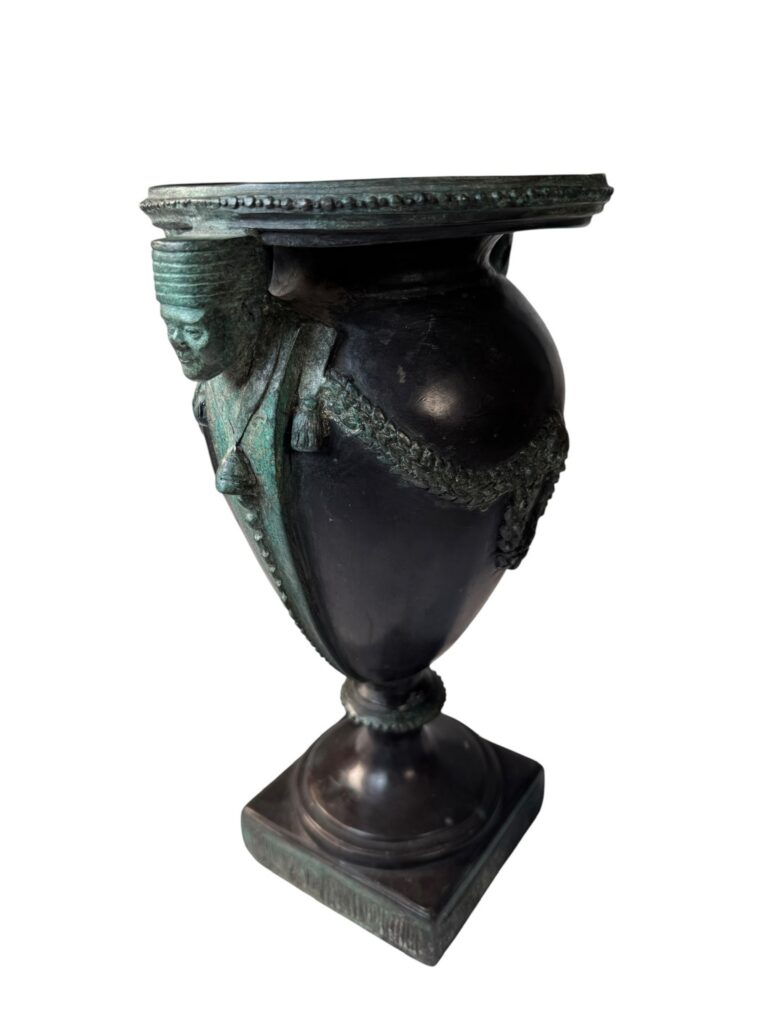
Egyptian Revival: The Ancient Civilization That Never Truly Went Out of Style

For more than 3,000 years, the monuments of ancient Egypt have inspired awe, fascination, and artistic imitation. Yet no period embraced Egypt’s visual language quite as enthusiastically as the Egyptian Revival movement. From the grand discoveries of archaeologists to the glamorous interiors of the Art Deco era, Egyptian motifs repeatedly resurfaced in decorative arts, architecture, jewelry, furniture, and sculpture. Today, collectors continue to seek out Egyptian Revival objects for their striking symbolism, exotic beauty, and historical significance.
An Egyptian Revival Bronze Urn with Figural Pharaoh Heads & Laurel Swags, dating to approximately 1925–1935, is a perfect example of how ancient motifs were reimagined through the sophisticated lens of the Art Deco period. To fully appreciate such a piece, it is worth exploring the remarkable history of Egyptian Revival and why it continues to captivate collectors over two centuries after it first emerged.
The Origins of Egyptian Revival
The roots of Egyptian Revival can be traced back to the late eighteenth century when European fascination with ancient Egypt intensified dramatically. While travelers had long returned from Egypt with stories and sketches of pyramids, temples, and colossal statues, the movement gained unprecedented momentum following the Egyptian campaign of Napoleon Bonaparte in 1798.
Alongside soldiers, Napoleon brought scientists, artists, architects, and scholars who meticulously documented Egypt’s monuments. Their findings were later published in the monumental work Description de l’Égypte, introducing Europe to a visual world unlike anything previously encountered.
Suddenly, sphinxes, obelisks, lotus flowers, scarabs, and hieroglyphs became fashionable decorative elements. Architects incorporated Egyptian-inspired forms into cemeteries, monuments, and public buildings. Furniture makers adapted ancient motifs into tables, chairs, and cabinets. Jewelers created scarab-inspired ornaments, while artists drew inspiration from Egyptian mythology and symbolism.
The Discovery That Changed Everything
Although Egyptian Revival enjoyed several waves of popularity throughout the nineteenth century, no event influenced the movement more than the discovery of the tomb of Tutankhamun in 1922.
British archaeologist Howard Carter uncovered one of the greatest archaeological finds in history when he opened the nearly intact royal tomb in the Valley of the Kings. Newspapers around the world reported the discovery in extraordinary detail. Photographs of gold treasures, ceremonial furniture, jewelry, chariots, and funerary objects appeared in magazines and newspapers across Europe and America.
The public became obsessed.
Egyptian-inspired fashions swept through society almost overnight. Jewelry designers incorporated scarabs and winged motifs. Interior decorators embraced geometric patterns inspired by temple architecture. Architects added Egyptian details to theaters, office buildings, and private homes. Manufacturers produced everything from lamps and clocks to cigarette cases featuring Egyptian themes.
This renewed fascination coincided perfectly with the rise of the Art Deco movement, creating one of the most distinctive decorative styles of the twentieth century.
Egyptian Revival Meets Art Deco
The Art Deco period, generally spanning the 1920s through the 1930s, emphasized elegance, geometry, luxury, and modernity. Designers sought inspiration from a variety of sources including ancient civilizations, exotic cultures, and emerging technologies.
Egyptian motifs fit naturally within the Art Deco aesthetic.
The strong geometric forms found in Egyptian architecture translated beautifully into Art Deco design. The symmetry of temple facades, the stylized forms of pharaohs, and the repetitive patterns of hieroglyphics complemented Deco’s preference for order and balance.
Designers frequently incorporated:
- Pharaoh heads
- Sphinxes
- Obelisks
- Lotus blossoms
- Winged sun disks
- Cobras
- Scarabs
- Pyramidal forms
- Papyrus motifs
- Hieroglyphic-inspired decoration
These elements appeared in furniture, lighting, sculpture, metalwork, ceramics, textiles, and architectural ornament.
Rather than creating exact reproductions of ancient artifacts, Art Deco designers modernized Egyptian imagery. Ancient forms became cleaner, more stylized, and more geometric, resulting in objects that felt simultaneously historic and contemporary.
The Symbolism of the Pharaoh
Among all Egyptian motifs, none proved more enduring than the image of the pharaoh.
Ancient Egyptian rulers were viewed as both kings and divine figures. They represented authority, stability, prosperity, and connection to the gods. Their iconic headdresses and idealized facial features became instantly recognizable symbols of Egypt itself.
During the Egyptian Revival period, pharaoh heads frequently appeared on decorative objects including:
- Urns
- Vases
- Lamps
- Bookends
- Mantel garnitures
- Architectural elements
- Furniture mounts
These figures lent an air of mystery and grandeur to otherwise conventional decorative objects.
A bronze urn featuring figural pharaoh heads would have projected sophistication and worldly taste while simultaneously reflecting the owner’s awareness of contemporary design trends.
Bronze and the Egyptian Revival Style
Bronze was one of the preferred materials for high-quality Egyptian Revival decorative arts.
Its durability, rich coloration, and ability to capture intricate detail made it ideal for reproducing sculptural motifs. Bronze also carried historical associations with ancient civilizations, further enhancing the authenticity and prestige of Egyptian-inspired objects.
During the 1920s and 1930s, foundries produced a wide variety of Egyptian Revival bronzes ranging from monumental sculptures to elegant tabletop accessories.
Many featured:
- Deep brown patinas
- Verdigris accents
- Gilded highlights
- Architectural forms
- Stylized figural elements
The combination of bronze construction and Egyptian iconography created objects that felt timeless and luxurious.
Laurel Swags: A Classical Influence
Interestingly, many Egyptian Revival objects incorporated motifs borrowed from other ancient cultures.
Laurel swags, for example, originate primarily from ancient Greece and Rome rather than Egypt. In decorative arts, they symbolize victory, honor, achievement, and prestige.
Designers of the Art Deco era frequently blended influences from multiple civilizations, creating hybrid works that appealed to contemporary tastes.
A bronze urn featuring both pharaoh heads and laurel swags demonstrates this fascinating cross-cultural approach. While the pharaoh evokes the mystique of ancient Egypt, the laurel introduces classical elegance, resulting in a sophisticated decorative object that transcends strict historical accuracy.
This blending of styles is one of the hallmarks of Art Deco design.
Egyptian Revival in American Homes
By the late 1920s, Egyptian Revival had become firmly established in American decorative arts.
Department stores sold Egyptian-inspired furnishings. Movie palaces incorporated monumental Egyptian architecture into their facades. Designers created entire room schemes based on the latest archaeological discoveries.
Wealthy homeowners often displayed Egyptian Revival objects as symbols of sophistication and cultural awareness.
Decorative urns were especially popular because they combined artistic beauty with practical versatility. They could serve as:
- Mantel decorations
- Centerpieces
- Console table accents
- Architectural focal points
- Companion pieces in formal interiors
Their sculptural qualities allowed them to function as works of art even when not holding flowers or other decorative arrangements.
Collecting Egyptian Revival Today
Interest in Egyptian Revival remains strong among collectors.
Several factors contribute to the enduring appeal of these pieces:
Historical Significance
Egyptian Revival objects capture a specific cultural moment when archaeology, art, fashion, and design intersected in fascinating ways.
Artistic Merit
The best examples demonstrate exceptional craftsmanship and imaginative reinterpretation of ancient motifs.
Decorative Impact
Egyptian Revival objects possess a dramatic visual presence that works surprisingly well in both traditional and contemporary interiors.
Connection to Art Deco
Because many Egyptian Revival pieces were produced during the Art Deco era, they appeal to collectors of both categories.
Relative Rarity
Fine bronze examples featuring complex figural decoration are becoming increasingly difficult to locate, particularly in well-preserved condition.
Decorating with Egyptian Revival
One of the pleasures of collecting Egyptian Revival objects is their versatility.
A bronze urn with pharaoh heads can complement:
- Art Deco interiors
- Neoclassical spaces
- Hollywood Regency décor
- Eclectic collector interiors
- Contemporary minimalist settings
Placed on a mantel, console table, or library shelf, such a piece immediately becomes a conversation starter.
Its strong sculptural form creates visual interest while its historical references invite curiosity and discussion.
Why Egyptian Revival Endures
Few decorative styles have enjoyed the longevity of Egyptian Revival.
Part of its enduring appeal lies in the timeless nature of its source material. The pyramids, temples, and monuments of ancient Egypt continue to inspire wonder thousands of years after their construction.
At the same time, Egyptian Revival reflects humanity’s ongoing fascination with mystery, discovery, and the ancient world.
Whether viewed through the lens of nineteenth-century archaeology, Jazz Age glamour, or modern collecting, Egyptian-inspired decorative arts remain remarkably compelling.
An Egyptian Revival Bronze Urn with Figural Pharaoh Heads & Laurel Swags, Art Deco Period c. 1925–1935, embodies all of these qualities. It serves not only as a beautiful decorative object but also as a tangible reminder of one of the most influential design movements of the twentieth century—a period when the treasures of ancient Egypt captured the imagination of the modern world and transformed the decorative arts forever.
For today’s collector, such a piece represents far more than bronze and ornamentation. It is a celebration of history, craftsmanship, archaeology, and timeless design—an elegant bridge connecting the ancient world with the sophisticated aesthetics of the Art Deco age.