(248) 617-7717
 mona@artandbeautifulthings.com




- 80s
- Art
- Abstract
- Art Deco
- Atomic
- Brutalist
- Ceramics & Pottery
- China & Porcelain
- Collectibles
- Decor
- Delightfully Kitschy
- Fashion
- Folk
- Fun
- Furniture
- Glass
- Gothic
- Holiday
- Historical Significance
- Hollywood Regency
- Industrial
- Kitchen
- Lighting
- Metal
- Mid Century
- Mid Century Modern
- Modern
- Off The Wall
- Old World
- Pop Art
- Primitive
- Rustic
- Salvage
- The Beauty Of Asia
- The Beauty of All Europe
- The Beauty of Canada
- The Beauty of France
- The Beauty of Italy
- The Beauty of Scandinavia
- The Beauty of the UK
- The Classics
- Whimsical
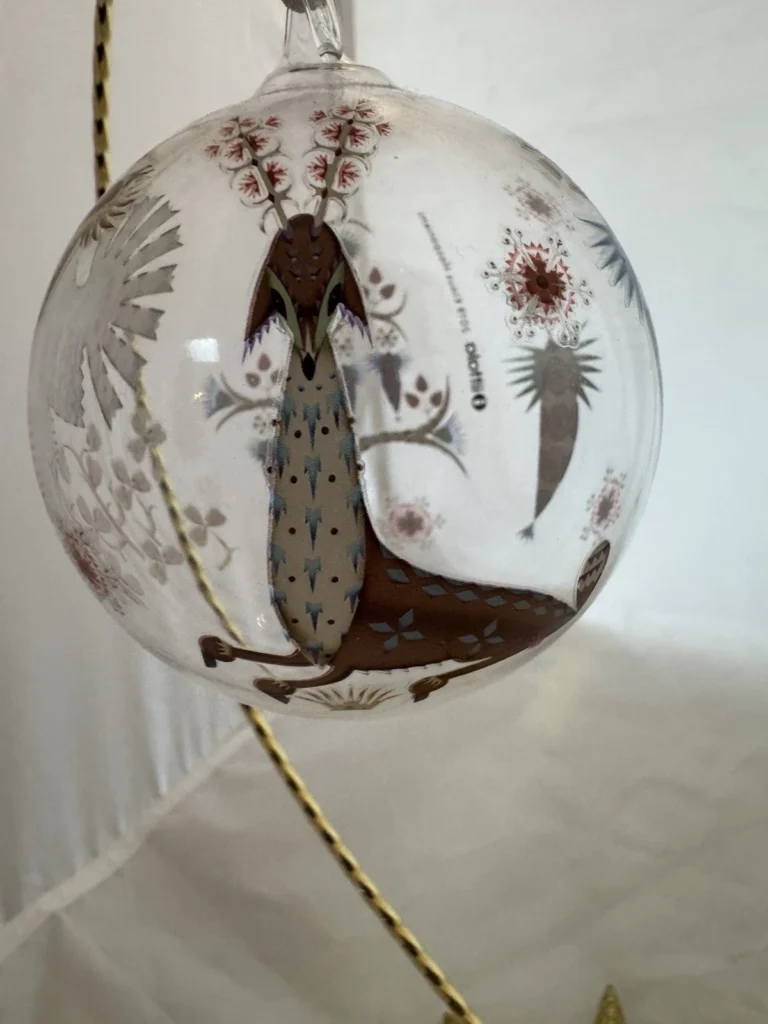
Italian Glass Ornament Making: The Complete History, Art, and Enduring Magic of Soffieria De Carlini

Introduction: When Glass Becomes Story, Memory, and Art
In the world of decorative arts, few objects balance fragility and permanence as beautifully as hand-blown glass ornaments. They are delicate, yet enduring. Ephemeral in appearance, yet deeply tied to tradition and memory. And nowhere is this balance more evident than in the tradition of Italian glass ornament making.
Among the many names associated with this tradition, one stands apart for its distinctive voice—Soffieria De Carlini, a workshop that has spent decades transforming molten glass into objects of imagination, personality, and artistic expression.
To understand De Carlini is to understand more than a company. It is to understand a lineage of craftsmanship, a philosophy of design, and a uniquely Italian approach to creativity that embraces both elegance and whimsy.
This is not simply a story about ornaments.
It is a story about:
- The survival of craftsmanship after war
- The relationship between artist and material
- The transformation of function into art
- The emotional power of handmade objects
And ultimately, it is a story about why these pieces still matter today—to collectors, to historians, and to anyone who recognizes beauty when they see it.
The Ancient Roots of Italian Glassmaking


7
Long before De Carlini, long before Christmas ornaments became a collectible category, Italy had already established itself as one of the world’s most important centers of glassmaking.
The origins of Italian glass art can be traced back to ancient Rome, where glass was used for vessels, decorative objects, and architectural elements. Over time, these techniques evolved, eventually reaching their most famous expression in Venice—specifically on the island of Murano.
Murano glassmakers were known for:
- Their control of color and clarity
- Their ability to create intricate forms
- Their guarded techniques, often kept secret for generations
This tradition laid the foundation for all Italian glassmaking that followed.
While De Carlini is not a Murano company, it exists within this broader cultural lineage. The emphasis on hand-blown technique, artistic individuality, and material mastery all stem from these earlier traditions.
In this sense, every De Carlini ornament carries not just its own story, but echoes of centuries of Italian craftsmanship.
The Birth of Christmas Ornaments in Europe
Before exploring De Carlini specifically, it is important to understand the evolution of Christmas ornaments themselves.
Glass ornaments as we recognize them today began to emerge in Europe in the late 19th and early 20th centuries. Initially, Germany—particularly the town of Lauscha—became the center of ornament production.
These early ornaments were:
- Blown glass shapes
- Often symmetrical and traditional
- Designed for mass appeal
Over time, other regions began to develop their own interpretations. Italy entered this space later, bringing with it a different artistic sensibility—one less focused on uniformity and more focused on expression.
This distinction would become crucial in understanding what makes Italian ornaments, and specifically De Carlini, so unique.
Post-War Italy: The Moment That Changed Everything


6
The founding of De Carlini in 1947 was not accidental. It occurred at a moment when Italy was redefining itself.
After World War II, there was a strong cultural push toward rebuilding not only infrastructure but identity. Artisans and craftsmen became central to this effort. They represented continuity, resilience, and a return to values rooted in skill and tradition.
Enrico De Carlini founded his workshop during this period with a clear purpose: to create objects that would bring beauty and joy back into everyday life.
This was not about mass production. It was about meaning.
From the very beginning, De Carlini ornaments were:
- Handmade
- Individually shaped
- Designed with artistic intent
They were small, but they carried weight.
The Art of Glassblowing: Breath as Creation


7
Glassblowing is at the heart of De Carlini’s work. It is both a technical process and an artistic act.
The process begins with molten glass, heated until it becomes fluid. The artisan gathers the glass onto a blowpipe and begins shaping it through controlled breathing.
This is where the magic happens.
Unlike molded production, glassblowing allows for spontaneity. The material responds to the artisan’s touch, creating subtle variations in form. These variations are what give each De Carlini ornament its individuality.
The company itself emphasizes this process, describing its work as “mouth-blown” and hand-finished, reinforcing the importance of the human element.
Every ornament is shaped by:
- Breath
- Movement
- Timing
- Experience
It is not a repeatable process. It is a performance.
From Form to Character: The Decorative Process
Once the glass form is created, the ornament undergoes a transformation.
Artisans begin layering:
- Paint
- Metallic finishes
- Textural elements
This stage is where the ornament becomes expressive. Facial features are added. Details emerge. The piece begins to take on personality.
Unlike many European traditions that prioritize symmetry, De Carlini embraces individuality.
Each ornament becomes:
- A character
- A narrative
- A moment captured in glass
This is where De Carlini separates itself most clearly from other makers.
Whimsy: The Defining Language of De Carlini

If there is one word that defines De Carlini, it is whimsy.
This does not mean randomness. It means imagination with intention.
De Carlini ornaments often feature:
- Unexpected subjects
- Expressive faces
- Playful proportions
- Storybook-like qualities
They feel alive.
This approach reflects a distinctly Italian artistic philosophy—one that values emotion and expression as much as technical precision.
For collectors, this is what makes De Carlini unforgettable.
Italian vs German vs Czech Ornament Traditions
Understanding De Carlini becomes even clearer when placed alongside other traditions.
German ornaments:
- Precise
- Symmetrical
- Traditional
Czech ornaments:
- Highly decorative
- Reflective
- Intricate
Italian (De Carlini):
- Expressive
- Sculptural
- Narrative-driven
This difference is not subtle. It defines the entire collecting experience.
Why Collectors Are Drawn to De Carlini
Collectors are not just buying ornaments. They are selecting pieces that resonate.
De Carlini appeals because it offers:
- Authentic craftsmanship
- Emotional connection
- Artistic individuality
- Increasing scarcity over time
These are not mass objects. They are personal discoveries.
The Psychology of Collecting De Carlini
There is a deeper layer to collecting that goes beyond aesthetics.
Collectors often seek:
- Connection to history
- Evidence of craftsmanship
- Objects that feel “alive”
De Carlini satisfies all of these.
Each piece feels intentional. It carries presence.
Building a Collection: Strategy and Vision
A De Carlini collection can be approached in multiple ways:
- Theme-based (whimsical, religious, nature)
- Color-based
- Era-based
- Purely intuitive
The key is consistency and intention.
Modern Market and Value
De Carlini ornaments continue to be produced, but earlier pieces and distinctive designs are becoming harder to locate.
This creates:
- Increased collector interest
- Stable long-term value
- Cross-category demand
They appeal to:
- Glass collectors
- Holiday collectors
- Art collectors
The Enduring Legacy
More than 75 years later, De Carlini continues to produce ornaments that reflect its founding principles.
Handmade. Expressive. Individual.
In a world of replication, that matters.
Conclusion: Why This Still Matters
De Carlini is not just about ornaments.
It is about:
- Craft
- History
- Expression
- Beauty
And that is why it endures.